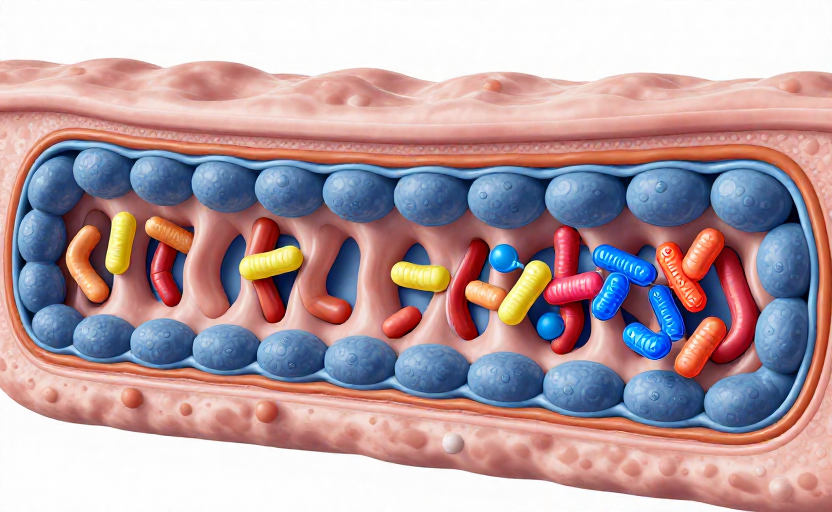
When we talk about gut health, the conversation often centers on probiotics—the live bacteria we get from yogurt, kimchi, and supplements. But there's a quieter, equally important player that deserves more attention: prebiotic fiber. These non-digestible plant compounds don't just feed your gut microbes; emerging research suggests they play a direct role in maintaining the physical integrity of your intestinal lining.
Think of your gut lining as a security checkpoint. When it's working well, it allows vital nutrients through while blocking toxins and undigested food particles. When it becomes leaky (a condition often called increased intestinal permeability), that barrier function fails. Here's how prebiotic fibers help keep that barrier tight and resilient.
What Exactly Is the Gut Lining Made Of?
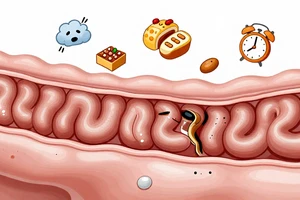
Your intestinal wall is a single layer of epithelial cells held together by tight junction proteins—think of them as the zippers between each cell. These junctions are dynamic; they open and close in response to what you eat, your stress levels, and your microbial balance. When the zippers stay open too wide for too long, larger molecules can slip through, triggering immune responses that contribute to inflammation, food sensitivities, and digestive discomfort.
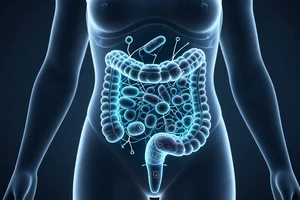
This is where prebiotic fibers step in. Unlike probiotics, which are live organisms, prebiotics are compounds that your body cannot digest. They travel to the colon largely intact, where your gut bacteria ferment them into beneficial metabolites.
Key Prebiotic Fibers and How They Support the Barrier
Not all fibers are created equal. The prebiotics most studied for their role in gut barrier function include inulin, fructooligosaccharides (FOS), galactooligosaccharides (GOS), and beta-glucans. Each appears to work through slightly different mechanisms.
1. Fuel for Butyrate Production
The most direct way prebiotics help seal your gut lining is by boosting production of butyrate, a short-chain fatty acid produced when bacteria ferment soluble fibers. Butyrate is the primary energy source for colonocytes, the cells lining your colon. When these cells are well-fed, they proliferate, repair damage, and tighten the junctions between them. Animal studies published in the American Journal of Physiology have shown that butyrate directly upregulates the expression of tight junction proteins like occludin and claudin. In plain English: more butyrate means stronger zippers.
2. Reducing Inflammatory Signals
A chronically inflamed gut is more likely to be a leaky gut. Prebiotic fibers help dampen inflammation by shifting the balance of gut bacteria toward species that produce anti-inflammatory compounds. For example, beta-glucans from oats and barley can modulate immune cell activity in the gut-associated lymphoid tissue, reducing the release of pro-inflammatory cytokines that would otherwise loosen tight junctions. This indirect protection is just as important as the direct butyrate effect.
3. Physical Bulking and Transit Time
While this seems simpler, it matters. Prebiotic fibers increase stool bulk and regulate transit time. When waste moves through the colon at a healthy pace, harmful bacteria have less opportunity to overgrow and damage the mucosal layer. That mucosal layer is your first line of defense—a thick, gel-like barrier that sits on top of the epithelial cells. Keeping it intact is essential for preventing bacterial components from reaching the tight junctions below.
Which Prebiotic Foods Should You Focus On?
You don't need a supplement to get these benefits. The following foods are excellent sources of the prebiotic fibers discussed above:
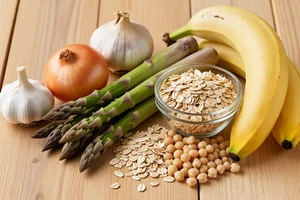
- Chicory root and Jerusalem artichokes – Very high in inulin, best introduced slowly to avoid gas
- Garlic, onions, and leeks – Rich in FOS, easy to add to daily cooking
- Oats and barley – Excellent sources of beta-glucans
- Legumes – Chickpeas, lentils, and beans provide both GOS and resistant starch
- Bananas (slightly green) – Contain resistant starch that resists digestion and feeds beneficial bacteria
- Asparagus and dandelion greens – Good all-around prebiotic vegetables
A practical note: Introduce high-prebiotic foods gradually. A sudden load of inulin from artichokes or chicory can cause bloating and gas if your gut microbiome isn't used to it. Start with a serving the size of your fist, and increase over a couple of weeks.
Can Prebiotic Supplements Help Seal the Gut?
Whole foods should be your foundation, but targeted prebiotic supplements can be useful, particularly for people with digestive conditions that make it hard to tolerate large amounts of fibrous vegetables. Partially hydrolyzed guar gum and acacia senegal fiber are two well-tolerated options that are less likely to cause gas. Studies on GOS supplements have also shown promising effects on tight junction integrity in both animal models and early human trials.
That said, the science isn't yet at the point where we can prescribe a specific dose for gut sealing. Most research uses doses between 5 and 15 grams per day, but individual tolerance varies widely. If you have a diagnosed condition like irritable bowel syndrome or inflammatory bowel disease, talk to your healthcare provider before adding concentrated prebiotic powders.
What the Research Still Needs to Clarify
Much of the strong mechanistic evidence for prebiotics and gut barrier function comes from animal studies and lab experiments on cell cultures. Human studies are growing but still limited. Some of the most compelling human data comes from research on GOS in people with Crohn's disease, where improvements in gut permeability markers have been observed. However, we don't yet have large-scale trials that definitively prove prebiotics alone can reverse leaky gut in otherwise healthy people.
What we do know is that a diet rich in diverse prebiotic fibers consistently promotes a healthier microbiome, and a healthier microbiome consistently correlates with a stronger intestinal barrier. That's a solid foundation for adding more fibrous plants to your plate.
Building a Gut-Sealing Routine
The goal isn't to eat one superfood; it's to create a pattern. Aim for at least three different sources of prebiotic fiber across your day. A morning bowl of oats with a few slices of barely ripe banana, a lunch salad with chickpeas and a clove of raw garlic in the dressing, and a dinner side of roasted asparagus or leeks will give you a wide spectrum of prebiotic types. Pair these with adequate hydration, as fiber needs water to work effectively in the colon.
Remember that gut health is holistic. While prebiotic fibers can help tighten the lining, factors like chronic stress, excessive alcohol, nonsteroidal anti-inflammatory drugs (NSAIDs), and poor sleep also loosen tight junctions. Fiber is a powerful tool, but it works best in the context of an overall healthy lifestyle.
The bottom line: Prebiotic fibers help seal your gut lining primarily by fueling butyrate production, reducing inflammation, and supporting a healthy mucus barrier. While more human studies are needed, the existing evidence strongly supports including a variety of prebiotic-rich foods in your daily diet. Start slow, stay consistent, and your gut bacteria—and your intestinal barrier—will thank you.