You’ve likely heard about probiotics—the beneficial bacteria in yogurt, kefir, and supplements that take up residence in your gut. But those microbes don’t work in a vacuum. To thrive and do their good work, they need to be fed. That’s where prebiotics come in. Think of them as the fertilizer for your inner garden, the specialized nourishment that helps your good gut bacteria grow stronger and more numerous.
This isn’t about a restrictive diet or a fleeting trend. It’s about understanding a simple, foundational principle of gut health: feed what you want to grow. By consciously including more prebiotic-rich foods in your meals, you’re creating an environment where beneficial microbes can flourish, which in turn supports everything from digestion and immune function to mood and overall well-being.
What Exactly Are Prebiotics?
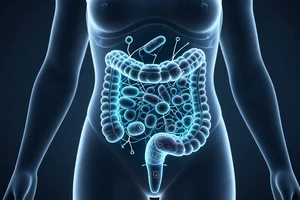
Prebiotics are a specific type of non-digestible fiber. When you eat them, they pass through your upper digestive system largely intact because your body’s enzymes can’t break them down. They arrive in your colon, where they serve as a food source for the beneficial bacteria living there. This process of fermentation produces short-chain fatty acids, like butyrate, which are vital for colon health and have wide-ranging benefits for the entire body.
Not all fiber is prebiotic, but all prebiotics are fiber. The most well-researched types include inulin, fructooligosaccharides (FOS), and galactooligosaccharides (GOS). You don’t need to memorize these names. What matters is knowing which everyday foods contain them.
Prebiotics are the specialized food for your gut’s beneficial bacteria, helping them multiply and produce compounds essential for your health.
A Practical Guide to Prebiotic-Rich Foods
The beauty of focusing on prebiotics is that it shifts your attention to whole, plant-based foods. You’ll find them in vegetables, fruits, legumes, and whole grains. Here’s a breakdown of some of the most accessible and potent sources.
Vegetables and Roots
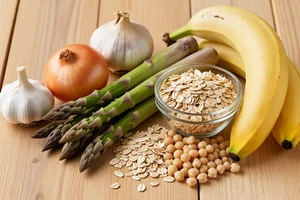
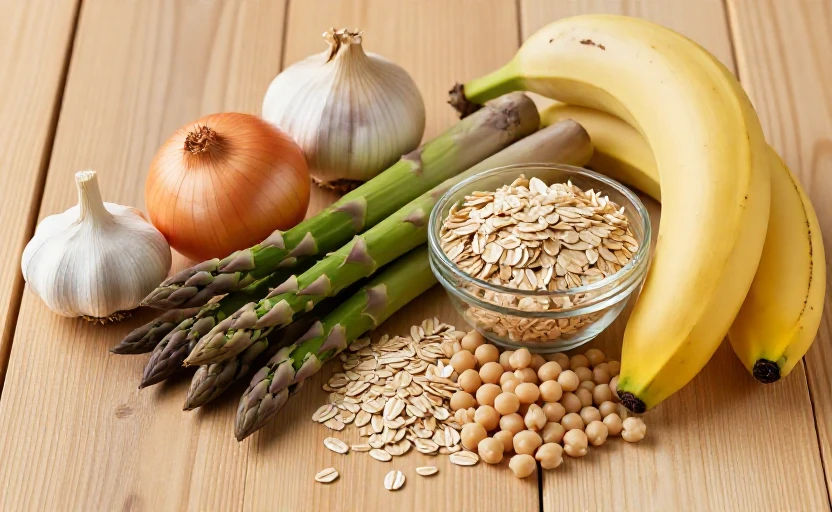
Many common vegetables are excellent sources. Garlic and onions are prebiotic powerhouses, thanks to their inulin and FOS content. They’re culinary staples for a reason—adding them to soups, sauces, and sautés is an easy win. Leeks and asparagus are also rich in inulin. Jerusalem artichokes (also called sunchokes) and chicory root are among the most concentrated sources, though they can be potent, so it’s wise to introduce them gradually.
Fruits
Bananas, particularly when slightly green, contain resistant starch that acts as a prebiotic. Apples, with their pectin, are another great choice. Berries, while often celebrated for antioxidants, also provide fiber that feeds gut bacteria.
Legumes and Grains
Lentils, chickpeas, and beans are packed with prebiotic fibers. Oats and barley are standout grains, offering beta-glucan, a fiber with both prebiotic and heart-health benefits.
How to Add More Prebiotics to Your Day
You don’t need a complete diet overhaul. Small, consistent additions make a significant difference over time. Start by including one or two prebiotic foods in each meal.
- Breakfast: Stir a tablespoon of oats into your yogurt, or add sliced banana to your cereal.
- Lunch: Add a handful of chickpeas to your salad, or include raw onion slices in your sandwich.
- Dinner: Sauté garlic and onions as a base for your main dish, or serve roasted asparagus or leeks as a side.
- Snacks: An apple with a handful of nuts, or a few berries, can be a perfect gut-friendly pick-me-up.
If you’re new to high-fiber foods, increase your intake slowly and drink plenty of water. This gives your digestive system—and your microbiome—time to adjust without discomfort.
Listening to Your Gut
As you introduce more prebiotic foods, pay gentle attention to how you feel. Some initial gas or bloating can be normal as your bacterial populations shift and increase their activity. This usually subsides as your gut adapts. If you have a known digestive condition like irritable bowel syndrome (IBS), some high-FODMAP prebiotics (like garlic, onion, and legumes) might be problematic. In such cases, working with a healthcare professional or dietitian can help you identify which prebiotic sources you tolerate best.
Ultimately, nourishing your gut bacteria is a long-term practice, not a quick fix. By making prebiotic-rich foods a regular part of your eating pattern, you’re investing in the ecosystem within you. It’s a simple, sustainable way to support your health from the inside out, one meal at a time.