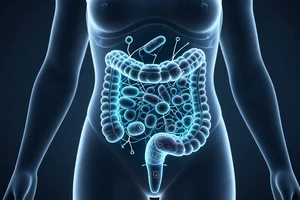

Living with irritable bowel syndrome (IBS) often means living with uncertainty. What sets off the bloating, cramping, or urgency this week might not have bothered you last month. This unpredictability can make daily life—meals with friends, a day at the office, even a morning commute—feel like a game of chance. While the exact root of IBS is still being untangled, research points to several key physiological triggers. Understanding these five common causes can help you connect the dots between what you eat and how you feel, giving you a clearer path toward managing your symptoms.
1. Abnormal Gut Motility: When the Rhythms Go Wrong
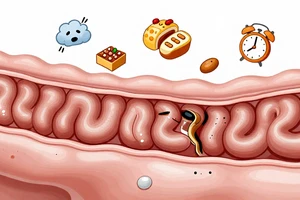
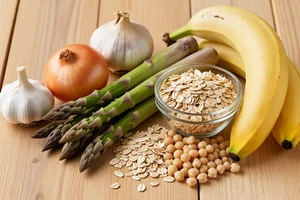
Your digestive tract relies on a coordinated series of muscular contractions—called peristalsis—to move food and waste along. In IBS, this rhythm can become dysregulated. Some people experience contractions that are too strong and too fast, rushing food through the system and leading to diarrhea and urgency. Others have sluggish motility, where waste lingers too long, giving the colon more time to absorb water and resulting in constipation. Diet plays a direct role here: fiber can either help or hinder motility depending on the type. Insoluble fiber (found in wheat bran, nuts, and many vegetables) may accelerate transit, while soluble fiber (like psyllium or oats) can help regulate both loose stools and constipation by holding water and slowing digestion.
2. Visceral Hypersensitivity: Feeling More Than Others
Many people with IBS have a heightened sensitivity to normal digestive processes. Where someone without IBS might not notice a small gas bubble passing through the intestine, a person with visceral hypersensitivity may feel sharp pain or severe cramping. This is not “all in your head”—the nerves connecting the gut and brain are simply more reactive. Diet can influence this sensitivity. Large meals, very fatty foods, and spicy dishes can trigger stronger gut contractions, which are then perceived as painful. Eating smaller portions, reducing high-fat foods, and avoiding chili and capsaicin can dampen the nerve response.
Know the trigger pattern: If you notice pain within 30–90 minutes after eating, visceral hypersensitivity may be a leading cause. Keep a food diary to identify the specific meals that provoke discomfort.
3. The Gut Microbiome: An Unbalanced Ecosystem
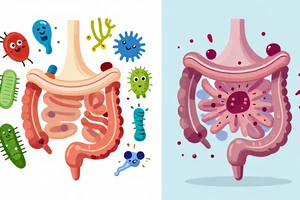
Your colon is home to trillions of bacteria that help ferment undigested food and produce beneficial compounds. In IBS, the composition of this microbiome is often different—there may be less diversity, an overgrowth of gas-producing bacteria in the small intestine (SIBO), or a shortage of microbes that soothe the gut lining. When certain carbohydrates are not properly absorbed, gut bacteria feast on them, producing hydrogen, methane, or hydrogen sulfide gas. This gas stretches the intestinal walls, causing bloating and pain. A low-FODMAP diet, which temporarily restricts fermentable carbs like onions, garlic, wheat, apples, and beans, can starve the problematic bacteria and relieve gas and bloating in many people.
4. Disrupted Gut–Brain Communication: The Stress Connection
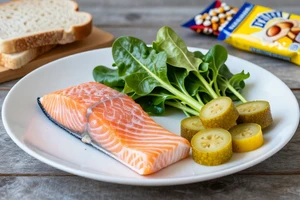
The gut and brain are linked through the vagus nerve and a shared network of neurotransmitters. Stress, anxiety, and strong emotions can directly alter gut motility, increase pain sensitivity, and change the secretion of digestive juices. For someone with IBS, a stressful day at work can provoke a flare just as powerfully as a food trigger. Diet can help mitigate this in two ways: first, by ensuring a steady intake of magnesium-rich foods (like spinach, pumpkin seeds, and legumes) which support muscle relaxation and stress response; second, by stabilizing blood sugar with regular meals and adequate protein, since glucose crashes can amplify feelings of anxiety and physical tension.
5. Malabsorption of Short-Chain Carbohydrates (FODMAPs)
Many people with IBS do not absorb certain short-chain carbohydrates efficiently in the small intestine. When these FODMAPs (fermentable oligosaccharides, disaccharides, monosaccharides, and polyols) reach the colon, they draw in water and are rapidly fermented by bacteria, producing gas. Common culprits include lactose in milk, excess fructose in apples and honey, fructans in wheat and onions, galactans in beans, and polyols (sugar alcohols) in sugar-free gum and some fruits. Working with a registered dietitian to follow a structured elimination and reintroduction plan can pinpoint exactly which FODMAPs your system struggles with, allowing you to enjoy a varied diet while only limiting the specific triggers.
Pinpointing your personal mix of these causes often takes time and patience. A diet that helps one person may aggravate another. The most powerful step you can take is not to eliminate everything at once, but to approach your symptoms with curiosity. Try keeping a simple symptom journal that notes what you ate, your stress level that day, and your pain and stool consistency. Over a week or two, patterns will begin to emerge. Share those notes with a gastroenterologist or a dietitian who specializes in IBS—they can help you confirm which mechanisms are at work in your body and guide you to a diet that is both effective and sustainable.