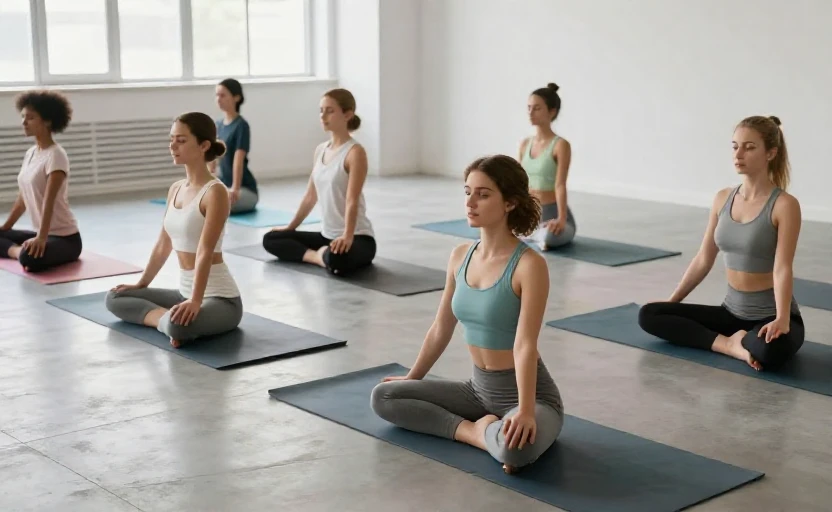
If you’ve ever felt curious about yoga but wondered if it’s more than just physical poses, you’re not alone. For many beginners, the initial draw is flexibility or stress relief, but the practice offers a deeper, evidence-supported toolkit for mental well-being. Modern research is now catching up to what ancient traditions have long suggested: a consistent yoga practice can create measurable, positive shifts in how we think and feel.
This isn’t about achieving perfect postures. It’s about using simple movement, breath awareness, and moments of stillness to cultivate a more resilient and calm mind. The benefits are accessible from your very first session on the mat.
How does yoga reduce stress and anxiety?
When we feel stressed or anxious, our nervous system is often stuck in a state of high alert—the “fight-or-flight” response. Yoga offers a direct pathway to dial this down. The combination of deliberate movement and focused breathing acts as a signal to the body that it’s safe to relax.
Studies point to yoga’s ability to lower cortisol, the body’s primary stress hormone. More than just a temporary calm, regular practice seems to enhance the function of the parasympathetic nervous system, which is responsible for rest and digestion. This means over time, your baseline stress level can decrease, and your ability to recover from stressful events may improve.
Think of your breath as a remote control for your nervous system. Slow, mindful breathing is the ‘off’ button for panic.
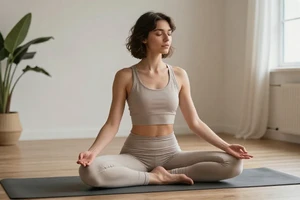
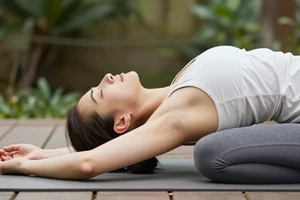
For beginners, this often starts with noticing the breath. In a pose like Child’s Pose or even a simple seated position, the instruction to “breathe into” a sensation shifts your focus from swirling thoughts to the physical present. This mindful anchor is a powerful, portable tool you can use anywhere, long after you’ve rolled up your mat.
Can yoga improve mood and combat low mood?
Emerging research suggests a strong link between yoga and improved mood regulation. The mechanisms are multifaceted, involving both brain chemistry and psychology.
On a physiological level, yoga appears to influence neurotransmitters like GABA, which is associated with a calmer, more stable mood. Physical activity, even the gentle kind, also promotes the release of endorphins. But yoga adds another layer: the mindful component. By practicing non-judgmental awareness of the present moment—noticing a tight hamstring without criticizing it, observing a feeling of frustration without getting swept away—you cultivate a different relationship with your inner experience.
This practice of self-observation can create a small but crucial gap between feeling a low mood and being consumed by it. It doesn’t erase difficult emotions, but it can prevent them from defining your entire day. For many, this leads to a gradual increase in overall emotional resilience and a greater sense of contentment.
What are the benefits for focus and mental clarity?
Yoga is often described as meditation in motion. Holding a pose requires you to pay attention to alignment, balance, and breath all at once. This is a workout for your attentional muscles.
Neuroscientific studies have found that regular yoga practice can enhance activity in the prefrontal cortex, an area of the brain crucial for concentration, decision-making, and self-regulation. The constant gentle redirecting of attention from wandering thoughts back to the body or breath strengthens your mind’s ability to focus on a single task. You might notice this off the mat as an improved ability to listen in a conversation, read a book without distraction, or work through a problem with less mental fog.
Poses that challenge balance, like Tree Pose, are particularly effective for this. They demand a quiet, singular focus to stay steady, offering a clear, immediate feedback loop for your attention.
How does yoga contribute to better sleep?
Struggling with sleep is often a symptom of a busy mind that won’t quiet down. Yoga addresses this from both a physical and mental angle. A gentle evening practice can help release physical tension stored in the shoulders, jaw, and hips—common places we hold the day’s stress.
More importantly, yoga encourages the transition from sympathetic (aroused) to parasympathetic (restful) nervous system dominance. Restorative poses like Legs-Up-the-Wall or a supported Reclining Bound Angle Pose, held for several minutes with slow breathing, are profoundly calming. They are not about exertion but about surrender, teaching the body and mind the skill of letting go.
Starting a yoga practice as a beginner is about exploration, not expertise. The mental benefits begin to unfold when you show up consistently, with curiosity instead of judgment. Look for a beginner-friendly class or online series that emphasizes foundational alignment and breath awareness. Remember, the goal is not to tie yourself in a knot, but to untie the knots in your mind.