
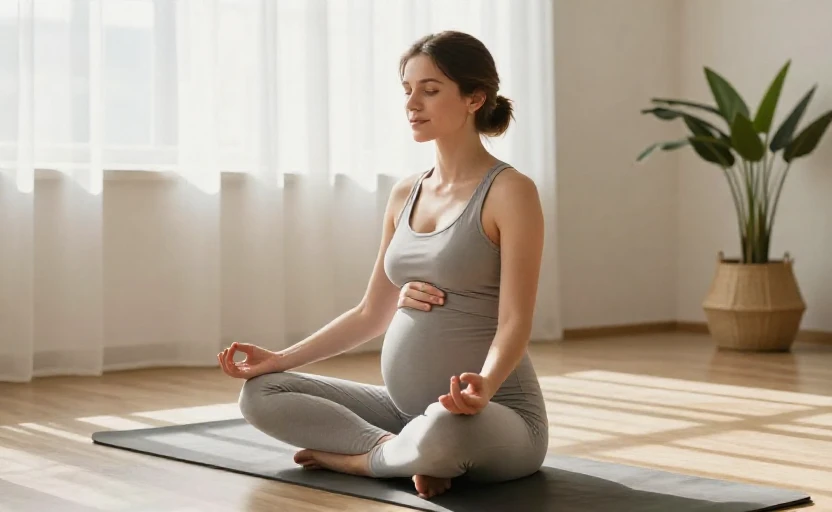
You settle onto your mat, hands resting gently on your belly, and begin to guide your breath. Inhale, feeling the expansion. Exhale, releasing tension you didn't even know you were holding. Prenatal yoga breathing is a quiet practice, one that can feel almost too simple. But beneath that simplicity, profound shifts are occurring—for you and for your growing baby. The benefits aren't always dramatic. More often, they reveal themselves in subtle, easy-to-miss signs that signal your practice is weaving its way into your daily well-being.
Learning to recognize these gentle signals can transform your practice from a scheduled activity into a source of deep, reassuring connection. It turns abstract concepts like "reducing stress" into tangible, felt experiences. Here’s how to notice when your breathwork is truly doing its job.
A Shift in Your Response to Discomfort
Pregnancy brings a parade of physical sensations, from the awe-inspiring first flutters to the more challenging aches and pressures. One of the clearest signs your breathing practice is integrating is a change in how you meet these sensations.
Instead of a knee-jerk reaction of tension or frustration toward a sore back or a bout of heartburn, you might find yourself pausing—almost instinctively—to take a longer, more deliberate breath. This isn't about eliminating the discomfort (though sometimes it does ease it). It's about creating a small space between the sensation and your reaction to it. You're not being controlled by the discomfort; you're observing it with a bit more space and a bit more breath. This subtle shift from reactivity to mindful response is a direct gift of your consistent breath practice.
The breath becomes a tool you reach for without thinking, creating a buffer between sensation and stress.
A Deeper Sense of Connection, Beyond the Kicks
Fetal movement is the most obvious way we connect with our babies. But breathwork can cultivate a different, more constant layer of connection that exists even in the quiet moments.
You might notice this during your practice or in a still moment before bed. As you breathe deeply into your belly and ribs, you become hyper-aware of the physical presence of your baby—not just as movement, but as a warm, grounded weight. Your attention softens from a focus on "my body" versus "baby's body" to a more unified feeling of "our space." This isn't mystical thinking; it's a heightened somatic awareness. Your breath, massaging your internal organs and gently rocking the amniotic fluid, becomes a rhythmic, calming signal to your baby, and your focused attention on the process strengthens that neural pathway of connection.
Improved Sleep Onset
Pregnancy insomnia is notoriously common, with a racing mind and physical discomfort often conspiring against rest. If you've begun to use your yoga breathing as a tool at bedtime, a key sign of benefit is a change in how you approach sleep.
Lying in the dark, instead of mentally cataloging tasks or worrying, you might find yourself automatically guiding your breath into a slower, more abdominal pattern. The familiar rhythm of your practice tells your nervous system it's safe to power down. This doesn't guarantee you won't wake up later to use the bathroom, but it significantly aids the crucial process of falling asleep. The breath acts as an anchor, pulling your awareness away from anxious thoughts and into the present, physical moment—the exact state conducive to sleep.
Quieter Moments of Patience
Pregnancy can be an emotional rollercoaster, and patience often wears thin. A subtle, yet powerful, sign your breathing is benefiting you is a newfound pause in everyday moments of frustration.
Maybe it's in a long line, during a tedious work task, or when you drop something (again) and bending over feels like a major expedition. The old pattern might have been a spike of irritation. Now, you may notice a sigh—but not a frustrated one. It's a conscious, releasing exhale that resets your nervous system just enough to handle the moment with a bit more grace. This is your parasympathetic nervous system, strengthened by your breathwork, gently applying the brakes on your stress response.
That conscious sigh is your body remembering its training, turning a moment of stress into a moment of regulation.
Enhanced Body Awareness and Alignment
Prenatal yoga breathing is fundamentally about cultivating awareness. A practical sign this is working is a sharper, more intuitive sense of your posture and movement throughout the day.
You might be standing at the kitchen counter and notice you're holding your breath or that your shoulders are creeping up toward your ears. Because your practice has tuned you into the feeling of a full, easy breath, you more quickly recognize when it's constricted. With that recognition comes the natural impulse to adjust: soften the shoulders, lengthen the spine, and allow the breath to flow. This ongoing, gentle self-correction protects your changing joints and creates more space for both you and your baby, reducing common pains before they intensify.
How to Nurture These Subtle Signs
Noticing these signs is encouraging, but how do you make sure your practice continues to support you? The key is consistency over duration. A few minutes of mindful breathing each day is far more powerful than an hour once a week.
- Anchor it to a daily habit. Practice your breathing for five minutes after you brush your teeth in the morning, or each time you settle into your car (before starting the engine).
- Keep it simple. Don't worry about complex techniques. Focus on making your exhales slightly longer than your inhales, which directly signals calm to your nervous system.
- Listen to your body. Some days, deep belly breathing might feel wonderful. Other days, with more pressure upstairs, you might find more ease in gentle rib-cage expansion. Follow the comfort.
Your prenatal yoga breathing is a quiet dialogue between your body and your baby's environment. The benefits—reduced cortisol levels, improved oxygen circulation, a calmer uterine environment—are happening on a physiological level whether you feel them or not. But by tuning into these subtle signs, you get to witness the proof firsthand. It transforms your practice from a task into a conversation, one deep, calming breath at a time.