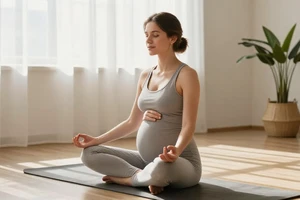
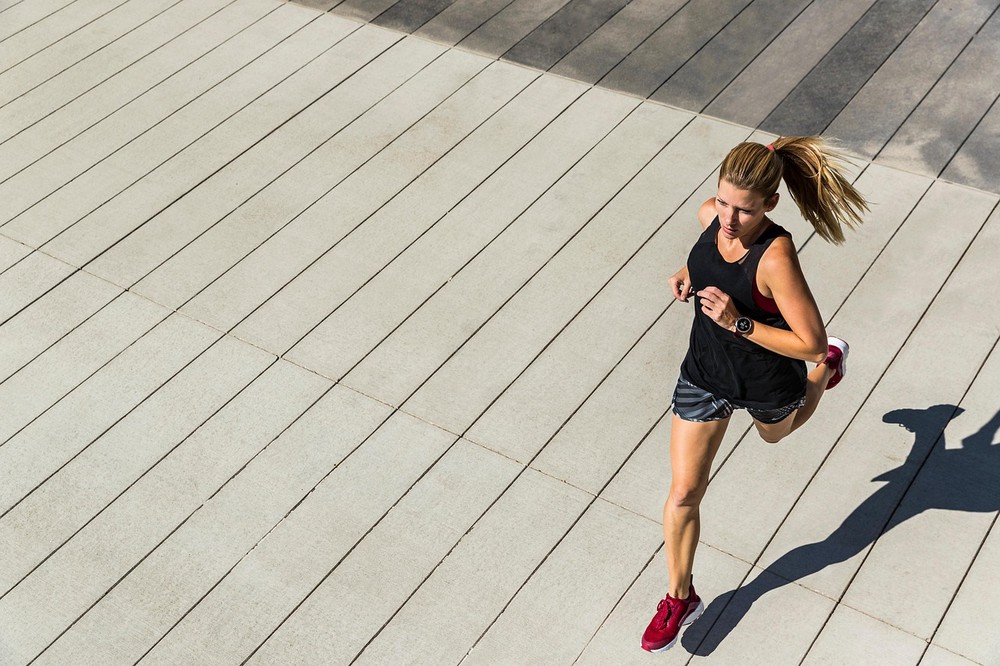
You step onto the mat for your yoga practice, and something feels off. In Warrior III, that standing leg wobbles. In Tree Pose, you grip the wall more than you'd like. If you're over 50 and a dedicated runner, this isn't a fluke—it's a predictable pattern. Running builds endurance, bone density, and mental grit, but it also tightens certain muscle groups and dulls the subtle neuromuscular cues your body needs for balance. This article explains why running and yoga over 50 can create a balancing act, and what you can do about it.
The Running-Yoga Tension After 50
Running is a repetitive, forward-moving activity. Every stride shortens your hip flexors, tightens your hamstrings, and locks your ankles into a limited range of motion. Meanwhile, yoga demands hip mobility, hamstring flexibility, and ankle stability in all directions. After 50, your body's natural recovery slows, and these structural imbalances become more pronounced. The result? Your proprioception—your brain's awareness of where your body is in space—gets a little fuzzy.
Balance in yoga isn't just about strength. It's about the conversation between your ears, your eyes, and the tiny muscles in your feet. Running tends to override that conversation with a single, repetitive signal: push forward, land, repeat. Over time, the stabilizer muscles in your hips, glutes, and feet can become underactive, while the prime movers (quads, hamstrings, calves) take over. On the mat, this shows up as a shaky standing leg.
Think of balance as a three-legged stool: strength, mobility, and sensory feedback. Running overdevelops one leg while the other two weaken.
Key Structural Changes That Affect Your Balance
Hip Flexor Tightness and Glute Inhibition
When you run, your hip flexors contract thousands of times to lift your knees. After years of this, they can become chronically short. Tight hip flexors send an inhibitory signal to your glutes—the very muscles you need to stabilize your pelvis in standing balances like Half Moon or Dancer's Pose. If your glutes aren't firing properly, your center of gravity shifts, and your body recruits smaller, less efficient muscles to compensate. That compensation shows up as shaking, fatigue, or a sudden loss of balance.
Hamstring and Calf Rigidity
Running strengthens your hamstrings in a shortened, eccentric contraction as they decelerate your leg. But it doesn't often stretch them through a full range. Similarly, your calves work hard in toe-off but rarely get the lengthened stretch needed for poses like Downward-Facing Dog or even a simple forward fold. When your hamstrings and calves are tight, they pull on your pelvis, tilting it posteriorly (tucking the tailbone). A tucked pelvis compromises your alignment in standing balances, making it harder to find a stable foundation.
Ankle Proprioception Drift
Your ankles are the first point of contact with the ground. In running, they move primarily in one plane (flexion and extension). In yoga, your ankles must also roll through inversion, eversion, and rotation. After 50, the small stabilizing muscles in the feet and ankles can become deconditioned for this variety. This isn't just about flexibility—it's about sensory input. The nerves in your feet send constant information to your brain about pressure and position. If they've been tuned to a single running gait, their signal fidelity drops on the yoga mat.
Neuromuscular Adaptation: Why Your Brain Struggles to Switch Modes
Your brain optimizes for what you do most. If you run four times a week and practice yoga once, your neural pathways for stability during single-leg stance are under-trained. Meanwhile, your brain is very good at the rhythmic, bilateral movement of running. When you ask it to slow down, stand on one leg, and hold still, the neural signals aren't as crisp.
After 50, neuroplasticity (the brain's ability to form new connections) is still active, but it requires more repetition and focus. This means that simply going through the motions of a yoga class may not be enough to retrain your balance. You need deliberate, mindful practice that challenges your proprioceptive system in new ways.
Practical Steps to Rebuild Balance for Runners Over 50
- Warm up the hips and glutes before your yoga practice. Try supine figure-four stretches (thread the needle) and glute bridges with a slow lift. Activating the glutes before standing poses gives your stabilizers a fighting chance.
- Add balance-specific drills off the mat. Stand on one foot while brushing your teeth. Practice single-leg deadlifts with a light weight. This type of training transfers directly to yoga.
- Stretch the calves daily. A tight calf limits ankle dorsiflexion, which makes it harder to find stability in poses like Warrior II. Use a down-dog pedal stretch or a simple wall calf stretch for 30 seconds per side.
- Modify your yoga focus. Instead of trying to hold every balance for five deep breaths, reduce the duration and repeat the pose more often. Two attempts of five seconds each builds neural patterns faster than one shaky 30-second hold.
- Use props strategically. A wall, a block, or a chair is not a crutch—it's a tool to teach your body the correct alignment. For example, practice Tree Pose with your back against a wall to feel neutral pelvis alignment before moving away from support.
When to Be Patient With Yourself
If you've been running for decades, your body has adapted beautifully to that sport. Over 50, those adaptations take longer to remold. You might feel that your balance is worse than it was at 40—and that's normal. The combination of age-related decline in fast-twitch muscle fibers, slower nerve conduction, and cumulative tightness from running creates a perfect storm. But it's a storm you can navigate. Consistency in a targeted practice—two to three times per week—will yield noticeable improvement in six to eight weeks.
Remember: balance in yoga is not about perfection. It's about the graceful wobble you recover from. Every time you steady yourself, you build a stronger nervous system and a more resilient body.