
You step onto your mat, eager for the gentle movement and deep breathing that prenatal yoga promises. But halfway through a modified Warrior II, a familiar ache radiates across your lower back. It's frustrating—and for many expecting moms, it feels counterintuitive. Shouldn't yoga, especially a prenatal class, be relieving stiffness, not causing it?
If your lower back flares during practice, you are not alone—and you are not doing anything wrong. The truth is that pregnancy fundamentally alters your biomechanics, and some classic yoga postures (even gentle ones) can inadvertently trigger that deep aching sensation.
Here are three expert-backed reasons why lower back pain shows up in prenatal yoga, along with practical cues to help you stay comfortable on the mat.
1. The pelvic tilt trap: anterior pelvic tilt overloads the lumbar spine
By the second trimester, your growing belly shifts your center of gravity forward. To compensate, your pelvis naturally tilts forward—a position called anterior pelvic tilt. This shortens the hip flexors and compresses the small joints in the lower back.
When you practice standing poses like High Lunge, Crescent Moon, or even simple Squats, you may unknowingly exaggerate this tilt by tucking your tailbone under or arching your lower back to “open the hips.” That added compression can irritate the facet joints and strain the surrounding muscles.
The fix: Instead of tucking the tailbone, cue a subtle posterior tilt—imagine wrapping the front of your pelvis upward like a scoop. Keep your ribs stacked over your hips in standing poses. A simple wall check: press your low back gently toward a wall in Mountain Pose before moving into your flow.
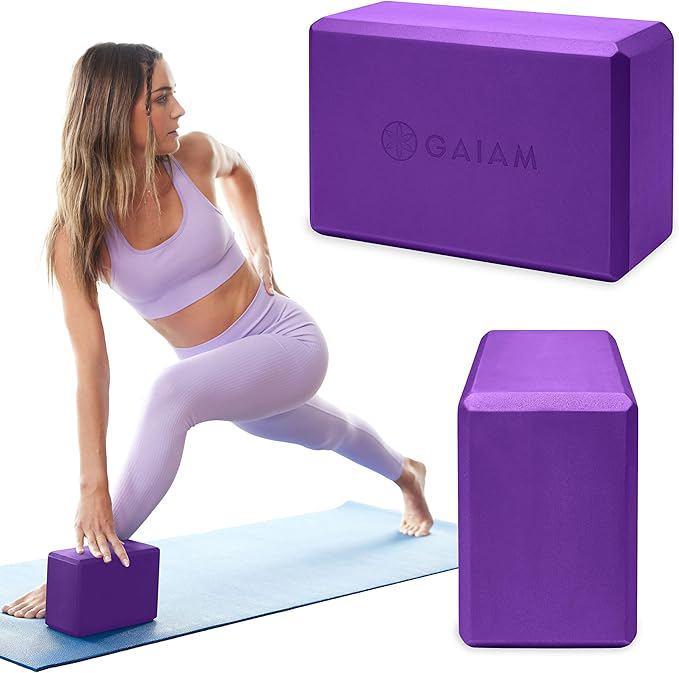
“Think less about deepening a pose and more about lengthening your lower back. If a forward fold feels pinchy, place your hands on blocks and keep a micro-bend in the knees.” — adapted from prenatal yoga therapist Jane Chen, DPT
2. Relaxin is real: joint laxity destabilizes the sacroiliac joint
The hormone relaxin peaks during the first trimester and stays elevated throughout pregnancy. Its job is to loosen ligaments—especially in the pelvis—to prepare for birth. But relaxin doesn't only affect the pubic symphysis; it also loosens the sacroiliac (SI) joints, which connect your sacrum to your pelvis.
When those ligaments become lax, the SI joint can become unstable. Asymmetric poses—think Low Lunge, Pigeon, or Tree Pose—can cause one side of the pelvis to shift slightly. That instability can irritate the nerves and ligaments around the sacrum, producing a sharp or dull ache on one side of the lower back.
The fix: Keep poses symmetrical whenever possible. Avoid deep, asymmetrical hip openers like full Pigeon during the second and third trimesters. In supine (lying-down) poses, place a yoga block or folded blanket under one hip if lying on your side to keep the pelvis level. And in standing balance poses, keep your standing leg soft and use a wall for support.
3. Weak deep core and glutes shift the load to your low back
As your belly expands, the rectus abdominis (the “six-pack” muscles) lengthens and can become less effective at stabilizing the spine. At the same time, your gluteal muscles naturally may become less active due to altered gait and prolonged sitting during pregnancy.
Without strong glutes and a functional deep core (transversus abdominis and pelvic floor), your lower back erector muscles take on a heavier load during bending, lifting, and even holding a plank. A prenatal yoga sequence with lots of Cat-Cow, Child's Pose, or standing flows can quickly fatigue those lower back muscles if they are the only line of defense for stability.
The fix: Build your practice around core engagement that doesn't compress the belly. Before each pose, exhale and gently draw your belly button toward your spine without holding your breath. Add glute activation in Bridge Pose (feet hip-width apart, press into the heels) and in all fours position by lifting one bent knee toward the ceiling (fire hydrant) while keeping the core engaged. Strengthening the glutes and deep core off the mat between yoga sessions also helps—consider pelvic tilts on a large exercise ball or standing hip hinges with a neutral spine.
When lower back pain signals something else
While the three causes above are common and manageable, persistent or sharp pain—especially on one side—may indicate sciatica or sacroiliac joint dysfunction that needs individual assessment. If the pain radiates down your leg or is accompanied by fever, contractions, or vaginal bleeding, stop your practice and contact your healthcare provider immediately.
Prenatal yoga is meant to support your changing body, not fight against it. Listen to your body's signals and modify without apology. A few small adjustments can transform a painful practice into a genuinely supportive one.