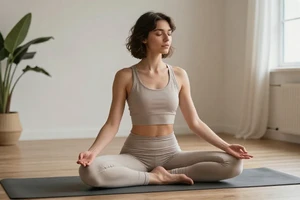
You’ve committed to your mat, flowing through sun salutations and holding poses with determination. Yet, week after week, that forward fold feels just as far away, and your hips seem no more open. The frustration is real, and it’s a shared experience for many beginning their yoga journey. Often, the culprit isn’t a lack of effort, but a subtle, ingrained habit that quietly undermines your progress toward greater flexibility.
This common mistake isn't about skipping practice or not trying hard enough. It's about how you breathe within the shape of a pose. More specifically, it's the tendency to hold your breath or breathe in a shallow, restricted way when you meet an edge of tension. That unconscious breath-holding acts like a parking brake on your nervous system, signaling your body to protect and resist rather than release and lengthen.
Why Breath Is the Bridge to Your Muscles
Flexibility isn't just about muscle length. It's a conversation between your muscles and your nervous system. Your nervous system's primary job is to keep you safe. When you push into a stretch and simultaneously hold your breath, you create a stress signal. Your body interprets this combination—physical tension plus breath restriction—as potential danger. In response, it triggers the stretch reflex, causing the very muscles you're trying to lengthen to contract protectively. You're essentially fighting against your own biology.
Conscious, steady breathing does the opposite. A full, rhythmic breath tells your nervous system that you are safe and in control. With each exhale, there is a natural physiological softening that occurs in the body, a slight down-regulation of tension. This allows the golgi tendon organ, a sensory receptor in your muscles, to override the stretch reflex and permit a gradual release. The breath isn't just accompaniment; it's the direct line to unlocking greater range of motion.
Recognizing the Pattern (And How to Break It)
So, how do you know if you're making this mistake? The signs are often physical and mental. You might notice your shoulders creeping up toward your ears in a seated fold, your jaw clenching in pigeon pose, or your face contorting in a deep lunge. Mentally, you may find yourself counting down the seconds until the teacher releases the pose, or you might be strategizing your exit rather than inhabiting the present sensation.
The correction is simple in theory but requires mindful practice. The next time you come into a pose that challenges your flexibility, pause and audit your breath. Don't try to force a dramatic change. Simply observe.
Let your breath be longer and smoother than the pose is deep.
If you find it has stalled, gently initiate the cycle again. Inhale to create a sense of space and lift, even if it's microscopic. As you exhale, consciously allow that breath to flow through the area of tightness, not pushing deeper, but softening the effort around the edges. Imagine your breath moving into the sensation.
A Practical Breath-Focused Drill
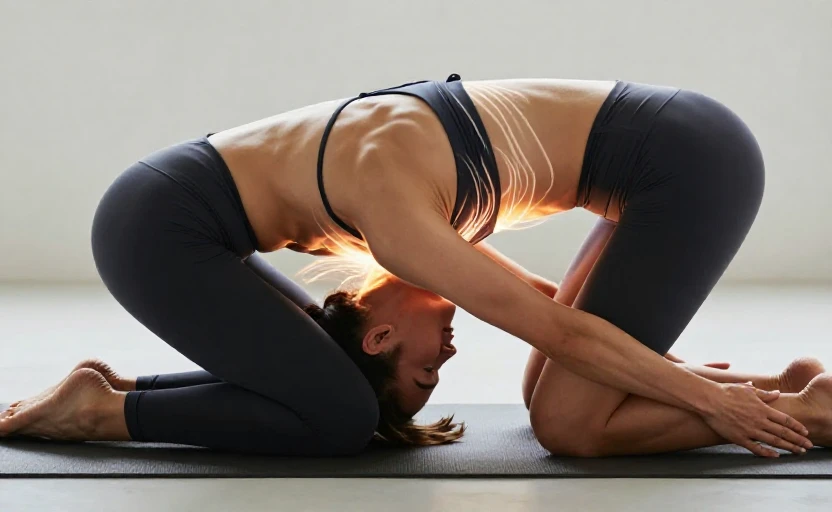
Try this in a simple forward fold (Uttanasana). Stand tall, take a full inhale, and as you exhale, hinge forward. Once you're in your fold, with knees softly bent, place your hands on your shins. For the next two minutes, do not try to go any deeper. Your only intention is to breathe fully and evenly. Feel your spine lengthen slightly on each inhale. Feel your hamstrings and back release on each exhale. Notice how the pose changes when you stop doing and start breathing.
Supporting Your Flexibility Beyond the Mat
While breath is the master key, other lifestyle factors influence your flexibility gains. Consistency matters more than marathon sessions; shorter, more frequent practices create better neuromuscular adaptation than one long, intense weekly class. Hydration is also crucial, as well-hydrated muscle tissue is more pliable. And patience is non-negotiable. Flexibility is a slow, non-linear journey. Some days will feel open, others tight—this is normal and not a sign of failure.
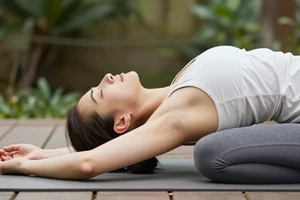
It’s also wise to balance your active yoga practice with modalities that encourage passive release. This doesn't mean stretching more, but rather giving your muscles complementary signals to relax fully.
Ultimately, re-framing your approach from “pushing into a stretch” to “breathing into a shape” can transform your practice. It shifts the experience from one of striving to one of exploration. The flexibility will come, not because you forced it, but because you created the inner conditions of safety and ease that allowed your body to naturally let go.