You’ve just finished a satisfying run. Your muscles are warm, your heart rate is up, and you know you should stretch. So you find a spot, maybe lean against a tree or sit on the grass, and hold a few static stretches for your hamstrings, quads, and calves. It feels like the right thing to do—the responsible runner’s ritual. But what if this well-intentioned habit is actually working against your long-term goals for suppleness and ease of movement?
The mistake isn’t stretching itself. The problem lies in when and how you’re doing it immediately after your run. Many runners conflate post-run cool-down with dedicated flexibility work, using the same static holds for both purposes. This approach often sells your flexibility gains short.
Why Your Post-Run Static Stretch Might Not Be Enough
Think of your muscles and connective tissues like warm taffy. After a run, they are pliable. Holding a stretch for 20-30 seconds at this point feels good and does provide a temporary increase in range of motion. It helps signal to your nervous system that it’s safe to relax, which is excellent for cooling down.
However, this temporary gain is largely neurological. Your body is allowing a bit more length because the muscles are warm and fatigued, not because you’ve created a lasting structural change. For actual, long-term improvements in flexibility—the kind that makes your stride longer, your movements more fluid, and reduces that persistent tightness—you need a different stimulus.
The cool-down stretch and the flexibility session have different jobs. Confusing them means neither gets done properly.
Relying solely on these brief, fatigued-state stretches means you’re likely missing the optimal window for creating adaptation. You’re also probably not spending enough time under tension to encourage the tissues to remodel over weeks and months.
The Missing Ingredient: Loaded Flexibility
This is the core concept many runners overlook. Flexibility isn’t just about passive length; it’s about usable range of motion. Can you control your body at that end range? If not, your nervous system will wisely keep you from going there to prevent injury.
Static stretching post-run is passive. You’re using gravity or a gentle pull to take a muscle to its end range. For building real, functional flexibility, your muscles need to be actively engaged within that stretched position. This is sometimes called active isolated stretching or loaded stretching.
Imagine your hamstring stretch. Instead of just leaning forward and holding, try this: lie on your back, loop a strap around your foot, and extend your leg up. Now, gently press your heel toward the ceiling against the slight resistance of the strap for 5 seconds, then relax and use the strap to pull the leg a fraction closer. Repeat. You’ve just actively engaged the muscle in the stretched position, which sends a stronger signal for adaptation.
How to Structure Your Stretching for Better Results
To fix the routine mistake, you don’t need to stretch more; you need to stretch smarter by separating the intentions.
Phase 1: The Immediate Cool-Down (0-10 minutes post-run)
This is for promoting recovery and easing the transition to rest. Keep it dynamic and gentle.
- Keep moving: Walk for 3-5 minutes.
- Dynamic flows: Perform 5-10 slow, controlled leg swings (forward/back and side-to-side), some torso twists, and ankle circles.
- Brief static holds (optional): If you crave a static stretch, limit it to 2-3 key areas and hold for only 15-20 seconds. This is for feel-good release, not structural change.
Phase 2: Dedicated Flexibility Work (Separate time or much later)
This is your true flexibility session. Do it at a separate time of day, or at least 2+ hours after your run when you are warm but not fatigued. A warm shower or light cardio can be a good primer.
- Focus on active engagement: Use the method described above—gentle contraction in the stretched position.
- Hold for longer duration: Aim for cumulative time under tension. Try 3 sets of 30-45 second holds for each major muscle group, using active engagement at the beginning or throughout.
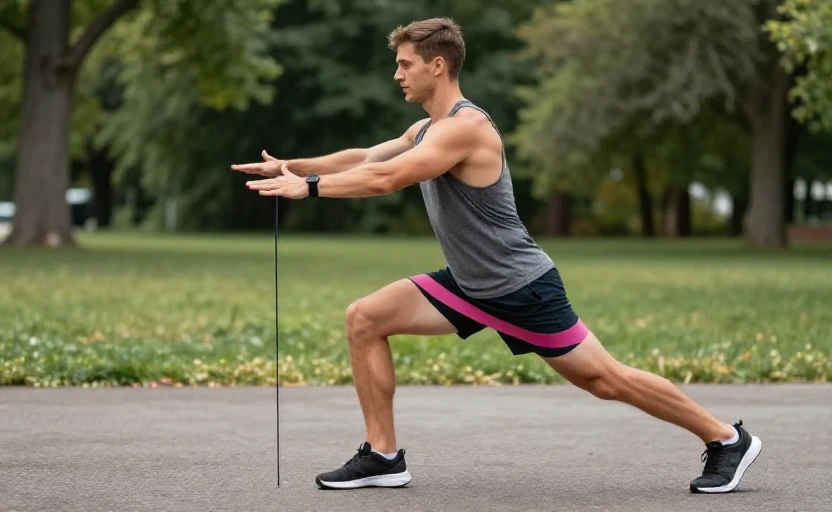
- Incorporate mobility: Blend stretches with mobility drills like deep lunges with rotations, or cat-cow poses for the spine.
The separation is key. It allows you to give focused attention to improving range of motion without the interference of fatigue.
Signs You’re Making the Mistake
How can you tell if your current routine is limiting you? A few clues:
- You feel just as tight the next day, despite always stretching after runs.
- Your range of motion hasn’t measurably improved over several months.
- You feel unstable or weak at the edge of your stretch.
- Stretching is always a rushed, box-ticking exercise at the end of a workout.
Breaking a long-held habit can feel counterintuitive. But by distinguishing between cooling down and building flexibility, you give each process the space to work effectively. Your post-run routine becomes a true recovery tool, and your dedicated flexibility work becomes a powerful driver of change. The result isn’t just more supple muscles—it’s a smoother, stronger, and more resilient running body.