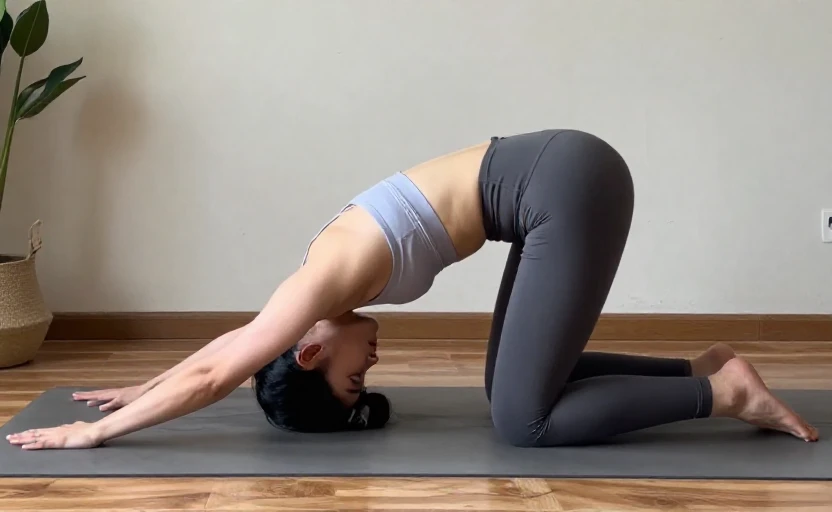
You unroll your mat in a quiet corner, ready to find a little peace and movement. Home yoga is a sanctuary, a chance to listen to your body without the backdrop of a studio. Yet, sometimes, that private practice ends not with a sense of ease, but with a familiar, nagging ache in the lower back. This discomfort isn't a sign you're "bad" at yoga; it's often a signal that a single, common habit has crept into your routine.
The mistake isn't about a lack of flexibility or strength. It's far more foundational. In the absence of a teacher's watchful eye, we tend to prioritize the shape of a pose over the sensation of it. We see a picture of a forward fold and think, "I must touch my toes." We see a warrior and think, "My front knee must be at a perfect 90 degrees." This visual pursuit, this drive to achieve an external form, almost always comes at the expense of the spine's natural, healthy alignment.
Where Does the Strain Actually Come From?
Back strain in home yoga typically originates from the lumbar spine, the five vertebrae in your lower back. This area is naturally curved inward (lordosis), which helps with shock absorption. However, when we force movement, we often compromise this curve, either by over-flattening it or by over-arching it.
The primary culprit is a misunderstanding of engagement. Many believe that to protect the back, they must simply "be careful." In reality, protection comes from active, intelligent support from the surrounding musculature—specifically, the core and the glutes. When these muscle groups are passive, the fragile ligaments and joints of the spine bear the full load of movement, leading to compression and strain.
Your practice is about feeling, not just form. If you can't breathe deeply and comfortably in a pose, that's your body's first cue to reassess.
The Central Mistake: Sacrificing Length for Depth
Let's name the routine mistake clearly: you are likely compromising the length of your spine to achieve a greater range of motion. This trade-off—length for depth—is the engine of most back strain.
Imagine Uttanasana, a standing forward fold. The instinct is to bend from the upper back to get the head closer to the knees, rounding the spine like a hunched comma. In this rounded position, the vertebrae are compressed at the front, and the discs and muscles at the back are overstretched. The goal, however, is to maintain a long, neutral spine, even if it means your hands only reach your shins. The hinge must come from the hips, not the waist.
This same pattern appears in countless poses:
- Downward-Facing Dog: Pushing the heels to the floor by rounding the upper back, rather than keeping the spine long and sending energy back through the hips.
- Warrior I & High Lunge: Over-arching the lower back to lift the arms high, instead of grounding the tailbone and engaging the lower belly.
- Seated Forward Fold: Rounding over to grab the feet, pulling on the lumbar spine.
How to Correct the Pattern
Relearning this requires a shift from a visual checkpoint to a tactile one. Before you move deeper into any pose, ask yourself: Can I feel the space between each vertebra? Is my spine growing longer, not shorter? Use your breath as a guide. An inhale should create a sense of expansion along the entire column.
Building Your Support System: Core is More Than Abs
"Engage your core" is common advice, but it's often misinterpreted as "suck in your stomach." True core engagement for spinal protection is subtler and more encompassing. It involves the deep transverse abdominis (your body's natural corset), the pelvic floor, and the multifidus muscles along the spine itself.
A simple way to access this is through mindful breathing. Lie on your back with knees bent. Place one hand on your lower belly. Inhale deeply, letting your belly rise. As you exhale, gently draw your lower belly inward, as if softly zipping up a tight pair of pants, without flattening your lower back into the floor. Maintain that gentle, supportive engagement as you breathe. This is the feeling you want to maintain throughout your practice—not a hard clench, but a conscious support.
Practical Adjustments for Common Poses
Apply this principle of length-before-depth with these specific modifications.
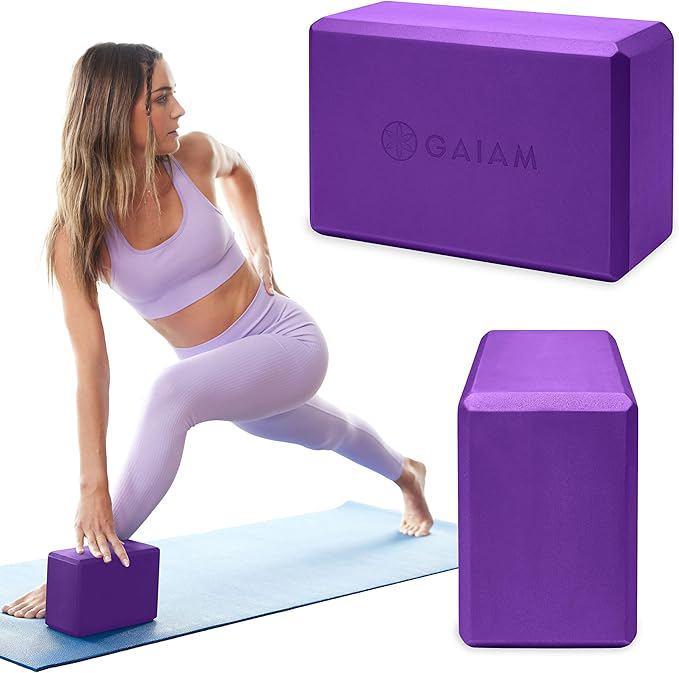
In Forward Folds (Standing or Seated): Focus on hinging from the hip joints. If your hamstrings are tight, bend your knees generously. Let your torso rest on your thighs. The goal is a flat back, not straight legs. You can place your hands on blocks to avoid the pull into the round.
In Backbends Like Cobra or Upward Dog: The tendency is to dump into the lumbar spine. Instead, initiate the lift from your upper back. In Cobra, keep your pubic bone and lower ribs on the floor, and use your back muscles to lift your chest forward and up, not just up. Keep your glutes soft to avoid compressing the sacrum.
In Twists: Always lengthen the spine upward on an inhale before you rotate on an exhale. Imagine you are wringing out a long towel, not a short, crumpled one. If seated, sit on the edge of a folded blanket to help keep the spine tall.
Your yoga mat is a laboratory, not a stage. It's the place to experiment with what support feels like, not to perform a finished product.
Creating a Sustainable Home Practice
Beyond individual poses, your overall approach can safeguard your back. Always include a gentle warm-up—cat-cow stretches, pelvic tilts, and side bends—to awaken the spine. Balance your practice. For every forward fold, include a gentle backbend. For every twist to the right, twist to the left.
Listen to dull aches versus sharp pains. A dull ache might signal a muscle being worked; a sharp, pinching, or shooting pain is a clear "stop" signal. Most importantly, use props. Blocks, a strap, and a bolster are not crutches for beginners; they are tools of intelligence that allow everyone to find proper alignment and spinal length.
Your home practice is a gift you give yourself. By letting go of the external ideal and tuning into the internal experience of length and support, you transform it from a potential source of strain into a genuine source of strength and resilience for your entire back.



![Tumaz Yoga Strap/Stretch Bands [15+ Colors, 6/8/10 Feet Options] with Extra Safe Adjustable D-Ring Buckle, Durable and Comfy Delicate Texture - Best for Daily Stretching, Physical Therapy, Fitness](https://www.glowtheorylab.com/uploads/ad202604/d62cf3b7330d7d4a.webp)