For runners, the quest for better endurance often leads down a path of more miles, hill repeats, and tempo runs. Yet, a powerful tool for unlocking greater stamina might be found not on the track, but on the yoga mat. Integrating a consistent yoga practice into your routine can transform your running from the inside out, addressing the hidden limitations that hold you back.
The connection isn't merely about flexibility. It’s a deeper synergy where yoga’s focus on breath control, mental resilience, and structural balance directly combats the specific physical and mental fatigue runners face. This daily habit creates a foundation that allows you to run longer, recover more efficiently, and find a sustainable rhythm in your training.
How does yoga directly improve running endurance?
Endurance isn't just about cardiovascular fitness; it's about economical movement and resilience. Yoga builds endurance by targeting three core areas that running alone often neglects: breath efficiency, muscular stamina, and joint stability.
Running tends to promote shallow, chest-based breathing, especially as fatigue sets in. Yoga, particularly styles that emphasize pranayama (breathwork), trains you to breathe deeply and fully into your diaphragm. This practice increases your lung capacity and teaches you to maintain a calm, controlled breath pattern under physical stress. On a long run, this translates directly to better oxygen delivery to your muscles and a steadier pace, delaying the point where breathlessness forces you to slow down.
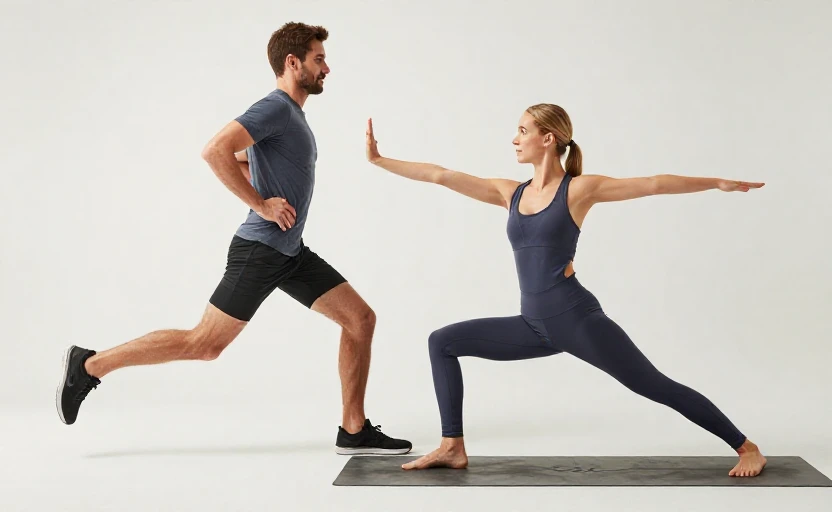
Furthermore, yoga poses build isometric strength—the kind of strength needed to hold your form when you’re tired. Poses like Warrior II, Chair Pose, and Plank develop endurance in the glutes, quads, and core. A strong core prevents your torso from collapsing late in a run, which conserves energy and protects your lower back. Stable hips and engaged glutes ensure your power transfer is efficient with every stride, reducing wasted motion that drains stamina.
Think of yoga as training the supporting muscles that keep your running engine finely tuned over distance.
Key yoga practices for runners seeking stamina
Not all yoga is created equal when the goal is endurance. A runner’s practice should prioritize foundation over extreme flexibility. The aim is to create resilient, balanced strength that supports repetitive motion.
Focus on a sequence that includes standing poses for leg and hip stability, core engagement for torso control, and mindful transitions that build full-body coordination. Flowing through a Sun Salutation with intention, for example, connects breath to movement while warming up the entire posterior chain—the calves, hamstrings, glutes, and back—which is crucial for powerful propulsion.
Incorporate these elements into a short daily routine:
- Dynamic Warm-up Poses: Cat-Cow to mobilize the spine, Low Lunges to open the hip flexors, and gentle Downward Dog to stretch calves and hamstrings.
- Strength-Holding Poses: Hold Warrior III for balance and glute activation, Bridge Pose for posterior chain strength, and a simple High Plank to build core endurance.
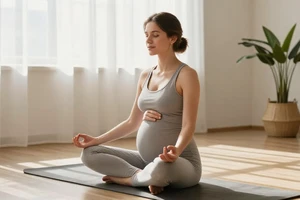
- Focused Breathwork: Spend 2-3 minutes practicing diaphragmatic breathing, either seated or lying down. Inhale for a count of four, expanding your belly, and exhale for a count of six.
What to avoid in your practice
As a runner, your body is already primed for forward motion and can be prone to certain imbalances, like tight hip flexors and hamstrings. Avoid pushing into deep, passive stretches that might compromise joint stability. The goal is controlled, active stretching that builds strength at the end range of motion, not achieving the most Instagram-worthy pose. Listen to your body; a sensation of engagement is good, sharp pain is not.
The mental endurance connection
The challenge of endurance running is as much mental as it is physical. Yoga cultivates the mental fortitude needed to push through the tough middle miles or maintain pace on a hill. The practice of holding a challenging pose while focusing on steady breath is a direct metaphor for enduring discomfort on a run.
This mindfulness training helps you observe sensations of fatigue without immediately reacting to them. You learn to acknowledge the urge to stop, and then gently return your focus to your breath and form. This skill is invaluable for managing the inevitable mental chatter during a long, solo effort, turning a run into a moving meditation rather than a battle of attrition.
Building your daily habit
Consistency trumps duration. A daily 15-20 minute yoga session is far more effective for building endurance than a single 90-minute class once a week. The daily practice reinforces neuromuscular patterns, maintains mobility, and provides a moment of mindful recovery.
Try anchoring your practice to an existing habit. A short sequence after your morning coffee, or a few key poses and breathwork following your evening run, can create a sustainable ritual. The focus should be on quality of movement and breath connection, not on completing a complex routine. Over time, this daily investment compounds, leading to noticeable improvements in how you feel during your longest runs.
By addressing the whole runner—body, breath, and mind—yoga provides a comprehensive toolkit for enhanced endurance. It’s the daily habit that doesn’t just add miles to your legs, but longevity to your running journey.