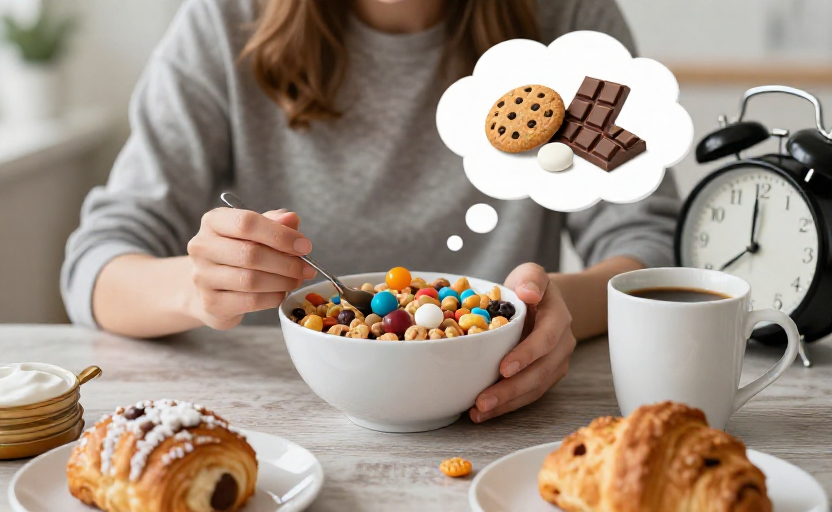
You reach for a snack. Maybe it’s something sweet—a cookie, a handful of candy, a square of chocolate. You tell yourself you just need it. But if you step back and look at your day, you might notice that the craving didn’t come out of nowhere. It was triggered by something you did earlier—something that felt completely neutral, even healthy.
One common daily habit can accidentally make sugar cravings much worse, and it has nothing to do with willpower. In fact, it’s a routine so many of us follow without a second thought: skipping breakfast—or eating a breakfast that’s almost pure carbohydrates with very little protein, fat, or fiber.
If you’ve ever felt a powerful urge for something sweet by mid-morning or mid-afternoon, your morning meal might be the reason. Here’s how that works, and what you can do instead.
Why skipping breakfast (or eating the wrong breakfast) backfires
Your body runs on blood sugar. When you wake up after six to eight hours of sleep, your glucose levels are naturally on the lower side. That’s normal. But when you skip breakfast entirely, your body enters a state of mild fasting stress. Cortisol, your primary stress hormone, rises in the morning to help you wake up. Without food, that cortisol spike can linger.
At the same time, your insulin sensitivity changes throughout the day. Research shows that eating a balanced breakfast helps stabilize blood glucose for hours afterward. When you skip it, your next meal—often lunch—can cause a sharper blood sugar spike, followed by a steep crash. That crash is when the brain starts screaming for quick energy, and the quickest source is sugar.
But even if you do eat breakfast, the composition matters enormously. A bowl of sugary cereal with low-fat milk, a bagel with jam, or a store-bought smoothie with fruit juice concentrate can spike your blood sugar almost as severely as skipping the meal entirely. Within an hour or two, your glucose plummets, and the sugar cravings return with intensity.
The takeaway: Skipping breakfast or eating a carb-heavy breakfast creates a blood sugar rollercoaster. The valleys in that ride are where cravings live.
The science of a blood sugar crash and sugar cravings
When blood sugar drops rapidly, the body releases adrenaline and cortisol to bring it back up. These stress hormones can trigger hunger signals even if you’re not truly hungry. You may feel shaky, irritable, or have difficulty concentrating. The brain, which runs primarily on glucose, interprets this as an emergency. It demands sugar—specifically refined sugar—because that’s the fastest fuel source available.
This isn’t a lack of discipline; it’s biology. The gut-brain axis is powerful. When your glucose dips, the brain releases neuropeptides that drive you toward high-calorie, high-sugar foods. You’re not weak-willed—your body is trying to survive what it perceives as an energy crisis.
Over time, repeated blood sugar swings can lead to insulin resistance, which makes cravings even more frequent and intense. Breaking that cycle often starts with how you break your fast in the morning.
What a craving-proof breakfast looks like
The goal is to keep blood sugar steady for five to six hours after eating. That requires a meal that contains protein, fiber, and fat—not just carbohydrates. Here are three reliable approaches:
- Protein-rich eggs with vegetables and avocado. The fat from the avocado and the protein from the eggs slow digestion and keep glucose stable.
- A smoothie that follows a 2:1:1 ratio: two parts vegetables or fruit, one part protein powder or Greek yogurt, one part healthy fat (like nut butter or chia seeds). Avoid pre-made mixes with added sugar.
- Savory oatmeal with a scoop of protein powder, a tablespoon of nut butter, and a handful of berries. The fiber from oats and berries helps buffer blood sugar spikes.
It doesn’t have to be complicated. Even a piece of whole-grain toast with two tablespoons of peanut butter and a sliced banana can work—because the protein and fat in the peanut butter blunt the glucose response from the toast and banana.
Other sneaky habits that fuel sugar cravings
While breakfast is the most common culprit, other daily habits can contribute to the same problem:
- Drinking sweetened coffee drinks first thing on an empty stomach—that liquid sugar hits the bloodstream fast, setting up a crash before lunch.
- Eating low-carb meals without replacing the calories with enough protein or fat. A salad with chicken but no avocado or oil can leave you hungry and craving sweets soon after.
- Not drinking enough water. Mild dehydration often signals as hunger, and many people interpret that as a need for something sweet.
- Excessive stress without a recovery routine. Chronic stress elevates cortisol, which increases appetite for high-sugar, high-fat comfort foods regardless of what you ate for breakfast.
Each of these habits, on its own, is manageable. But when combined with a breakfast that doesn’t support blood sugar stability, the craving pressure builds.
How to break the cycle without feeling deprived
First, check in with your morning meal for three days. Write down what you ate (or didn’t eat) and note when your first craving hit. If you’re consistently feeling a strong pull toward sweets by 10:30 a.m., your breakfast is the likely driver.
Next, try one change: add protein and fat to your morning meal. It doesn’t have to be perfect. A hard-boiled egg and a handful of almonds alongside your usual toast can make a real difference. Or swap a sugary cereal for one with less than 6 grams of sugar per serving, and add milk or yogurt with some fat in it.
Finally, plan for your afternoon slump. Even with a perfect breakfast, some people experience a natural dip in energy around 2 to 4 p.m. Instead of reaching for a soda or candy bar, have a snack with protein and fiber ready: an apple with a string cheese stick, or a small handful of nuts with a few dark chocolate chips.
The goal isn’t perfection. It’s about smoothing out the peaks and valleys so that when you do eat something sweet, it’s a conscious choice—not a biological reflex.