You settle onto your mat, breathe in, and begin to move. But as you flow through your practice, a familiar twinge or ache creeps into your neck. It’s a common experience, yet a confusing one. Is this a sign of a minor muscle strain that needs rest, or simply a cue that your alignment needs attention? Learning to distinguish between the two is a crucial skill for a safe and sustainable practice.
The neck, or cervical spine, is a delicate structure balancing a significant weight—your head. In yoga, we ask it to move in ways it doesn't in daily life: extending back in upward-facing dog, rotating in twists, or bearing load in poses like shoulder stand. Discomfort here shouldn't be ignored, but it also doesn't always mean you should stop. The key lies in listening to the specific language of your body.
The Language of Pain: Strain vs. Discomfort
First, let's reframe how we think about sensation. Not all pain is created equal. A sharp, pinching, or shooting pain is your body's red flag. It often feels localized, specific, and intense. A dull, broad ache or a feeling of stiffness, on the other hand, is more like a yellow light—a suggestion to proceed with caution and check your approach.
A true muscular strain often announces itself clearly. You might feel it as a sudden pull or twinge during a specific movement. The pain typically persists after your practice, perhaps feeling worse the next morning. It may be tender to the touch, and certain movements—like turning your head to check a blind spot while driving—can recreate the sharp sensation.
Sharp, pinching, or shooting pain is a red flag. A dull ache or stiffness is a yellow light for caution.
Pain from poor form, however, usually speaks in a different dialect. It's often a diffuse ache or fatigue that builds gradually during your hold. It frequently eases immediately when you come out of the pose or adjust your alignment. This type of sensation is more about muscular overload or joint compression than tissue injury.
Common Poses Where the Distinction Matters
Certain yoga postures are frequent contributors to neck confusion. Let's look at a few.
Downward-Facing Dog
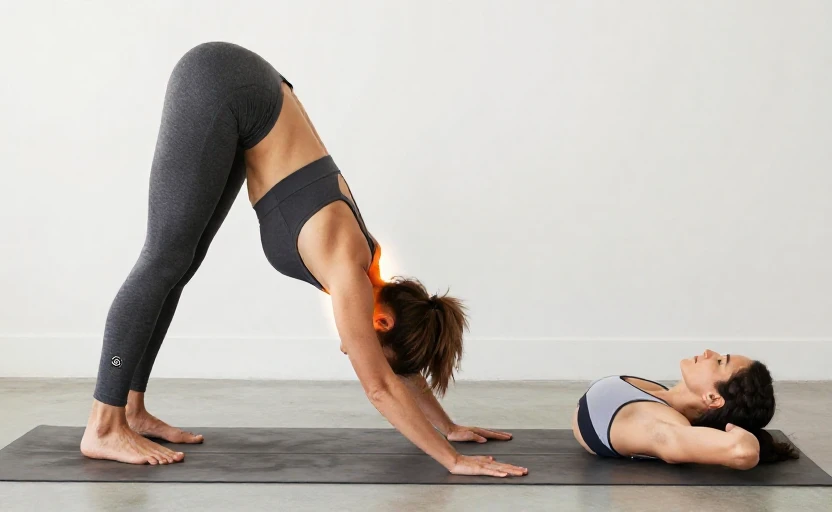
In this foundational pose, the neck should be a natural extension of the spine, gazing back toward the legs or navel. Neck strain here often comes from dumping weight into the shoulders and craning the head forward to look at the hands, which compresses the cervical vertebrae. The fix? Actively press the floor away to lift your shoulders, and let your head hang heavy between your arms. If you feel a stretch in your upper back and shoulders, that's likely good. A pinching feeling in the front or back of the neck is a sign to reposition.
Upward-Facing Dog and Cobra
The instruction to "look up" can be misleading. If your back extension comes primarily from crunching your neck back, you'll feel compression in the cervical spine. The lift should originate from your chest moving forward and up, with the neck following last. Imagine drawing your head back on a straight spine, like a turtle coming out of its shell, rather than dropping it backward. Sensation in the front of the throat or a pinching at the base of the skull often points to form.
Shoulder Stand and Plow
These poses place direct weight on the neck and shoulders. A feeling of intense pressure, difficulty breathing, or any radiating numbness or tingling into the arms is an immediate signal to come down carefully. These are advanced poses that require proper setup, shoulder engagement, and often props. A general rule: if you cannot maintain a natural cervical curve (a small space behind your neck) in these poses, you are compressing the spine and risk injury.
Twists
In seated or reclined twists, the movement should initiate from your core, spiraling up the spine. Yanking your head around to achieve a deeper twist forces the cervical vertebrae. Lead with your gaze, letting your head be the last part to turn. A pulling sensation along the side of the neck is often muscular overreach, not a beneficial stretch.
Your On-the-Mat Checklist
When you feel neck sensation, pause and run through this quick internal audit.
- Can I breathe easily? Pain or strain often constricts breath. If your breath becomes shallow or held, it's a major clue.
- Does it change when I micro-adjust? Slightly tuck your chin, lengthen the back of your neck, or soften your gaze. If the sensation diminishes, it was likely a form issue.
- Is it sharp or dull? Revisit the language of pain. Sharp, specific pain means back off. Dull, broad sensation means explore alignment.
- Does it linger? Discomfort from form usually vanishes when you exit the pose. Pain from strain often lingers, aches afterward, or feels worse later.
When to Step Back and When to Seek Help
Your practice is about cultivation, not conquest. If you suspect a strain—sharp pain that persists—the wisest yoga is the yoga of rest. Avoid poses that aggravate it for a few days. Gentle heat and mindful movement within a pain-free range can support healing. This isn't a setback; it's part of the practice of self-care.
Consult a healthcare professional, such as a doctor or physical therapist, if you experience:
- Pain that radiates down your arm or into your fingers.
- Numbness, tingling, or weakness in your arms or hands.
- Headaches originating from the base of your skull.
- Pain that doesn't improve with a few days of rest.
These could indicate issues beyond a simple muscle strain, such as nerve involvement or disc problems, and warrant proper evaluation.
Cultivating a Neck-Smart Practice
The ultimate goal is to build a practice that supports your neck. This means prioritizing foundational strength and mobility in the surrounding areas: your upper back, shoulders, and core. Poses that build scapular stability, like forearm plank and dolphin pose, create a supportive girdle for your cervical spine. Remember, your neck is often the victim of tension generated elsewhere.
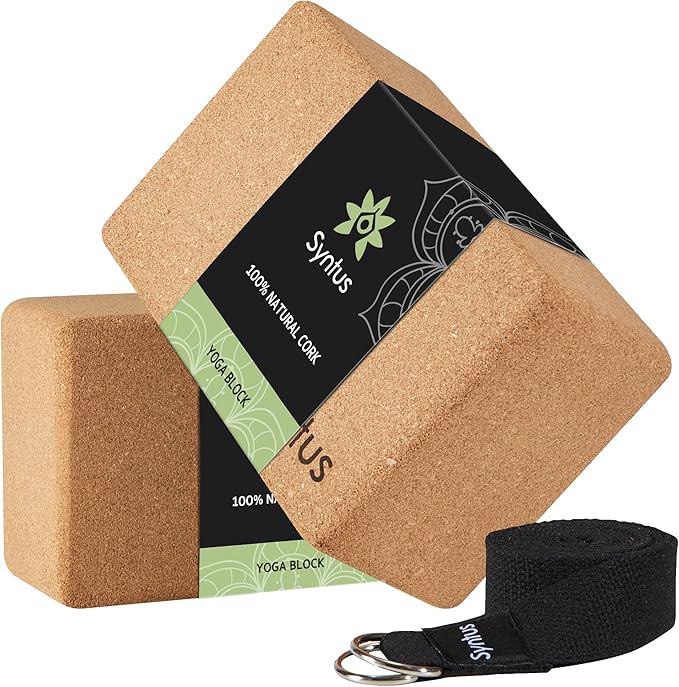
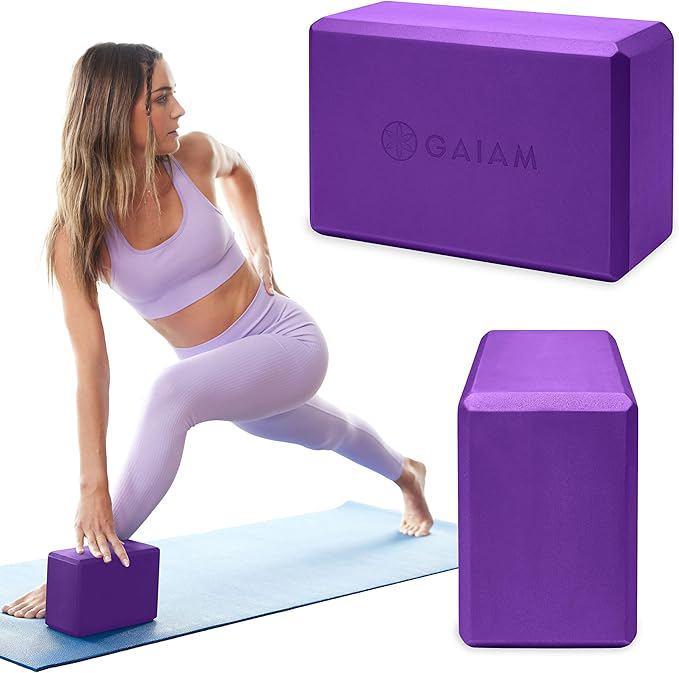
Embrace props and modifications without ego. A block under your forehead in child's pose, a folded blanket under your shoulders in shoulder stand, or keeping your gaze forward instead of up in a backbend are intelligent adaptations, not compromises. They allow you to experience the essence of the pose without the strain.
Listening to your body is the most advanced yoga skill there is. That ache in your neck isn't a criticism; it's communication. By learning its language—differentiating the shout of strain from the whisper of misalignment—you transform your practice from a series of shapes into a true dialogue of awareness and care.