That sharp twinge or dull ache in your knee can stop a runner in their tracks, both physically and mentally. Is it just a temporary strain that will ease with a day of rest, or is it a signal of something more serious that needs attention? Learning to listen to your body and interpret these signals is a crucial skill for any runner. The difference often lies in the specific location, quality, and timing of the pain, as well as what makes it better or worse.
Knee pain is incredibly common among runners, but it’s not a uniform experience. The knee is a complex hinge joint, and pain can originate from the kneecap, the tendons, the ligaments, the cartilage, or the surrounding muscles. A simple strain, often from overuse or a slight misstep, typically involves the muscles or tendons and follows a predictable pattern of irritation and recovery. A warning sign, however, often points to a structural issue or inflammation that won’t improve without a change in training or professional evaluation.
Listening to the Language of Your Knee
Your knee communicates through sensation. The first step in understanding its message is to pinpoint exactly where the pain is and what it feels like. Grab a mental notepad and start observing.
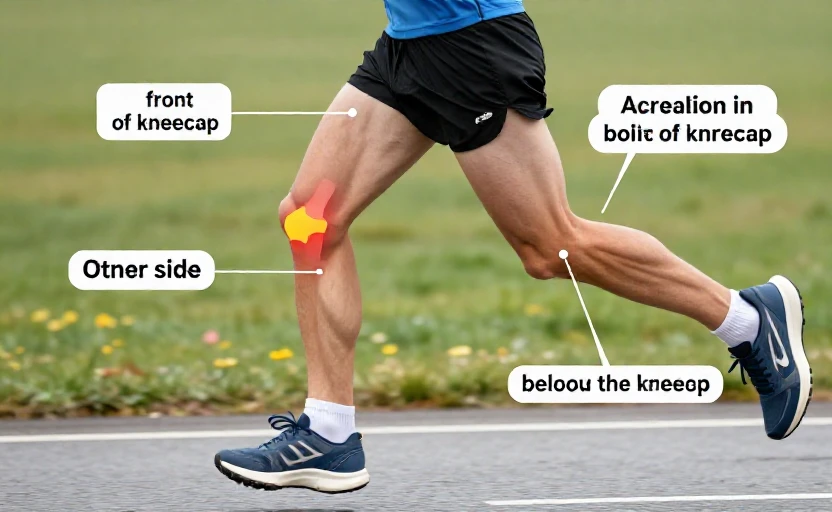
Location is your first major clue. Pain directly on or around the kneecap, especially when going downstairs or after sitting for long periods, often suggests patellofemoral pain syndrome, or “runner’s knee.” A sharp pain on the outer side of the knee could point to iliotibial band syndrome. Discomfort below the kneecap, at the top of the shin, is a hallmark of patellar tendonitis. Pain on the inner side might relate to the medial meniscus or pes anserine bursa.
The character of the pain tells another part of the story. A general, achy soreness that feels muscular and is symmetrical (you feel it in both knees after a long run) is more likely a strain or general fatigue. A sharp, stabbing, or pinching pain that occurs in one specific spot with each footstrike is a louder warning. A grinding, catching, or locking sensation, or a feeling of instability where the knee might “give way,” strongly suggests a mechanical issue inside the joint that needs assessment.
The Strain Pattern: What a Typical Overuse Injury Feels Like
A strain is your body’s way of saying you’ve asked a bit too much, too soon. It’s often a story of overuse rather than a single traumatic event. The narrative of a strain usually follows a recognizable arc.
The pain typically comes on gradually. You might notice it halfway through your run, or it may whisper to you the next morning as stiffness. It often feels like a dull ache or tightness around the knee. Crucially, it usually warms up. You start your run feeling it, but after a mile or so, it loosens and fades into the background, only to return later or after you’ve cooled down.
With a strain, rest is effective. Taking a day or two off, applying ice, and gently stretching often brings noticeable relief. The pain is directly tied to your activity level—it gets worse with more mileage or intensity and improves when you pull back. There’s usually no significant swelling, bruising, or deformity, just a localized soreness.
A key indicator of a simple strain is that it improves with a short period of rest and modified activity.
Red Flags: When Knee Pain is a Warning Sign
Some sensations are your knee’s way of waving a red flag. These signs suggest that continuing to “run through it” could lead to a more significant injury. Heed these warnings.
- Pain that worsens during the run: Unlike a strain that warms up, warning-sign pain intensifies the longer you go. It starts and just gets sharper or more persistent with every step.
- Swelling that appears quickly: Noticeable puffiness around the joint, especially if it comes on within a few hours of activity, indicates inflammation or fluid in the joint space.
- Pain at rest or night: Aching that wakes you up or bothers you while you’re sitting still, not just when active, is a signal to pay attention.
- Mechanical symptoms: Any catching, locking, popping (that is painful, not just noisy), or a true sensation of the knee buckling unpredictably.
- Localized, pinpoint tenderness: You can press one specific spot (like on a ligament or the joint line) and reproduce a sharp pain.
Your Immediate Response Plan
When pain strikes, your first actions can influence the healing timeline. For any new or concerning knee pain, consider this approach.
First, take a strategic pause. This doesn’t necessarily mean complete rest, but it does mean avoiding the activity that provokes the pain. Swap your run for cross-training that doesn’t hurt, like swimming, cycling, or using an elliptical machine. Apply a cold pack to the area for 15-20 minutes a few times a day, especially after any activity.
Pay close attention to the pain over the next 48-72 hours. Does the sharp pain settle into a dull ache? Does the swelling go down? Does walking on level ground become pain-free? If the symptoms are clearly improving and fit the “strain” pattern, you can begin a very gradual return to running after a few pain-free days.
If, however, the pain persists unchanged for more than a week, or if you experience any of the red flags mentioned, it’s time to seek a professional opinion. A sports medicine doctor, physical therapist, or qualified athletic trainer can provide a diagnosis and a targeted rehab plan.
Beyond the Pain: Looking at the Whole Picture
Knee pain is rarely just about the knee. It’s often the result of a chain reaction. Weakness or tightness in the hips and glutes can change your running form, placing extra stress on the knee. Flat feet or overpronation can also contribute. A sudden increase in mileage, intensity, or a change in running surface are common triggers.
Addressing knee pain for the long term often means looking upstream and downstream. Incorporating consistent strength training for your hips, glutes, and core can create a more stable platform for running. Don’t neglect flexibility work for your quads, hamstrings, and calves. And be mindful of your training progression—the 10% rule (not increasing weekly mileage by more than 10%) is a good guideline to prevent overuse.
Listening to your knee isn’t a sign of weakness; it’s a practice of intelligent running. By distinguishing between a minor strain that calls for a brief respite and a warning sign that demands respect, you empower yourself to run stronger and healthier for years to come.