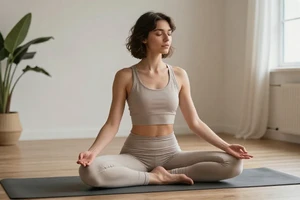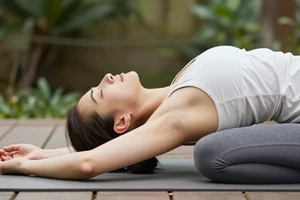
Finding your balance on the mat can feel different after 50. It’s not about achieving a perfect pose, but about building a steady, reliable foundation that supports you in every part of your life. The good news is that balance isn't a fixed skill you either have or don't; it's a dynamic sense you can cultivate with small, consistent actions woven into your day. These habits work quietly in the background, strengthening the connection between your feet, your core, and your focus, so when you step onto your yoga mat, your body is already prepared to find its center.
The journey to better balance begins far from the yoga studio. It starts with how you stand while brushing your teeth, how you navigate a curb, and how you carry your groceries. By integrating mindful movement into these ordinary moments, you train your proprioception—your body's internal GPS—making it more responsive and accurate. This approach is gentle, sustainable, and honors where your body is today, building confidence from the ground up.
Start with Your Foundation: Feet and Ankles
Your feet are your base. For balance, they need to be both strong and sensitive, able to feel the ground and make micro-adjustments. Begin by simply spending more time barefoot at home. Feel the texture of the floor, spread your toes, and practice shifting your weight slowly from your heels to the balls of your feet and back. This reawakens the neural pathways that may have grown lazy from constant support.
Try this while waiting for the kettle to boil: stand on one foot. Don't worry about holding it for long; even ten seconds is a win. If you need to, keep a fingertip on the counter. The goal isn't to be a statue, but to notice the tiny muscles in your standing ankle firing to keep you upright. Switch feet. This simple act, done daily, builds remarkable ankle stability.
Integrate Balance into Daily Routines
The most effective habits are the ones you don't have to schedule. Attach them to tasks you already do.
- While brushing your teeth: Stand on one leg. Alternate legs halfway through.
- Waiting in line: Practice a subtle weight shift. Rock gently from foot to foot, focusing on smooth control rather than speed.
- Washing dishes: Adopt a staggered stance, one foot slightly ahead of the other, and feel the engagement in your core as you stand there.
Balance is a conversation between your body and the space around it. The more you listen, the clearer the conversation becomes.
These micro-sessions add up without demanding extra time. They teach your brain and body to work together automatically, which is exactly what you need for a steady Tree Pose or Warrior III.
Strengthen Your Core Gently
A strong core is your body's central stabilizing pillar. For yoga beginners over 50, this isn't about crunches; it's about cultivating awareness and endurance in the deep abdominal and back muscles.
Focus on your posture throughout the day. When sitting, imagine a string lifting the crown of your head toward the ceiling, gently lengthening your spine. Engage your lower belly lightly, as if you were about to zip up a snug pair of pants. This subtle bracing, held for a few minutes at a time during seated work, builds core stamina.
Incorporate a brief bridge pose into your morning or evening routine. Lying on your back with knees bent, feet hip-width apart, slowly lift your hips toward the ceiling. Hold for a few breaths, then lower with control. This strengthens the glutes and lower back, crucial supporters for balance.
Train Your Gaze and Your Breath
Your eyes and your breath are secret balance tools. A darting, unfocused gaze can make you wobble, while a soft, steady gaze on a fixed point—a drishti in yoga—acts as an anchor.
Practice this off the mat. Choose a spot on the wall across the room and soften your focus on it while you stand on one foot. Notice how it steadies you. Your breath is equally important. Holding your breath creates tension and rigidity. Instead, cultivate a smooth, even breath during any balance challenge. The rhythm soothes your nervous system and allows for fluid adjustments.
Create a Supportive Environment
Safety builds confidence. Place a sturdy chair or clear a space near a wall in your main living area. Knowing you have a quick support within reach encourages you to practice those one-legged stands more often. Wear supportive, flexible shoes with a low heel when out, but prioritize barefoot time at home to let your feet work naturally.
Remember, progress in balance is rarely linear. Some days you'll feel rooted and solid; other days, you might feel a bit wobbly. That's perfectly normal. The habit itself—the daily return to these small practices—is the true victory. By honoring your body with consistent, mindful attention, you're not just preparing for yoga class. You're building a foundation of stability that will support every step you take.