You show up on the mat. You breathe. You flow. But if your sleep has been fragmented or too short, that same familiar sequence can feel like moving through sand. Many yogis focus entirely on alignment and flexibility while overlooking the single biggest factor that determines how a practice actually feels: recovery. Sleep tracking offers a surprisingly practical bridge between how you rest and how you move.
This isn't about obsessing over numbers or chasing a perfect score. It's about using the data your body already produces to make small, informed decisions about your yoga. When you understand what your sleep is telling you, you can adapt your practice in real time—protecting your nervous system on tired days and capitalizing on your energy when it's high.
Why sleep data matters for your yoga
Yoga is essentially a conversation between your nervous system and your muscles. Sleep regulates that conversation. During deep sleep, your body repairs tissue and clears metabolic waste from the brain. During REM sleep, it processes emotional stress. If you consistently miss either stage, your practice will reflect it: balance wobbles, muscles feel tighter, and your ability to stay present fades.
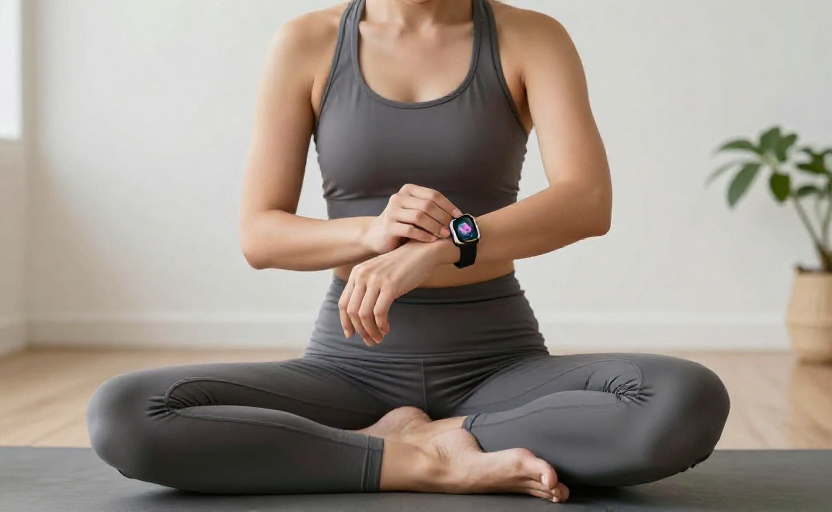
A sleep tracker — whether a ring, watch, or mat-based sensor — gives you a rough window into these stages. It's not a medical device, but it's good enough to spot trends. You don't need to understand every metric. Focus on three things: total sleep time, sleep consistency (bedtime and wake time), and resting heart rate.
Check your resting heart rate trend over a week. If it climbs 5–8 beats above your baseline without illness, you're likely under-recovered. That's your cue to practice a yin or restorative sequence instead of a vigorous vinyasa.
Reading your morning readiness score
Many sleep trackers produce a readiness or recovery score each morning. This score typically combines heart rate variability (HRV), resting heart rate, sleep duration, and sometimes temperature. Rather than taking it as gospel, use it as a loose guide for your yoga session.
Green light (80–100)
High readiness. Your nervous system is balanced and your muscles have had time to repair. This is the morning to challenge yourself. Try a peak pose practice, arm balances, or a longer hold in standing postures. Your body has the physiological capacity to build strength and range of motion today.
Yellow light (50–79)
Moderate readiness. You have some reserves, but you're not fully recovered. Ideal for a steady, moderate practice: a 40-minute flow with moderate pace, sun salutations, and gentle backbends. Avoid pushing into deep hip openers or headstands. Stay in the middle of your range, not the edge.
Red light (below 50)
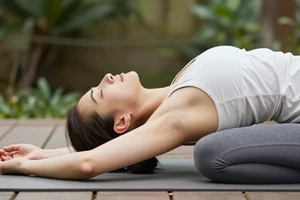
Low readiness. Your HRV is low, your resting heart rate is elevated, or you slept poorly. This is not a failure. It's a signal for restorative or yin yoga. Floor-based postures, long holds with bolsters, and forward folds. Breathwork such as extended exhales or 4-7-8 breathing can help shift your nervous system back toward rest-and-digest. Do not override the signal with caffeine and a vigorous practice.
Matching yoga style to sleep debt
Sleep debt accumulates when you get less than your optimal sleep duration for several nights in a row. A tracker that logs sleep duration can help you see this pattern. If you're carrying two or more hours of sleep debt — meaning you've lost that much sleep compared to your need over the prior three nights — your reaction time, coordination, and immune function all drop.
For most people, that means a slower, cooler practice. Instead of a power vinyasa, consider:
- A slow flow with longer holds in each pose
- Yin yoga with 3–5 minute passive stretches
- Yoga nidra or guided relaxation as your entire practice
- Pranayama sessions focused on exhale lengthening
If your sleep tracker shows you consistently hit 7–9 hours with good sleep efficiency (above 85%), your body is ready for more dynamic work. That's when you schedule your stronger asana practices, inversions, or faster-paced sequences.
Using HRV as a live feedback tool
Heart rate variability tracks the variation in time between heartbeats. In general, higher HRV indicates a more adaptable, resilient nervous system. Lower HRV suggests stress or fatigue. Most sleep trackers measure HRV during the night and give you a morning number, but you can also use it during practice.
Midway through your flow, pause in a standing forward fold or child's pose. Take a breath and check your tracker's live heart rate or HRV reading (if your device offers it). A heart rate that stays elevated even after a resting pose suggests your nervous system is still in fight-or-flight mode. That's a sign to dial back the intensity, not push through it.
What sleep consistency tells you about your routine
Irregular sleep schedules — different bedtimes and wake times every day — confuse your circadian rhythm. Over time, this keeps cortisol levels higher and melatonin release delayed. Your yoga practice becomes less effective because your body never fully knows whether it should be activating or resting.
Use your tracker's sleep schedule graph to check variation. If your bedtime shifts by more than 60 minutes on three or more nights per week, focus on a grounding evening practice to signal safety to your nervous system before bed. A 10-minute sequence of reclined twists, legs-up-the-wall, and slow breathing helps anchor your sleep rhythm naturally.
Practical limits: what trackers can't tell you
Sleep tracking is useful, but it has blind spots. Consumer wearables can overestimate deep sleep and underestimate light sleep. They can't diagnose sleep disorders. They also can measure movement-related disruption as waking from sleep, which may show false fragmentation if you change positions frequently.
Use the data to notice patterns, not to fixate on individual nights. A single low score means nothing. A trend over two weeks of declining HRV combined with low-quality sleep means you need to adjust your practice and possibly your sleep hygiene. Never use a sleep tracker as a substitute for feeling your own body. Your felt sense — how your joints, breath, and mood feel on the mat — is still the best guide. Sleep tracking simply makes that inner signal clearer.
Integrating sleep data into your yoga is ultimately about precision, not perfection. When you know you slept poorly, you can choose a calming practice instead of fighting through a challenging one. When you slept deeply, you can safely explore your edges. That alignment between rest and movement is what makes a practice sustainable for the long term.