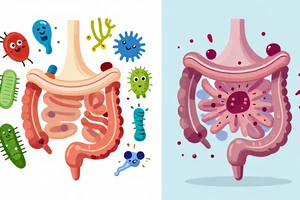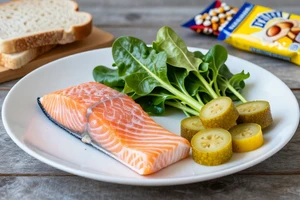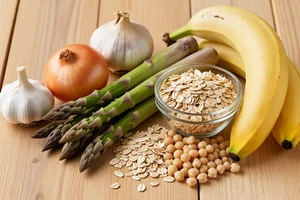

Prebiotics are the preferred fuel for your gut’s beneficial bacteria. A diet rich in these fibers can support a healthy microbiome, improve digestion, and reduce inflammation over time. But for people living with irritable bowel syndrome (IBS) or chronic bloating, the story isn’t always so straightforward. Many high-prebiotic foods are also packed with rapidly fermentable carbohydrates, which can trigger gas, cramping, and bowel urgency in sensitive guts — particularly in those with small intestinal bacterial overgrowth (SIBO) or a visceral hypersensitivity.
A common mistake is assuming that if a food is healthy for the general population, it’s automatically healthy for you. Here, we cover six prebiotic foods that frequently cause trouble for IBS and bloating-prone individuals, and how to tell if they’re worth keeping, modifying, or temporarily cutting out.
What exactly is a prebiotic and why might it backfire?
Prebiotics are non-digestible fibers that reach the large intestine intact, where bacteria use them for energy. That fermentation process produces gases like hydrogen and methane. For people with IBS, a normal volume of gas can stretch the bowel walls and trigger pain signals — sometimes with intensity that doesn’t match the actual amount of gas.
When gut motility is irregular (too fast or too slow), that gas gets trapped or builds up, leading to bloating and distension. So a prebiotic that’s normally gentle can become a problem for someone whose bowel is already sensitive or whose microbiome ferments carbohydrates very aggressively.
The six foods below appear on many healthy-eating lists because they’re rich in inulin, fructooligosaccharides (FOS), or galactooligosaccharides (GOS). But they’re also high-FODMAP foods — the group of carbohydrates most known to cause digestive distress in IBS patients. Let’s break down each one.
1. Garlic
Garlic is one of the most powerful prebiotic sources available thanks to its high inulin content. It feeds beneficial Bifidobacteria and has antimicrobial properties. However, garlic is also rich in fructans (a FODMAP) that are poorly absorbed in the small intestine. Even culinary amounts — a single clove — can cause bloating, gas, and cramping for many with IBS.
What to do about it: Replace raw or roasted garlic with garlic-infused oil (the FODMAPs are water-soluble but not oil-soluble, so the flavor remains without the fermentable carbs). For stir-fries or soups, try using a sprinkle of asafoetida or chives to mimic the savory kick.
2. Onions (including red, white, and shallots)
Onions are another classic prebiotic that double as a high-FODMAP irritant. They contain both fructans and FOS, making them a double threat for gas production. Even cooked or caramelized onions can provoke symptoms because they concentrate the sugars without breaking them down.
What to do about it: Use the green parts of spring onions/scallions only (the white bulb is higher in fructans). Garlic-infused oil or asafoetida again work well as substitutes in most savory dishes. If you tolerate small amounts, begin with a single teaspoon of cooked onion and observe your reaction over the next 4–6 hours.
3. Artichokes (especially Jerusalem artichokes)
Jerusalem artichokes (aka sunchokes) are notorious for causing gas even in people without digestive issues. They contain a specific type of inulin that ferments quickly and does not require peeling or cooking to activate that effect. Globe artichokes (the typical large artichoke) are less intense but still moderately high in fructans.
What to do about it: If you have IBS or bloating, completely avoid Jerusalem artichokes. For globe artichokes, limit yourself to the heart only — avoid the leaves and choke — and pair them with a protein and fat to slow digestion. Monitor your portion size: one small heart may be fine; three is likely too much.
4. Wheat and barley (bread, pasta, couscous, rye)
Whole wheat and barley are often recommended for their prebiotic effect due to their inulin and fructan content. Yet both are common IBS triggers. Modern wheat has been bred to have higher gluten levels and also higher fructans than older wheat varieties. Rye and barley are similarly problematic because of their galactan and fructan content.
What to do about it: Look for sourdough bread made with spelt or whole wheat that has been fermented for 24+ hours — the fermentation process breaks down some of the fructans. Short-grain white rice and oats are generally well-tolerated substitutes. For pasta, try a chickpea or lentil pasta in small portions (these do contain GOS but may be better tolerated than wheat for some people).
5. Legumes (chickpeas, lentils, beans, soybeans)
Legumes are exceptional prebiotic foods rich in GOS, raffinose, and stachyose — the same types of fibers that give them their famous “musical” reputation. For someone with IBS, even half a cup of lentils can cause severe bloating and pain. Canned chickpeas are slightly easier because the canning process leaches some of the oligosaccharides into the water, but they’re still high.
What to do about it: If you want to keep legumes in your diet, try these strategies: soak raw beans overnight (change the water twice), then cook thoroughly — this reduces GOS by about 40–50 percent. Use canned legumes, rinse them thoroughly with fresh water, and start with ¼-cup portions. Lentil soup where the lentils are cooked until very soft, pureed, and strained may remove enough fiber to be better tolerated, though it will also lower the prebiotic content significantly.
6. Cashews and pistachios
These nuts often appear in “healthified” snack mixes and dairy-free recipes because they’re rich in protein and monounsaturated fat. But cashews and pistachios contain relatively high amounts of fructans and GOS compared to macadamias, walnuts, or pecans. Just a handful (30 grams) of cashews can trigger bloating for many IBS patients.
What to do about it: Swap cashews and pistachios for low-FODMAP nut options: macadamias, pecans, peanuts, or walnuts (limit walnuts to 45 grams to stay safe). If you’re making a nut milk or cream, use almond milk or macadamia milk base instead of cashew base.
How to reintroduce these foods if you miss them
Cutting out prebiotic-rich foods for a short period (typically 4 to 6 weeks) on a low-FODMAP diet under the guidance of a registered dietitian can help quiet symptoms. After that phase, each food can be reintroduced one at a time over three days, starting with a very small portion (for example, one garlic clove in a meal, or two tablespoons of canned chickpeas). The goal is not to avoid them forever — many people find they tolerate certain prebiotic foods better after a gut rest period, or they find a “safe dose” that provides the prebiotic benefit without the downside.
A note for SIBO: If you have small intestinal bacterial overgrowth, even tiny amounts of prebiotic fibers can feed the bacteria in the small intestine itself, worsening symptoms. In that case, a more restrictive low-fermentation diet (like the Bi-Phasic Diet or select SIBO-specific protocols) may be needed before reintroducing any prebiotic foods. This is best done with a practitioner experienced in SIBO management.
The takeaway: prebiotics can wait until your gut is ready
The six prebiotic foods listed here — garlic, onions, artichokes, wheat/barley, legumes, and cashews/pistachios — cause problems for many people not because they are bad foods, but because a sensitive gut cannot handle their rapidly fermentable fibers. If you are struggling with IBS or bloating, you are not “failing” to eat healthily by avoiding them. Rather, you are giving your digestive system the chance to calm down. Once symptoms are controlled, you can test small doses to see whether your gut can eventually benefit from those prebiotic fibers again — and if so, in what form and portion.