You roll out your mat, flow through a careful sequence, and end with a long Savasana. You do everything right during practice. Yet, when your head hits the pillow at night, your mind races, your body feels wired, and restful sleep feels miles away. For dedicated yoga practitioners, this disconnect is frustrating—and surprisingly common.
The reality is that the habits you build off the mat often undermine the calm you cultivate on it. What you eat, when you move, and even how you breathe during the day can quietly sabotage your sleep architecture. Here are six daily habits that may be working against your nighttime rest, specifically for those who practice yoga regularly.
1. Evening Yin Yoga or Deep Stretching Too Close to Bed
Yin yoga and deep passive stretching are often prescribed for relaxation, but timing matters. While a gentle practice can be grounding, holding deep hip openers or intense forward folds for extended periods stimulates the deep fascia and the nervous system in complex ways. For some practitioners, this triggers a subtle neurogenic response—a slight increase in arousal—rather than the deep parasympathetic shift they expect.
If you are doing yin poses within 60 to 90 minutes of bedtime, you might be sending a mixed signal to your body. Instead, reserve deep yin for earlier in the day or at least two hours before sleep. A restorative practice with full support—bolsters under knees, blankets under the spine—is more appropriate for the pre-sleep window.
Reserve deep yin for earlier in the day or at least two hours before sleep.
2. Drinking Water Right Before Savasana
Hydration is essential, especially after a heated or vigorous practice. However, many yogis habitually chug water immediately before lying down for final relaxation, or worse, right before bed. This creates a double problem: the volume of fluid triggers nighttime urination (nocturia), and the rapid ingestion stimulates the digestive system when it should be winding down.
Hydrate steadily throughout your practice, not in a rush at the end. If you are practicing in the evening, finish your last intentional drink at least 45 minutes before you plan to sleep. This simple shift can dramatically reduce those 2 a.m. wake-ups.
3. Late-Day Caffeine from Unexpected Sources
Most yogis know that a latte at 5 p.m. is a bad idea. But caffeine hides in places you might not suspect. Pre-workout powders, certain herbal teas (yerba mate, guayusa, or strong matcha), dark chocolate, and even some “energy” electrolyte tablets contain enough caffeine to disturb sleep onset and reduce deep sleep.
If you practice in the late afternoon or evening, check the labels on your pre-practice snacks and supplements. Caffeine has a half-life of roughly five hours, meaning a modest dose at 4 p.m. can still be active at 9 p.m. For sensitive individuals, try a 2 p.m. cutoff for all caffeinated products, including chocolate with high cocoa content.
4. Intense Breathwork or Pranayama Before Bed
Not all breathing techniques are calming. Practices like Kapalabhati (skull-shining breath) or Bhastrika (bellows breath) are energizing and stimulating—they are designed to increase prana, alertness, and internal heat. Doing these right before bed is like drinking espresso before meditation.
Even some forms of Ujjayi breath, when practiced with strong effort and retention, can elevate heart rate variability in a way that interferes with sleep onset. Save vigorous pranayama for your morning or midday practice. In the evening, stick to simple diaphragmatic breathing, extended exhales (4-7-8 pattern), or a gentle Nadi Shodhana (alternate nostril breathing) without forceful retention.
Save vigorous pranayama for your morning or midday practice.
5. Checking Screens in Savasana (Yes, You)
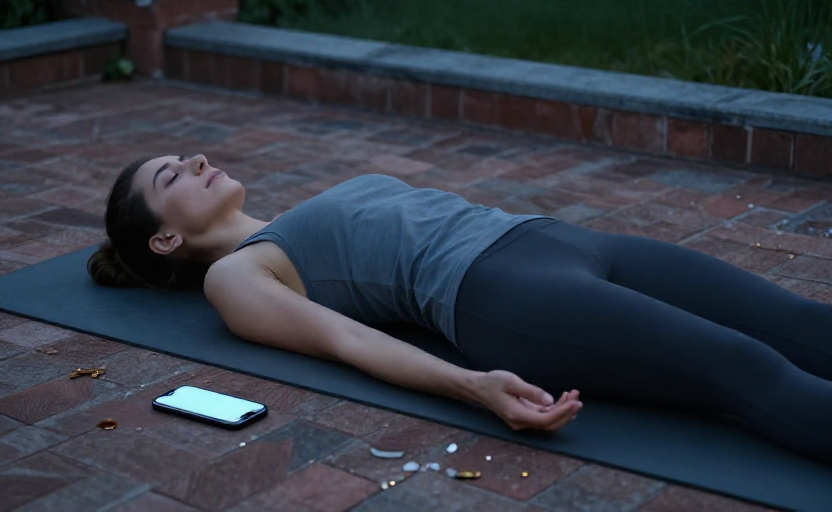
Modern yoga culture often includes snapping a quick photo or checking a message during the final relaxation. Even if you only glance at your phone for 30 seconds, the blue light exposure and cognitive activation break the relaxation response instantly. Your brain interprets the light and information as a signal that it is time to be alert, not to rest.
If you struggle with insomnia or delayed sleep onset, make the final five to ten minutes of your practice a completely screen-free zone. Leave your phone outside the practice room or turn it face-down on airplane mode. The benefits of Savasana are neurological—they require darkness and stillness to integrate.
6. Eating a Heavy Meal or High-Protein Snack Too Late
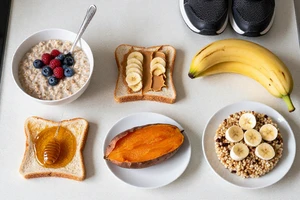
Yoga practitioners often follow a lifestyle that emphasizes clean eating, but timing matters as much as quality. Digesting a large meal—or even a protein-heavy snack like a whey shake or nut-based bar—requires significant metabolic energy. When your body is busy breaking down food two to three hours before sleep, your core temperature stays elevated, and your digestive organs remain active, both of which suppress melatonin production and disrupt the body's natural cooling process needed for sleep onset.
If evening hunger strikes, choose something very light and mostly carbohydrate, such as a small banana or a few dates. Avoid large volumes of protein, fat, or fiber within three hours of bedtime. This is especially relevant for yogis who practice in the evening and then eat a “recovery” meal immediately afterward.
How to Realign Your Daily Habits for Better Sleep
The good news is that these habits are subtle and reversible. You don’t need to overhaul your entire yoga practice or diet. Start by picking just one or two of the above adjustments—perhaps the water-timing or the pranayama swap—and observe the difference over one week. Sleep quality often improves faster than you expect when you stop fighting your body’s natural rhythms.
Remember that yoga is a holistic system. The poses and breathwork are meant to support your life off the mat, including your sleep. By making small, intentional changes to your daily routine, you can close the gap between your peaceful yoga practice and a truly restorative night of sleep.