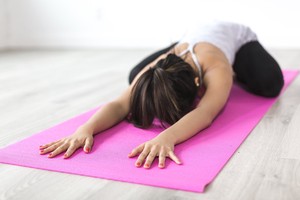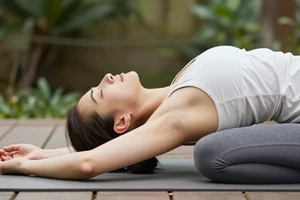

You've been diligent with your downward dog, cat-cow, and neck rolls. Maybe you even hit the mat three times a week. Yet the knot at the base of your skull refuses to budge. It's a frustrating place to be: doing the work, following the sequences, and still waking up with that familiar ache.
Yoga is exceptional for general mobility, stress reduction, and gentle muscle release. But not every neck issue responds to stretching. In fact, some symptoms suggest that your body needs something more—or something different—than another Child's Pose. Recognizing the line between tension that yields to yoga and tension that demands a different approach can save you weeks of frustration and prevent minor discomfort from hardening into a chronic problem.
Here are five warning signs that your neck tension has moved beyond what yoga stretches alone can resolve, along with what to do instead.
1. You Feel Sharp, Radiating Pain or Numbness
Yoga-related neck discomfort usually feels like a dull ache, a sense of tightness, or a localized knot. These sensations respond well to gentle lengthening, heat, and relaxation. But if you feel a shooting, stabbing, or electric sensation that travels down your arm or into your shoulder blade, that is not a stretch deficiency. It is a neurological signal that something is compressing or irritating a nerve root in your cervical spine.
Numbness, tingling, or weakness in your hand or fingers alongside neck pain is another red flag. These symptoms often point to a cervical radiculopathy or a herniated disc. Stretching an already compressed nerve can worsen the inflammation and extend your recovery time.
What to do: Stop stretching that side immediately. See a physical therapist or a spine specialist for a proper assessment. They can determine whether the issue is muscular, disc-related, or involves your facet joints, and prescribe specific movements that decompress rather than pull.
2. Your Range of Motion Is Worse in the Morning
It is normal to feel a little stiff when you first wake up. However, if you consistently struggle to turn your head to check your blind spot while driving, or if you have to rotate your whole torso just to look over your shoulder, the problem may be structural rather than muscular. Morning stiffness that lasts longer than thirty minutes—or that actually gets worse as you move—suggests inflammatory arthritis or joint dysfunction rather than simple muscle tightness.
Yoga stretches performed first thing on a stiff, inflamed joint can provoke a flare-up. Unlike muscle tissue, which relaxes with gentle elongation, an irritated joint reacts poorly to being pulled into its end range before it has had a chance to warm up naturally.
What to do: Try passive heat (a warm shower or a heating pad) for 10–15 minutes before any movement. If that helps, proceed with very small, pain-free ranges. If heat does not improve your motion, or if the stiffness is accompanied by grinding or clicking sounds, it is time for a medical evaluation.
3. You Get Frequent Headaches That Start at the Base of Your Skull
Tension headaches are common, and yoga can often help by relaxing the suboccipital muscles (the small muscles where your skull meets your neck). But if your headaches begin at the back of your head and neck and then wrap around to your forehead or behind your eyes—especially if they happen more than twice a week—you may be dealing with cervicogenic headaches. These are headaches that originate from a problem in the cervical spine, not from muscle tension alone.
The distinguishing clue is the pattern. True cervicogenic headaches are almost always one-sided and triggered by a sustained posture (like looking at a computer screen) or by specific neck movements. Yoga poses that involve deep forward folding, headstands, or shoulder stands can aggravate this condition by loading the cervical spine in a compromised position.
What to do: Keep a headache diary for two weeks, noting what you were doing and which poses you practiced beforehand. Share this log with a physical therapist or a neurologist. Manual therapy from a skilled practitioner often helps more than any self-directed stretch.
4. You Have a Visible Posture Shift or a Forward Head That Won't Correct
Your yoga teacher has likely encouraged you to draw your ears back over your shoulders. A mild forward head posture usually responds to consistent chin tucks, wall angels, and thoracic extension work. However, if your head sits noticeably in front of your shoulders despite months of corrective stretches, the imbalance may be driven by weak deep neck flexors rather than tightness.
When the deep muscles at the front of your neck (the longus colli and longus capitis) are underactive, your superficial muscles—the sternocleidomastoids and scalenes—take over. These bigger muscles are not designed for sustained postural holding. They tighten and fatigue, pulling your head forward. Stretching the already-overworked superficial muscles without strengthening the deep flexors is like loosening the emergency brake on a car with no working brakes. It provides temporary relief but leaves the underlying problem intact.
What to do: Ask a physical therapist to test your deep neck flexor endurance. A simple test involves lying on your back, lifting your head slightly, and holding a chin tuck while a therapist provides gentle resistance. If you cannot hold for ten seconds without your head sagging or your jaw jutting forward, your program needs strengthening, not more stretching.
5. Your Symptoms Are Accompanied by Dizziness or Nausea
Occasional lightheadedness after a deep twist is one thing. But if your neck pain regularly comes with true vertigo (a sensation that the room is spinning), nausea, or a feeling of unsteadiness when you walk, you may have a problem involving your upper cervical spine's relationship with your vestibular system. Conditions such as cervical vertigo or vertebrobasilar insufficiency can be triggered or worsened by neck extension and rotation—movements that are common in many yoga sequences.
Yoga can be helpful for general balance and proprioception, but it cannot correct a mechanical or vascular issue that originates in the atlas or axis vertebrae. In rare cases, aggressive neck stretching can compress the vertebral arteries, which run through the cervical vertebrae and supply blood to the brainstem.
What to do: If dizziness accompanies your neck tension, avoid any pose that involves extreme neck rotation (such as a full spinal twist where you look behind you) or deep backbends that jam the neck into extension. Consult a healthcare provider who can perform orthopedic and vascular screening tests before you return to your mat.
How to adapt your practice if you are not quite at the warning-zone yet.
If you are dealing with mild, occasional neck tension that dissipates with gentle movement, yoga remains an excellent tool. The key is to choose poses that support the cervical spine rather than loading it. Favor:
- Supported poses: Use blankets or blocks under your head in restorative poses so your neck muscles can fully relax.
- Neutral alignment: Keep your head in line with your spine during inversions and transitions. Avoid dropping your head back in standing backbends.
- Breath-based release: Long exhales through pursed lips or a gentle sigh can reduce the sympathetic nervous system's contribution to chronic muscle tension.
Listen carefully to your body's feedback. A muscle that feels warm, achy, and tight may loosen with ten minutes of gentle yin yoga and a warm compress. A muscle that produces sharp, shooting, or numbing sensations is not asking for more movement—it is asking for professional help.
This article is for educational purposes only and does not constitute medical advice. Always consult a qualified healthcare provider for diagnosis and treatment of persistent pain.