
Starting a yoga practice is a beautiful commitment to your body and mind. As you learn to move through poses, you might notice new sensations in your joints—the hinges and cushions that allow for all that wonderful mobility. While the practice itself builds strength and flexibility, what you eat can play a supportive, foundational role in keeping those joints comfortable and resilient. It’s less about a rigid diet and more about choosing foods that naturally provide the building blocks your joints need to feel their best.
Think of it as nourishing the infrastructure. The cartilage that cushions your joints, the synovial fluid that lubricates them, and the surrounding tissues all rely on specific nutrients to maintain their health and repair daily wear. For someone new to yoga, focusing on these foods can be a simple, empowering way to care for your body from the inside out, complementing the work you do on the mat.
What do joints need from our diet?
Joints are complex structures where bones meet. Their smooth function depends on cartilage, a firm yet flexible connective tissue that acts as a shock absorber. This cartilage, along with the lubricating synovial fluid inside the joint capsule, needs constant maintenance. Over time, or with increased activity, these tissues can experience oxidative stress and inflammation, which may lead to stiffness and discomfort.
Certain nutrients directly support the body’s ability to maintain and repair these tissues. They help combat inflammation, provide raw materials for rebuilding cartilage, and support the production of synovial fluid. By incorporating foods rich in these nutrients, you’re giving your body the tools it needs to support your yoga journey.
Five supportive foods for your joints
These aren’t exotic or difficult-to-find ingredients, but rather wholesome foods you can easily weave into your weekly meals. The goal is consistent inclusion, not perfection.
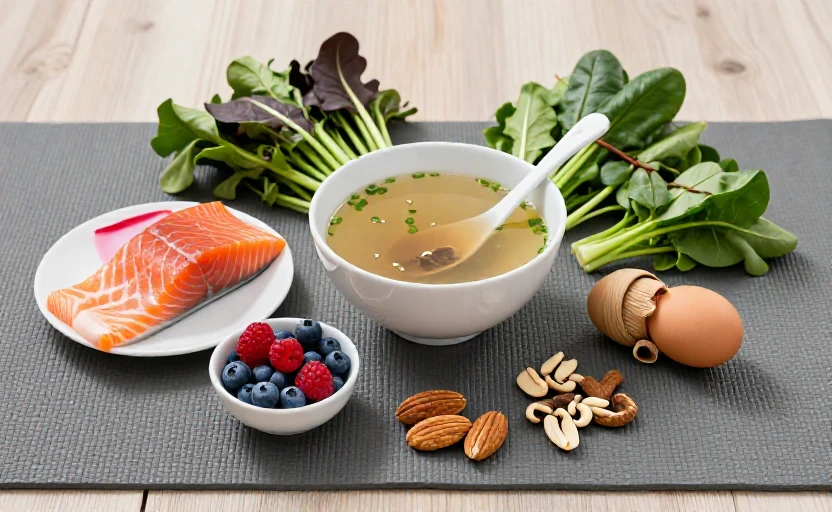
Fatty fish
Salmon, mackerel, sardines, and trout are standout sources of omega-3 fatty acids, specifically EPA and DHA. These fats are powerfully anti-inflammatory. Chronic, low-grade inflammation can be a source of joint stiffness. By helping to manage this inflammation, omega-3s can contribute to greater ease of movement. Aim for two servings per week.
Not a fish eater? Algal oil supplements are a direct plant-based source of DHA and EPA.
Colorful berries
Blueberries, strawberries, raspberries, and blackberries are packed with antioxidants, particularly anthocyanins and vitamin C. Antioxidants help neutralize free radicals—unstable molecules that can cause oxidative stress and damage tissues, including cartilage. Vitamin C is also essential for the body’s production of collagen, a key protein in cartilage, tendons, and ligaments. Enjoy a handful daily, fresh or frozen.
Leafy green vegetables
Spinach, kale, Swiss chard, and collard greens are nutrient powerhouses. They’re excellent sources of vitamin K, which is involved in bone metabolism and cartilage maintenance, and are rich in antioxidants like beta-carotene and vitamin C. The calcium they provide supports bone health, creating a stable foundation for your joints. Try adding a large handful to smoothies, soups, or stir-fries.
Nuts and seeds
Walnuts, almonds, chia seeds, and flaxseeds offer a beneficial mix of nutrients. Walnuts and chia seeds provide plant-based omega-3s (ALA). Almonds are rich in vitamin E, an antioxidant that protects joint tissues. They also contain healthy fats and magnesium, which supports muscle function around the joints. A small daily portion—about a handful of nuts or a tablespoon of seeds—is a great addition.
Bone broth
Simmering animal bones and connective tissue for an extended time extracts collagen, gelatin, and minerals like calcium and magnesium. While research is ongoing, the theory is that these compounds, particularly gelatin’s amino acids like glycine and proline, may provide the building blocks your body uses to support its own cartilage and joint tissue. Use it as a sipping broth or a base for soups.
How to integrate these foods thoughtfully
You don’t need to overhaul your diet overnight. Start with one change. Perhaps you add a berry smoothie after your morning practice, or include a salmon fillet in your weekly dinner rotation. The cumulative effect of consistently choosing these supportive foods is what matters most.
Listen to your body. As you introduce these foods, pay attention to how you feel during your yoga sessions. Do you notice less creakiness as you move into a low lunge? Does your downward dog feel a bit more fluid? These subtle shifts are worth noting.
Remember, hydration is part of the equation. Water is a major component of synovial fluid. Drinking enough water throughout the day helps keep this natural lubricant plentiful.
A balanced approach is key
While focusing on adding these supportive foods, it’s also wise to be mindful of foods that may promote inflammation for some people. These often include highly processed foods, refined sugars, and excessive fried foods. A diet centered on whole foods—fruits, vegetables, lean proteins, and whole grains—naturally creates a better environment for joint health.
This nutritional approach is a form of self-care that works in harmony with your yoga. It’s a way to honor the body that is showing up on the mat, providing it with the resources to grow stronger and more flexible with you. If you have specific health conditions or concerns about your joints, always consult with a healthcare provider or a registered dietitian for personalized guidance.