You rolled out your mat, moved through a slow flow, and settled into Savasana with a clear mind. But an hour later, you are lying in bed, wide awake. It is a frustrating disconnect—your body feels tired, but your brain will not power down. While yoga helps prime the nervous system for rest, what you eat in the post-practice window can either support that calm or undo it.
Dietitians who work with active individuals point to a few specific foods that pair well with the relaxation effects of evening yoga. These choices are not about heavy meals or sleep aids. They are about giving your body building blocks for serotonin, melatonin, and stable blood sugar—so your sleep is deep, uninterrupted, and truly restorative.
Why the post-yoga snack matters for sleep
Yoga, especially gentle or restorative styles, activates the parasympathetic nervous system—the "rest and digest" mode. But after practice, your muscles still need repair, and your brain needs precursors for sleep hormones. A snack that is too large or too stimulating (think spicy foods or sugar) can keep your system alert. A snack that is too small may leave you waking up hungry at 2 a.m.
The goal is a small, balanced bite that supplies tryptophan, magnesium, and complex carbohydrates. These nutrients help the brain produce melatonin naturally. Timing also counts: eat roughly 45 to 60 minutes before you plan to sleep.
The 5 foods dietitians recommend
These five foods appear consistently in dietitian recommendations for evening recovery. They are not exotic or expensive. You likely already have most of them in your kitchen.
1. Tart cherries
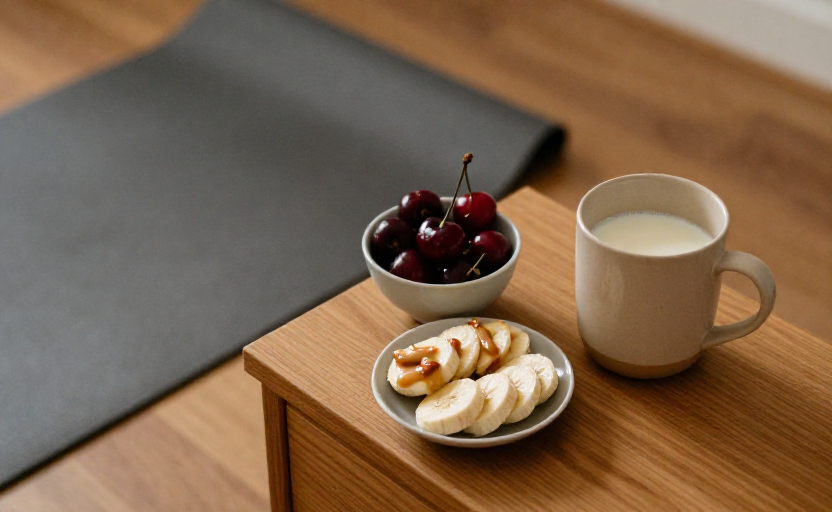
Tart cherries are one of the few natural food sources of melatonin. Research suggests that drinking tart cherry juice or eating the fruit itself can modestly increase both sleep duration and quality. For yoga practitioners, there is an extra benefit: the anthocyanins in tart cherries help reduce muscle soreness and inflammation after physical activity. A small bowl of frozen tart cherries or a glass of unsweetened tart cherry juice is enough. No added sugar needed.
2. A banana with almond butter
This classic combo works because of its nutrient profile. Bananas provide magnesium and potassium—both of which relax muscles and support nerve function. Almond butter supplies healthy fats and a small amount of protein, which stabilizes blood sugar through the night. The carbohydrates in the banana also help transport tryptophan to the brain, where it converts to serotonin and then melatonin. Slice the banana, spread a thin layer of almond butter, and you have a snack that takes 30 seconds to prepare.
3. Warm milk or fortified plant milk
The old advice about warm milk before bed has real science behind it. Milk contains tryptophan, calcium, and vitamin D—nutrients that support sleep regulation. Calcium helps the brain use tryptophan efficiently. For those who avoid dairy, unsweetened soy milk or pea-protein milk works because they are often fortified with calcium and vitamin D, and they provide comparable tryptophan levels. Warm the milk gently; the warmth itself signals comfort and relaxation to the body.
4. Kiwi
Studies have shown that eating two kiwis an hour before bed can improve sleep onset and total sleep time. The mechanism is not fully understood, but researchers point to kiwi's high concentration of serotonin, antioxidants, and folate. Serotonin is the direct precursor to melatonin. For yoga students, kiwi is also gentle on the stomach and provides vitamin C for immune support after physical exertion. No peeling necessary—just wash and eat the skin, which contains most of the fiber.
5. Oatmeal made with intact oats
A small bowl of oatmeal from rolled or steel-cut oats (not the instant, sugary packets) provides complex carbohydrates that digest slowly. This prevents blood sugar dips that can wake you up. Oats are also a natural source of melatonin. Add a splash of milk or a tablespoon of nuts for protein and fat, and you have a sleep-friendly porridge. Keep the portion small—about a quarter cup of dry oats—to avoid feeling overly full. Cinnamon adds flavor without spiking insulin.
A caveat on portion sizes: These are pre-bed snacks, not meals. Aim for roughly 150 to 200 calories. Eating too much, even of healthy food, can cause digestive discomfort that disrupts sleep.
Foods to avoid in the evening window
It is just as important to know what not to eat. Caffeine is obvious, but hidden sources matter. Dark chocolate, green tea, and even some decaf coffees contain enough caffeine to interfere with sleep for sensitive individuals. Spicy foods can raise body temperature and cause heartburn. High-sugar snacks like granola bars or dried fruit create a blood sugar roller coaster that often leads to middle-of-the-night waking. Alcohol, while sedating, fragment sleep architecture, reducing the deep sleep stages your body needs for recovery.
If you practice hot or intense power yoga in the evening, your fluid and electrolyte needs are higher. In that case, pair the snack with a small glass of water and ensure you are hydrated before bed, but not so much that you wake up to use the bathroom.
Putting it together: a sample post-yoga wind-down
Here is what a dietitian-supported evening could look like:
- Finish yoga by 7:30 p.m.
- Drink 8 to 12 ounces of water with a pinch of salt if the practice was sweaty.
- At 8:00 p.m., eat one of the snacks above—say, a banana with almond butter or a small bowl of tart cherries.
- At 8:45 p.m., begin your wind-down routine: dim lights, avoid screens, and consider a few minutes of deep breathing.
- Aim for lights out at 9:30 or 10:00 p.m.
This rhythm gives your body time to digest the snack, absorb the nutrients, and enter a restful state naturally.
Sleep is not a switch you flip. It is a cascade of biological events that respond to how you ate, moved, and relaxed in the hours before. Choosing the right foods after your evening practice is a small, repeatable action that pays off in deeper rest and better recovery—so you wake up ready to step back onto the mat.