
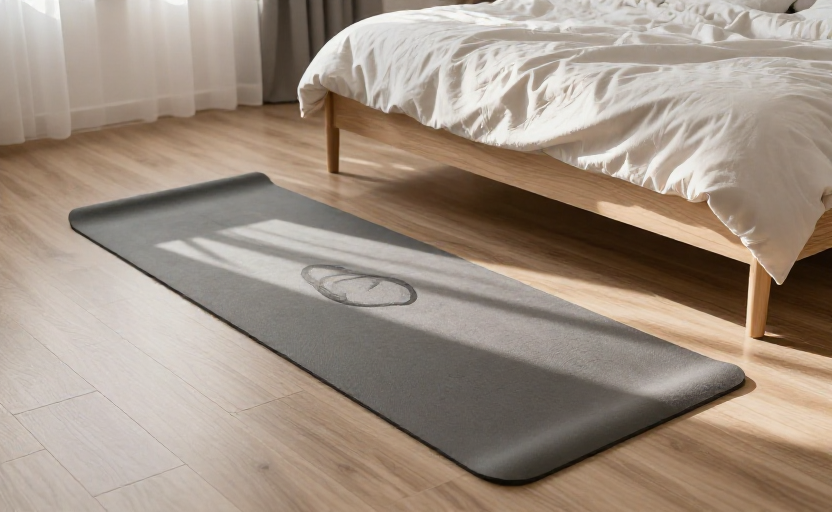
You've been consistent on the mat—showing up for practice, holding your poses, breathing through the tough moments. But lately, your body feels stiff, your balance is off, and that familiar sense of ease after savasana just isn't landing. If your yoga recovery feels stalled, the problem might not be your alignment or your effort. It might be your sleep.
Sleep is when your body does its deepest repair work. For yogis, that nightly restoration is what turns yesterday's challenging sequence into today's fluid movement. When sleep quality drops, your recovery suffers first—often in ways that are easy to mistake for overtraining or aging. Here are three warning signs that your sleep quality is quietly undermining all the good work you're doing on your mat.
1. Your muscles feel persistently tight or sore
That low-level muscle ache that never quite fades—even after a gentle yin class or a rest day—is a classic red flag. During deep sleep, your body releases growth hormone, which is essential for tissue repair and muscle protein synthesis. When your sleep is fragmented or too short, this repair cycle gets cut short.
Instead of waking up feeling refreshed and physically ready, you start each day with residual tightness in your hips, shoulders, or lower back. You might foam roll, stretch, or take more child's pose, but the relief is temporary. This isn't laziness or weakness—it's your body signaling that it didn't get the repair window it needed overnight.
2. Your balance wobbles more than usual
If tree pose feels unstable and warrior III has you hopping to stay upright, poor sleep could be the culprit. Sleep deprivation directly affects the cerebellum—the part of your brain that coordinates movement and balance. Even a single night of poor sleep can reduce proprioception (your sense of where your body is in space).
Over several nights, the effect compounds. You might notice you're bumping into door frames, losing your footing on the mat, or struggling with transitions that used to feel smooth. This isn't just frustrating—it increases your risk of injury. Good sleep resets your nervous system, helping you stay steady and grounded in every pose.
3. Your mental focus drifts during practice
“I just can't quiet my mind today.” That's a common experience for any yogi, but when it becomes a pattern—when you're constantly distracted, irritable, or mentally foggy on the mat—it's worth checking your sleep quality. Sleep is when your brain cleans out metabolic waste and consolidates memories, including the motor patterns you practiced in class.
Without adequate deep and REM sleep, your ability to stay present in your practice diminishes. You might forget the sequence, feel disconnected from your breath, or find yourself staring at the wall instead of focusing on the sensations in your body. This mental drift isn't a personal failing; it's a biological signal that your brain didn't get its overnight maintenance.
A simple test: if you feel noticeably calmer, stronger, and more focused after a full night's rest, your sleep quality is likely driving your yoga plateaus.
What to do about it
If any of these signs resonate, start by looking at your sleep hygiene—not your yoga practice—as the variable to adjust. Aim for consistent bed and wake times, even on weekends. Keep your bedroom cool, dark, and quiet. Avoid caffeine after noon and screens 45 minutes before sleep. And pay attention to how you feel after a solid eight-hour night versus a short, restless one.
Small changes in sleep habits often produce noticeable improvements in yoga recovery within a week or two. Sometimes the most advanced pose you can hold is the one in bed—fully surrendered to restorative rest.