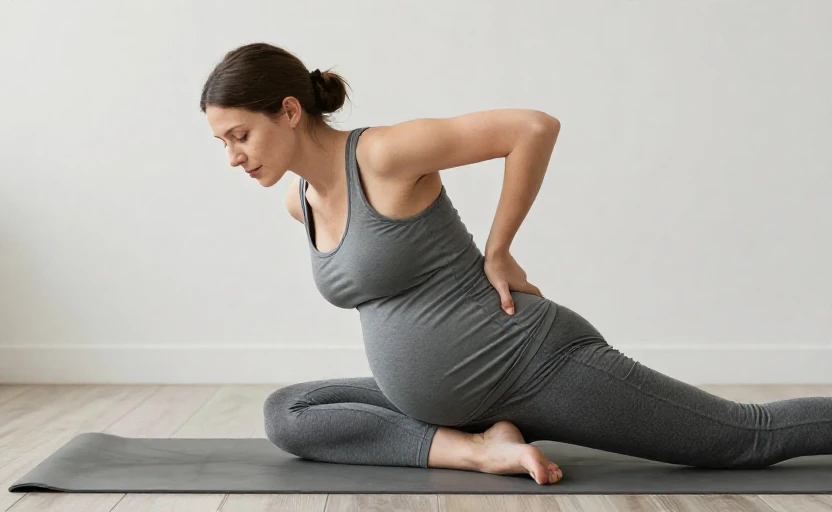
Prenatal yoga can be a beautiful anchor, a way to connect with your changing body and your growing baby. It builds strength, eases common discomforts, and cultivates a sense of calm. Yet, the very nature of pregnancy—a dynamic, ever-shifting process—means that what feels supportive one week may not the next. Listening to your body isn't just a yoga cliché during this time; it's an essential skill. Sometimes, the wisest part of your practice is knowing when to step back.
We spoke with experienced prenatal yoga instructors to understand the subtle and not-so-subtle signals that suggest it's time to pause, modify, or have a conversation with your healthcare provider. Their insights move beyond generic advice, focusing on the specific sensations that warrant your attention.
1. You Feel a “Pulling” or “Dragging” Sensation in Your Pelvis
It's common to feel a deep stretch in the hips and groin during pregnancy as your body produces relaxin, a hormone that loosens ligaments. However, instructors draw a clear line between a satisfying stretch and a concerning pull.
A healthy stretch feels like a release, often symmetrical, and dissipates shortly after you come out of a pose. The warning sign is a distinct sensation of pulling, dragging, or heaviness in the front of your pelvis, around your pubic bone, or deep in your sit bones. It might feel like something is being tugged apart or like there's unusual pressure downward.
“If a student describes a feeling of ‘heaviness’ or ‘pressure’ in the pelvis that lingers after practice, or a sharp pulling at the pubic symphysis when they separate their legs, that’s our cue to stop certain movements,” one instructor notes.
This can be a sign of pelvic girdle pain or diastasis recti abdominis (separation of the abdominal muscles) being aggravated. Poses like wide-legged forward folds, deep squats, or any posture that creates a strong sensation of the thighs moving away from the midline can contribute.
What to do: Pause poses that trigger this feeling. Focus on stability—gentle cat-cow, seated pelvic tilts, and strengthening movements that bring the legs together (like small bridges with a block between the thighs). Mention this sensation to your midwife or doctor.
2. Your Breath Becomes Forced or You Can't Talk Comfortably
In yoga, breath is the guide. In prenatal yoga, it becomes a critical monitor for both you and your baby's well-being. “We teach students to use their breath as a gauge,” another instructor explains. “If you’re holding your breath, gasping, or breathing in a shallow, panicked way, your body is in a stress response.”
This is different from being mildly winded. The warning sign is when your breathing pattern becomes strained and uncontrollable during a sequence you could normally handle. You shouldn't be so breathless that you couldn't hold a short conversation.
Forced breath can increase intra-abdominal pressure, divert oxygen from where it's needed, and spike your stress hormones. It also means you’ve moved past a moderate intensity level, which is the recommended ceiling for exercise during pregnancy.
What to do: Immediately ease up. Come to a comfortable seated or kneeling position. Place a hand on your belly and consciously slow your inhales and exhales. Your practice should center on calm, full breathing. If certain flows consistently leave you breathless, simplify them or replace them with restorative poses.
3. You Experience a “Sharp” or “Stabbing” Pain (Anywhere)
Aches and dull pains are frequent companions in pregnancy. Sharp, stabbing, or pinpoint pain is not. Instructors are unanimous on this point: any acute pain is a full stop.
This type of pain is distinct from muscle fatigue or the dull ache of ligaments stretching. It might feel electric, knife-like, or like a sudden “zing.” It can occur in the abdomen, back, pelvis, or even the head.
“A dull ache we can often work with through modification. A sharp pain is the body’s alarm system. We don’t try to breathe through alarms; we listen to them,” an instructor emphasizes.
Such pain could indicate anything from a strained muscle to a more serious complication. It is never something to ignore or push through in a yoga context.
What to do: Stop your practice completely. Rest. If the sharp pain subsides quickly and does not return, it may have been a one-time muscular tweak, but it’s still worth mentioning at your next appointment. If it persists, is severe, or is accompanied by other symptoms like bleeding, dizziness, or contractions, contact your healthcare provider immediately.
Honoring the Pause
Choosing to pause isn't a failure; it's an advanced practice of self-awareness. A pause might mean skipping a vinyasa class and doing gentle stretching at home, swapping a standing pose for a supported version, or taking a complete break for a few days.
Always communicate with your instructor before or after class about what you’re experiencing. A qualified prenatal teacher can offer tailored modifications and support your decision to rest. Most importantly, keep your healthcare team informed about your exercise routine and any new sensations that arise. Your yoga practice is a partner to your prenatal care, not a replacement for it.