
You've rolled out your mat, settled into a comfortable cat-cow, and focused on your breath. Prenatal yoga can be a sanctuary during pregnancy, but sometimes discomfort creeps in—not from the pose itself, but from what you ate an hour before. As a prenatal yoga instructor once told me, "Your body gives feedback, and in pregnancy, the conversation gets louder."
Certain foods are known to amplify inflammation, gas, or acid reflux, all of which can turn a soothing forward fold into a lesson in misery. I consulted registered dietitians who specialize in prenatal nutrition to identify three foods that may trigger or worsen back pain during prenatal yoga—and what to consider swapping in instead.
1. High-Sodium Processed Foods
Think packaged deli meats, canned soups, salty crackers, and frozen meals. According to Katherine Maslen, RD, a prenatal dietitian based in Portland, these foods cause water retention and systemic swelling. "When your tissues are puffy and inflamed, the muscles along your spine have to work harder to stabilize you," she explains. During yoga, that added fluid pressure can translate into a dull ache in the lower back.
In pregnancy, your blood volume already increases by about 50 percent. Adding high sodium—often above 1,500–2,300 mg per day—exacerbates edema. A single fast-food deli sandwich can contain over 1,000 mg of sodium. On a yoga mat, this fluid load makes hip openers and gentle twists feel tight and uncomfortable.
Substitution tip: Choose fresh or frozen vegetables, lightly salted nuts, or plain yogurt with berries. Cooked eggs or hummus on whole-grain crackers are also low-sodium, high-protein options that won't leave you feeling waterlogged.
2. High-Sugar Treats (Especially Before Practice)
A fruit smoothie with extra honey, a granola bar coated in chocolate, or a quick pastry might seem like convenient pre-yoga fuel. But Rachel Berman, RD, author of Healthy Pregnancy Guide, warns that blood sugar spikes from rapidly digested carbohydrates can trigger inflammation. "Inflammation is a known contributor to joint and muscle pain, including in the lower back," she says. "Combined with the ligament-loosening effects of relaxin, even minor inflammation can feel magnified."
Relaxin, the hormone that relaxes your pelvic joints to prepare for birth, also affects spinal ligaments. When your blood sugar surges, the resulting inflammatory cascade can make already-lax ligaments more irritable. In a yoga class, this might feel like a sharp pinch during a twist or an ache in the sacrum during child's pose.
Substitution tip: Eat a small, balanced snack 30–60 minutes before class: an apple with almond butter, a handful of walnuts, or half a whole-wheat wrap with turkey. Protein and fiber help keep blood sugar stable.
3. Dairy (If You're Lactose-Sensitive)
Not everyone reacts to dairy, but gastrointestinal bloating and gas from undigested lactose can mimic or amplify back pain. Emily Tills, RD, a women's health dietitian in Syracuse, explains: "When you're already dealing with constipation—common in the second and third trimesters—a glass of milk can cause significant cramping and distension. That gas pressure pushes upward against your diaphragm and backward against your spine."
In a yoga class, you might experience sharp discomfort in the lower back during a seated forward fold or feel unable to breathe deeply in a reclining twist. The body's digestive tract and spine share nerve pathways; what feels like back pain can actually be referred pain from intestinal pressure.
Substitution tip: Try lactose-free milk, small amounts of hard cheese (which is naturally low in lactose), or unsweetened oat milk. If you suspect dairy is a trigger, eliminate it for a week and note how your yoga sessions feel.
How to Time Your Pre-Yoga Meals
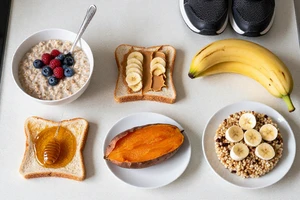
Even with the right foods, timing matters. General guidelines from the dietitians I spoke with: avoid heavy meals within two hours of yoga. Opt for a light snack about 30–45 minutes before class—aim for 100–200 calories that combine a bit of protein, a bit of healthy fat, and some complex carbohydrates. A small bowl of oatmeal with raspberries, a rice cake with avocado, or a banana with a smear of peanut butter all fit the bill.
Hydration also deserves a mention. Sipping water throughout the day—not chugging right before class—keeps muscles supple without causing sloshing during inversions. If you experience persistent back pain that worsens after certain meals, keep a simple food-and-symptom diary for a week. Share it with your OB or a dietitian; they can help you distinguish between yoga-related muscle strain and food-triggered pain.
Pregnancy is a time of heightened body awareness. Noticing how your food choices affect your yoga practice—rather than ignoring the signals—can make the mat feel like a safe, nourishing space again. Small swaps, like swapping salty snacks for fresh ones and sugary treats for balanced mini-meals, may go a long way toward keeping your spine happy through all nine months.