You’ve made the switch. You’re eating the kimchi, drinking the kombucha, adding a spoonful of sauerkraut to your plate. Maybe you start the day with yogurt or sip a kefir smoothie in the afternoon. You’re doing the work to support your gut—and that’s genuinely great. Probiotic-rich foods are among the most researched tools we have for maintaining digestive balance and immune function. But here’s the part that often goes unmentioned: two very common, very normal daily habits can quietly undo all that effort before the good bacteria even have a chance to settle in.
If you’ve ever felt like you’re eating all the right things but not feeling the payoff, the problem isn’t the food. It’s timing. And it’s temperature. Let’s break down the two habits that kill the benefits of probiotic-rich foods—and what to do instead.
Habit #1: Pairing Probiotics With Hot or Acidic Drinks
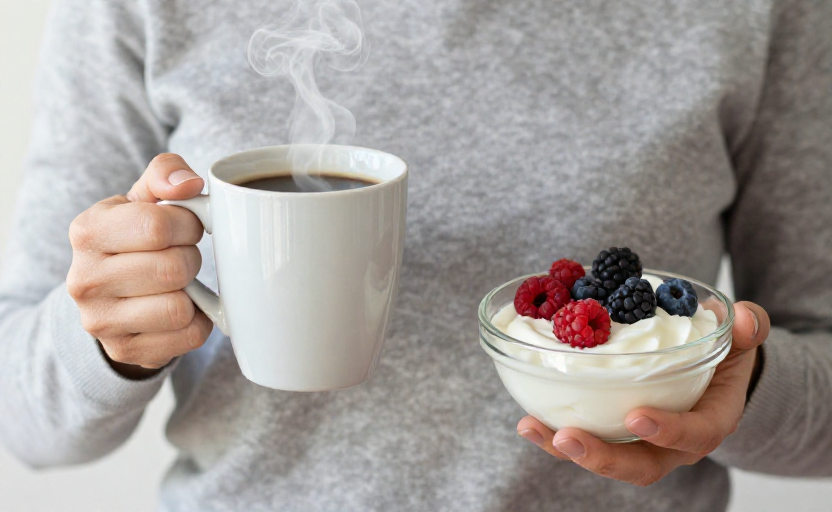
This one catches almost everyone. You have a bowl of yogurt with fruit at breakfast and wash it down with a hot cup of coffee. Or you take a sip of orange juice right after eating some kimchi. It feels harmless—just a normal meal. But here’s what’s happening at the microscopic level.
The live bacteria in fermented foods are delicate. They’re living organisms that have been carefully cultivated and kept alive through fermentation. When you expose them to temperatures above about 120°F (49°C), many of those strains die. A standard cup of hot coffee is around 160–185°F, depending on how you take it. That’s more than enough to significantly reduce the bacterial load you just ingested.
Acidity is another factor. The stomach is already an acidic environment, which is a natural barrier for probiotics. Your gut is designed to handle that—a certain percentage of bacteria will survive the stomach and reach the intestines. But adding highly acidic beverages—like citrus juice, soda, or vinegar tonics—right alongside your probiotics can increase the challenge these bacteria face before they even get to the stomach. You’re essentially front-loading the acidity, which can reduce the number of viable bacteria that make it through to your colon where they need to do their work.
The fix: Create a 30-minute window
You don’t have to give up your morning coffee or your afternoon orange juice. But give your probiotics a short window to pass through the stomach before you introduce heat or extra acid. If you eat yogurt at 7 a.m., wait until about 7:30 or 7:45 before you drink your hot tea. If you’re having a glass of kombucha, avoid following it immediately with a citrus-heavy meal. The timing gap is small, but it makes a measurable difference in how many of those bacteria survive the transit.
A quick tip: If you take a probiotic supplement (note: supplements are not the focus here, but the same rule applies to the foods themselves), check the label for strain-specific heat tolerance. Some strains are more robust, but as a general habit, it’s best not to rely on those margins. Distance from heat is safer for all probiotics.
Habit #2: Eating Probiotics on a Bare Stomach
This one goes against a lot of advice you hear about supplements. Many supplement labels recommend taking probiotics on an empty stomach, usually because that helps them move through the stomach faster and survive better. But with food-based probiotics, the dynamic is different—and often misunderstood.
When you eat a probiotic-rich food like yogurt, kefir, miso, or fermented vegetables on an empty stomach, the food itself is mostly liquid or easily digestible. It moves through the stomach relatively quickly, which sounds good. But here’s the catch: the stomach acid is most concentrated and potent when you haven’t eaten anything else. The pH of an empty stomach can drop as low as 1.5 to 2.0—that’s extremely acidic. That’s partly why the stomach can kill bacteria from food; it’s one of the body’s defenses against pathogens.
On an empty stomach, there’s nothing else in the stomach to buffer that acid. No food matrix, no fats, no proteins to help protect the probiotic bacteria. The bacteria from your fermented food are essentially dropped right into a pool of concentrated acid. A significant portion may be destroyed before they ever get near the intestines.
The fix: Pair probiotics with a protective meal
The research on probiotic survival consistently shows that consuming probiotics with a meal—specifically one that contains some fat and protein—improves survival rates dramatically. A 2011 study in the journal Beneficial Microbes, for example, found that survival of several Lactobacillus strains was significantly higher when taken with a meal containing oatmeal and milk compared to on an empty stomach or even with apple juice. The fat and protein in the meal help buffer stomach acid and also slow stomach emptying, giving the bacteria a more gradual, protected transport through the digestive tract.
This doesn’t mean you need a heavy, greasy meal. A simple bowl of yogurt itself contains fat and protein—so eating it as part of a meal (or even with a handful of almonds and berries) is already better than eating it alone first thing in the morning. If you’re having kimchi or sauerkraut, eat it alongside a main dish that includes some fat and protein—think eggs, avocado, grilled chicken, or a dressing made with olive oil.
Bottom line: The worst-case scenario for a probiotic-rich food is to eat it alone with no other food in the stomach, especially first thing in the morning when stomach acid is most concentrated.
What About Fermented Beverages Like Kombucha and Kefir?
This deserves a quick mention because drinkable probiotics are popular. The same rules apply—drinks are even more vulnerable to heat, so never heat your kombucha or drink it hot. And while kefir is a liquid, it does contain fat and protein from the milk (if you use the dairy version), so it acts more like a protective meal than a bare probiotic. Water kefir is more acidic and thinner, so it benefits more from being consumed alongside food rather than on an empty stomach.
If you drink kombucha for its probiotic content, drink it at room temperature or chilled, and have it with a snack—not on an empty stomach first thing in the morning, and not immediately before or after a hot beverage.
Building a Routine That Works
You don’t need to micromanage every bite. But small adjustments in timing can turn your probiotic-rich foods from a passing gesture into a real functional support for your gut microbiota.
- Eat your yogurt/kefir with breakfast, not as a standalone snack first thing. Add some oats, nuts, or fruit for a buffered meal.
- Wait 30 minutes after eating fermented foods before drinking hot coffee, tea, or acidic juice.
- If you take a probiotic supplement (and again, speaking generically without making a medical recommendation), check whether the label says “take with food” or “take on an empty stomach” and follow that for that specific product—but for food-based probiotics, with a meal is almost always better.
The two habits that kill probiotic benefits—eating them hot or on an empty stomach—are common because they’re built into how we structure our mornings and meals. But once you see the why behind each one, the changes are straightforward. Keep the heat away. Give the bacteria a food buffer. Your gut doesn’t need perfection—it just needs a fair shot at the good stuff you’re giving it.