There is a quiet irony in training hard: the very discipline that builds strength can also deepen the cracks in your foundation. If you have ever noticed one side of your chest developing faster than the other, or felt a persistent tightness in your left hip that does not bother the right, you have experienced a muscle imbalance. These asymmetries are common, but they become more stubborn—and more risky—when you train with high frequency.
Here is why that happens, and the two adjustments that can restore balance without forcing you to cut back on your favorite workouts.
How High Frequency Training Magnifies Asymmetries
A muscle imbalance is simply a difference in strength, flexibility, or activation between opposing muscles or between the same muscle on opposite sides of the body. A classic example is a stronger right quadriceps compared to the left, or a tight chest that overpowers the upper back. When you train a movement pattern repeatedly—say, benching four times a week—your nervous system learns to recruit the stronger, more dominant side first. Over weeks, that slight favoritism becomes a neurological groove. The left side stays relatively understimulated while the right side takes a larger share of the load.
High workout frequency compounds this because there is not enough recovery time between sessions for the weaker side to "catch up" in activation. Fatigue accumulates asymmetrically. The dominant side, already more efficient, continues to drive progress, while the inhibited side falls further behind. Research suggests that as little as a 5 percent difference in bilateral strength can alter movement mechanics, and high-frequency training can widen that gap to 15 percent or more over a mesocycle if left unchecked.
Moreover, repetitive high-frequency loading reinforces the same compensatory patterns. A runner with an imbalance in the gluteus medius, for example, will recruit the tensor fasciae latae (TFL) more on the weak side with every step. Run five days a week, and that faulty firing pattern becomes automatic. The imbalance no longer just exists—it becomes the default way your body moves.
The Neurological Feedback Loop
Your brain prioritizes efficiency, not symmetry. When you squat twice a week or more, your motor cortex optimizes the movement pattern that produces the most force with the least effort. If your right leg is slightly stronger, the brain sends a stronger signal to that side. The left leg receives less neural drive, its motor units fire less synchronously, and the strength disparity grows. High frequency training essentially rehearses and perfects an asymmetrical motor program, making it harder to break later.
Simple Fix #1: Swap Volume for Intentional Isolation
The most effective way to interrupt this feedback loop is not to add more sets, but to subtract mindless volume and replace it with targeted unilateral work. The goal is to force each limb to operate independently under load, which gives the nervous system direct feedback on the weaker side. Exercises like single-leg Romanian deadlifts, Bulgarian split squats, and single-arm overhead presses are ideal because they eliminate any opportunity for the dominant side to compensate.
Here is a practical approach: Identify the weaker side for a given movement—typically the non-dominant arm or leg. Perform the exercise first with that side, and use that performance to set the volume for the stronger side. If your left leg can manage eight controlled Bulgarian split squats, do not do twelve on the right. Match the rep count. This method, sometimes called the "deficit-led strategy," forces the dominant side to work only as hard as the weaker side can manage, gradually pulling both toward the same level.
Do not add extra sets on the strong side. Matching volume prevents the imbalance from widening further.
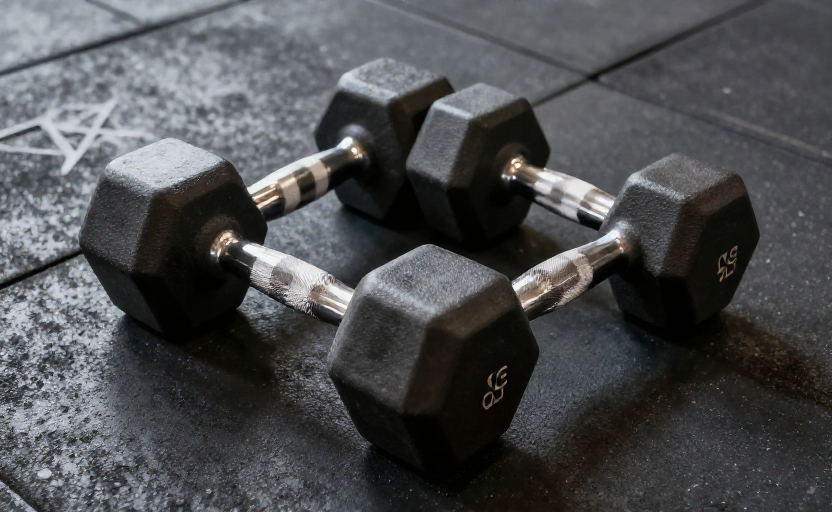
Swap out one bilateral exercise per session for a unilateral variation. If you bench twice a week, replace one flat bench day with dumbbell floor presses or single-arm dumbbell bench presses. If you squat three times a week, substitute one squat session with walking lunges or split squats. Over four to six weeks, the activation gap often narrows noticeably, especially in the first two weeks when neural adaptation occurs quickly.
Simple Fix #2: Restructure Your Weekly Split to Isolate Weak Links
If you prefer keeping your favorite compound lifts in the rotation—which is perfectly reasonable—you can address imbalances by restructuring the timing and order of your training. The principle here is fatigue management. When you are fresh, your nervous system can recruit all available motor units more symmetrically. As fatigue builds, compensation kicks in faster.
Consider placing unilateral or corrective work at the very beginning of a session, not at the end. Most people tack on single-leg work or rotator cuff exercises as finishers, but by that point, central fatigue has already reinforced the dominant movement pattern. Instead, perform two sets of a targeted unilateral exercise as a warm-up. For example, before your main squat sets, do two sets of single-leg glute bridges or lateral lunges. This primes the weaker side and teaches the brain to activate it before the heavy compound work begins.
A second option is to use an upper-lower split with an extra day focused solely on asymmetries. If you currently train four days a week, your schedule might look like this:
- Day 1: Lower body (bilateral focus with unilateral warm-up)
- Day 2: Upper body (bilateral focus with unilateral warm-up)
- Day 3: Light unilateral and core work (active recovery)
- Day 4: Lower body
- Day 5: Upper body
That lighter third session is not a wasted day. It is the structured buffer that prevents high frequency from deepening the imbalance. By separating heavy bilateral days with a low-fatigue unilateral session, you give the nervous system a chance to practice symmetrical recruitment without the interference of cumulative fatigue.
Monitoring Progress
Track your asymmetry with simple benchmarks. Once every two weeks, test a unilateral movement like a single-leg wall sit (hold time) or a single-arm dumbbell bench press (max reps at a fixed weight). If the gap narrows, your approach is working. If it stays the same or widens, the frequency may still be too high, or the unilateral work needs to be prioritized earlier in the session.
You do not need to abandon a high-frequency split. You need to be more strategic about how you direct the load. By trading a small amount of bilateral volume for intentional unilateral work, and by shifting your corrective exercises to the start of training, you can improve symmetry without losing momentum. The goal is not perfect equality on both sides—few people have that—but a functional balance that protects your joints and allows your main lifts to keep progressing.
Asymmetry is not a flaw to fix overnight. It is a signal to train smarter.