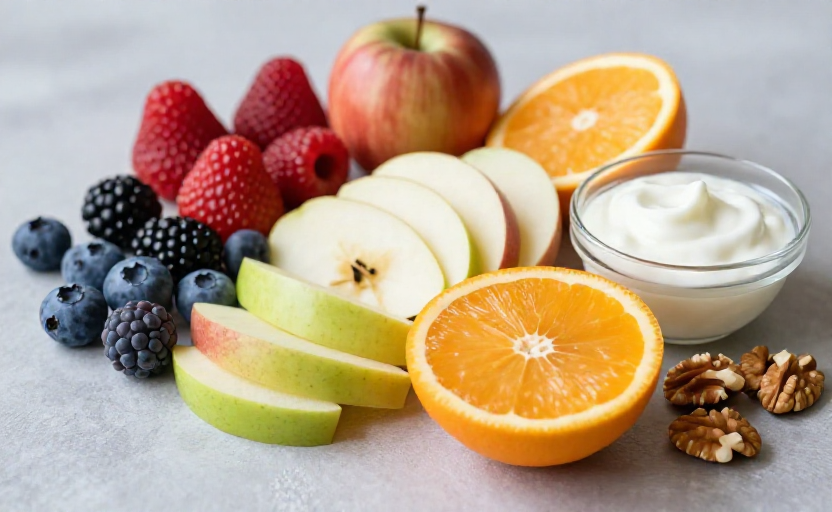
For anyone mindful of their blood sugar, fruit can feel like a nutritional paradox. It’s packed with vitamins, fiber, and antioxidants, yet it’s also a source of natural sugars. This often leads to confusion: Is fruit a friend or foe for stable glucose levels? The good news is that with a bit of knowledge, you can enjoy fruit confidently as part of a balanced diet.
The key lies in understanding how different fruits affect your body, and how to pair them for the gentlest impact on your blood sugar. It’s not about creating a forbidden list, but about making informed, dietitian-approved choices that support your well-being.
How Fruit Affects Blood Sugar
Fruit contains a type of sugar called fructose, along with glucose. When you eat fruit, your body breaks down these sugars, causing blood glucose levels to rise. However, this process is far from simple. The fiber, water, and overall structure of whole fruit slow down digestion and sugar absorption, leading to a more gradual rise in blood sugar compared to, say, a candy bar or soda.
Think of it like this: drinking fruit juice is like pouring sugar directly into your system—it’s absorbed rapidly. Eating a whole apple, with its skin intact, is more like a slow, controlled release. The fiber acts as a natural buffer.
Choosing Fruits for Better Blood Sugar Management
Not all fruits are created equal in their effect. A helpful concept is the glycemic index (GI), which measures how quickly a food raises blood sugar. Low-GI foods cause a slower, smaller rise.
Fruits with a lower glycemic impact tend to be those higher in fiber and lower in overall sugar concentration per serving. Berries like strawberries, blueberries, and raspberries are excellent choices, as are cherries. Whole apples and pears, with their skin, are also great. Even fruits like oranges and grapefruit, which taste sweet, have a relatively low GI due to their high water and fiber content.
Portion size matters just as much as the type of fruit. A small handful of berries has a different effect than a large bowl.
Fruits like watermelon, pineapple, and very ripe bananas have a higher GI, meaning they can cause a quicker spike. This doesn’t mean you must avoid them, but it’s wise to be more mindful of portion and to pair them strategically.
The Power of Pairing
This is perhaps the most practical tip for enjoying fruit without worry: never eat it alone. Pairing fruit with a source of protein or healthy fat dramatically slows digestion and blunts the blood sugar response.
Instead of just an apple, have apple slices with a tablespoon of almond butter. Add a handful of berries to plain Greek yogurt or cottage cheese. Enjoy some melon with a few slices of cheese. The combination of nutrients helps create a steady, sustained energy release.
What About Fruit Juice and Dried Fruit?
Here’s where caution is warranted. Fruit juice strips away the beneficial fiber, leaving concentrated sugar that is absorbed quickly. Similarly, dried fruit condenses the sugar into a small package—it’s easy to consume the sugar of several pieces of fruit in just a few bites. While a small amount of no-sugar-added dried fruit can be part of a meal (think a few raisins in oatmeal), whole fruit is almost always the superior choice for blood sugar management.
Listening to Your Body
Individual responses can vary. Some people may find they are more sensitive to certain fruits. Paying attention to how you feel after eating different fruits—noticing energy levels, hunger, or mood—can be a valuable personal guide. If you have specific health conditions like diabetes, working with a dietitian to create a personalized plan is the best approach.
Ultimately, fruit is a gift from nature, offering far more than just sugar. By choosing whole fruits, watching portions, and pairing them wisely, you can reap all the health benefits while supporting stable, healthy blood sugar levels.