
You’re dedicated. You show up, you push through your sets, and you finish feeling that familiar burn. But what if one of the most ingrained habits in your fitness routine is quietly chipping away at the very mobility you need to move well and stay pain-free? According to trainers, a widespread focus on a single plane of motion is doing exactly that to our shoulders.
The shoulder is a marvel of engineering—a ball-and-socket joint designed for incredible range. Yet, many of us treat it like a simple hinge, repeating the same pushing and pulling patterns week after week. This neglect of its full, three-dimensional capacity is the common workout habit that’s holding so many people back.
Why Your Shoulders Need More Than Just Presses and Pulls
Think about the movements you do most often at the gym. Bench presses, overhead presses, lat pulldowns, rows. These are fantastic exercises for building strength, but they primarily train your shoulders in the sagittal and frontal planes—that is, forward/back and up/down. The transverse plane, which involves rotation, is often an afterthought.
Your shoulder joint, or glenohumeral joint, relies on a delicate balance of muscles not just to produce force, but to stabilize the ball within the shallow socket. When you only train the major movers—like the pecs, lats, and deltoids—without equally training the stabilizers, particularly the rotator cuff and scapular muscles, you create an imbalance.
Mobility isn’t just about flexibility; it’s the active control of your range of motion. Without training for it, you lose it.
This imbalance doesn’t just limit how far you can reach overhead or behind your back. It changes how your shoulder moves under load, often leading to compensatory patterns that strain tendons and ligaments. The result can be a gradual, nagging loss of mobility and the increased risk of issues like impingement.
The Missing Link: Internal and External Rotation
The heart of the mobility problem usually lies in rotation. Healthy shoulder function requires a balance between internal rotation (turning your arm inward) and external rotation (turning it outward).
Our daily lives and typical workouts heavily favor internal rotation. We type, drive, and perform most pressing motions with our arms turned in. Without conscious effort to train external rotation, the internal rotators (like the subscapularis) can become overly tight and dominant, while the external rotators (like the infraspinatus and teres minor) become weak and underused.
This imbalance pulls the humeral head forward in the socket, rounding the shoulders forward and shrinking the subacromial space—the gap where tendons and bursa pass. It’s a primary setup for pain.
How to Spot the Signs
You might be experiencing this mobility restriction if you notice:
- A feeling of “tightness” or “pinching” in the front of your shoulder when reaching overhead.
- Difficulty keeping your lower back from arching excessively during an overhead press.
- Your elbows flare out widely during push-ups or bench presses.
- You can’t comfortably reach your hand up your back or behind your head.
- A rounded shoulder posture that’s hard to correct when standing tall.
Shifting Your Routine for Better Mobility
Fixing this habit doesn’t mean abandoning your strength work. It means weaving mobility and balanced strengthening directly into it. The goal is to train your shoulders to be both strong and supple.
Start by dedicating the first 5-10 minutes of your workout to priming your shoulders. This isn’t passive stretching; it’s active preparation.
- Band Pull-Aparts: Hold a resistance band with both hands, arms straight out in front. Pull the band apart by squeezing your shoulder blades together, keeping arms nearly straight. This wakes up the mid-back and rear deltoids.
- Internal/External Rotation with Band: Anchor a band at elbow height. With elbow tucked at your side and bent to 90 degrees, hold the band and rotate your forearm outward against resistance, then slowly back in. This directly targets the rotator cuff.
- Scapular Controlled Articular Rotations (CARs): Slowly and with control, roll your shoulders through their full range—shrugging up, pulling back, depressing down, and rolling forward. Move deliberately, exploring every degree of motion.
Next, integrate exercises into your strength sessions that challenge your shoulders in new ways.
- Add face pulls to your pulling days. This exercise uniquely trains external rotation and scapular retraction at the same time.
- Incorporate landmine presses or archer push-ups. These movements allow your shoulder to move through a more natural, semi-rotational path.
- Include overhead carries (like a single-arm waiter’s carry) with a light weight. This builds incredible stability through the entire shoulder girdle under load.
Think of mobility work as non-negotiable maintenance, like changing the oil in your car. It keeps everything running smoothly under the hood.
What to Do on Your Rest Days
Mobility improves with consistent practice, not just occasional effort. On your off days, focus on gentle movements that maintain range without fatigue.
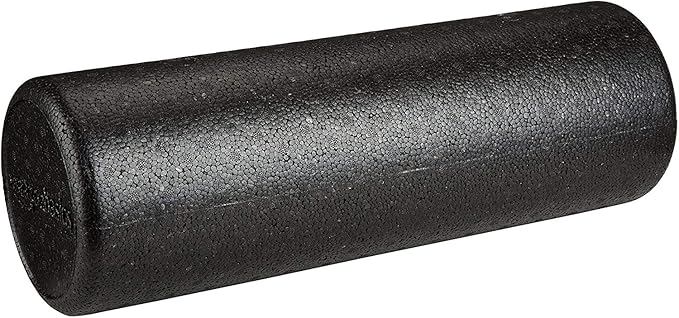
Simple practices like hanging from a pull-up bar (active or passive, if comfortable) can decompress the joint and improve overhead range. Using a foam roller or lacrosse ball on the pecs and upper back can release tension that pulls the shoulders forward. Even five minutes of mindful movement can make a significant difference over time.
The most important shift is a change in perspective. View your shoulder not as a machine built for one task, but as a complex, adaptive structure that thrives on varied movement. By trading the habit of repetitive, limited patterns for a commitment to full-range training, you build a foundation for strength that lasts—without the cost of pain and restricted movement.