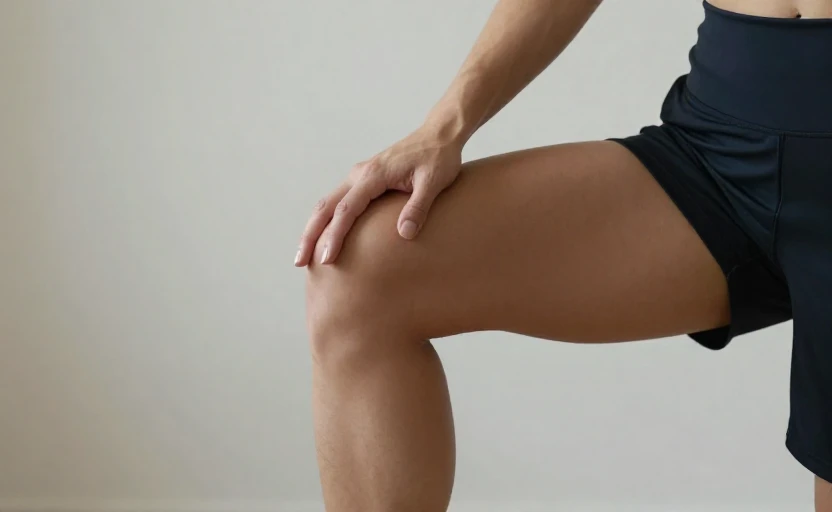
You’ve been consistent, pushing through your routine, but lately, a familiar ache settles into your knees after every session. It’s easy to dismiss it as part of the process, a sign of hard work. Yet, that persistent discomfort is your body’s most direct line of communication. Learning to interpret its signals—specifically, when pain is telling you to pull back rather than push through—is a cornerstone of sustainable fitness.
Knee pain after workouts isn’t a single note; it’s a complex message. Distinguishing between normal muscular fatigue and a warning sign requires paying close attention to the quality, timing, and context of the pain. Ignoring the latter can shift a temporary setback into a long-term limitation. The goal isn’t to stop moving, but to move smarter, using strategic rest as a tool for longevity.
What does “bad” knee pain feel like?
Not all discomfort is created equal. The “good” soreness of delayed onset muscle soreness (DOMS) is typically a diffuse, dull ache in the muscles around the knee, like your quadriceps or hamstrings. It peaks 24 to 48 hours after activity and eases with gentle movement. The pain that suggests you need to reduce frequency is different. It’s more specific and often sharper.
Listen for pain that feels sharp, stabbing, or pinching within the joint itself, or a persistent ache that lingers deep behind the kneecap.
This type of pain often localizes to a specific point—the inner or outer knee line, directly under the kneecap, or deep within the joint. It may be accompanied by sensations of clicking, grinding (crepitus), or even momentary buckling. Unlike general soreness, this pain often feels worse when you load the joint in a specific way, like going downstairs, squatting, or landing from a jump.
The three signs it’s time to reduce your workout frequency
Frequency—how often you train—is a primary lever for managing load. When your body’s capacity to recover is outpaced by the cumulative stress of your workouts, these signs emerge. They are your cue to dial it back.
1. The pain starts earlier in your workout, or without a warm-up
Initially, your knee might only whisper its complaint in the final minutes of a run or the last few squats. A key warning sign is when this timeline shifts. If you now feel that familiar pinch or ache during your first mile, or in the initial set of an exercise that previously caused no issue, it’s a significant red flag.
This pattern indicates that the tissues in and around your knee are in a constant state of irritation, with insufficient recovery time between sessions to settle down. The joint is no longer tolerating even baseline loads. Continuing at your current frequency in this state is like driving a car with a warning light on—you’re risking a more serious breakdown.
2. Rest doesn’t resolve it between sessions
The fundamental purpose of rest days is to allow for repair and adaptation. When your programming is appropriate, a day or two of lighter activity should see pain and stiffness subside substantially. The sign to heed is when the ache from Tuesday’s workout is still palpably present on Thursday, or when you start your next session feeling just as stiff as you finished the last one.
- Morning stiffness: Pay attention to how your knee feels first thing in the morning. Lingering stiffness that lasts more than 30 minutes after getting up can suggest ongoing inflammation.
- Persistent baseline ache: A low-grade, ever-present ache that becomes your new normal, even on off days, signals chronic overload.
This lack of resolution means the micro-trauma from exercise is accumulating faster than your body can repair it. More frequency only adds to the pile.
3. You’re modifying movements to avoid pain
This is a subtle but telling behavioral sign. Without even thinking, you begin to alter your movement patterns to spare your knee. You might start to:
- Favor one leg when climbing stairs.
- Shift your weight during squats or lunges.
- Shorten your running stride or change your foot strike.
- Avoid bending your knee fully when stretching.
These compensations are your nervous system’s brilliant, short-term solution to protect an irritated area. However, they are a stopgap, not a strategy. Over time, these altered patterns place abnormal stress on other joints (like your hips, ankles, or lower back) and can weaken the supporting muscles around your knee, creating a cycle of dysfunction. If you catch yourself consistently compensating, it’s a clear signal that your current training frequency is not allowing for proper recovery.
What to do when you see the signs
Recognizing these signs is the first step. The next is a purposeful, temporary pivot. Reducing frequency doesn’t mean abandoning fitness; it means managing load intelligently.
Start by cutting your weekly sessions for the aggravating activity by 30–50%. If you run four days a week with knee pain, drop to two. If you do lower-body strength training three times, go to once or twice. For 1–2 weeks, replace those sessions with true rest or very low-impact cross-training that doesn’t provoke pain, such as swimming, cycling on flat terrain, or gentle yoga focused on mobility.
Use this time to investigate other contributing factors. Often, frequency is the trigger, but other elements fuel the fire:
- Intensity: Are you always training at high intensity? Incorporating more low-to-moderate effort sessions can build fitness without the same joint stress.
- Exercise Selection: Could temporarily swapping high-impact jumps for step-ups, or deep squats for partial-range movements, provide relief?
- Recovery Hygiene: Are you supporting your workouts with consistent sleep, hydration, and nutrition for tissue repair?
A reduction in frequency is not a failure. It’s a strategic recalibration to keep you active for the long term.
When to seek professional guidance
While adjusting your training is a powerful first step, certain symptoms warrant a professional opinion. Consider consulting a healthcare provider, such as a sports medicine doctor or physical therapist, if you experience:
- Significant swelling or visible deformity around the knee.
- Pain so severe it causes limping or prevents normal weight-bearing.
- A feeling of the knee “giving way” or locking in place.
- Pain that persists or worsens despite a deliberate 2-week reduction in training frequency.
A professional can provide a specific diagnosis (e.g., patellofemoral pain, meniscus irritation, tendinopathy) and a tailored rehabilitation plan that addresses your weaknesses and movement patterns, getting you back to your preferred frequency safely and strongly.
The most resilient athletes aren’t those who never feel pain; they’re the ones who have learned to respect its message. By tuning into these three signs—pain arriving earlier, lingering longer, and causing movement compensations—you gain the insight to adjust your approach. This mindful management of frequency protects your joints, preserves your progress, and ultimately keeps you moving toward your goals without interruption.