Creating a workout schedule you can stick to at home is less about finding the perfect template and more about building a sustainable rhythm. The goal is to move your body consistently, not perfectly, in a way that fits the space, equipment, and time you have available. A thoughtful weekly structure prevents burnout, reduces injury risk, and ensures you’re giving all aspects of your fitness the attention they deserve.
Think of your week not as a series of isolated workouts, but as a complete cycle. Each day has a purpose, and each session builds on or recovers from the last. The magic happens in the balance between effort and rest, between challenging different muscle groups and energy systems. Let’s walk through how to map that out.
Start with the non-negotiables: recovery and consistency
Before you pencil in a single squat, block off your rest days. This is the most common mistake in DIY scheduling—the belief that more is always better. Rest is when your body adapts and gets stronger; it’s not wasted time. Aim for at least one, preferably two, full rest days per week where you focus on gentle movement like walking or stretching, or simply do nothing structured at all.
Consistency beats intensity every time. It’s far better to commit to three 30-minute sessions you actually complete than to plan five hour-long marathons you abandon by Wednesday. Be realistic about your weekly flow. When are you most energetic? When is your space quietest? Schedule your more demanding sessions for those windows.
Your schedule should serve your life, not the other way around. If it feels like a constant struggle, it needs adjusting.
The core components of a balanced week
A well-rounded schedule addresses four key elements: strength, cardiovascular health, mobility, and recovery. You don’t need a separate hour for each; many can be cleverly combined or kept short and focused.
Strength training (2-3 times per week)
This is the foundation for building muscle, boosting metabolism, and supporting bone health. At home, this often means bodyweight exercises, resistance bands, or a set of dumbbells. The key is to allow at least 48 hours of recovery for the same major muscle groups. A simple split might look like:
- Day A (Lower Body Focus): Squats, lunges, glute bridges.
- Day B (Upper Body Focus): Push-ups, rows (using a table or bands), overhead presses.
- Day C (Full Body): A circuit combining elements of both, perhaps with a higher rep range.
Space these sessions throughout the week, e.g., Monday, Wednesday, Friday.
Cardiovascular conditioning (2-3 times per week)
Cardio improves heart and lung health and aids in recovery by promoting blood flow. This doesn’t require a treadmill. It can be a brisk walk or jog outside, a jump rope session, a dance workout, or high-intensity interval training (HIIT) using bodyweight exercises like jumping jacks or mountain climbers. Try to avoid doing intense cardio immediately before or after a heavy strength day for the same muscles—your form and energy will suffer.
Mobility and flexibility (daily, if possible)
This is the glue that holds everything together. Dedicate 5-10 minutes after every workout to dynamic stretching or use a rest day for a longer, more focused mobility session or gentle yoga. Consistent attention here improves movement quality, reduces stiffness, and can prevent aches and pains.
Sample weekly frameworks to adapt
These are starting points, not rigid rules. Listen to your body and adjust based on your energy and goals.
The 3-Day Balanced Week: Ideal for beginners or those with limited time.
Mon: Full Body Strength + 10 min cardio finisher
Tue: Active Recovery (walk, light stretch)
Wed: Cardio Focus (e.g., 30 min HIIT or steady-state)
Thu: Rest
Fri: Full Body Strength (different exercises than Mon)
Sat: Outdoor Activity (hike, bike ride)
Sun: Rest or Gentle Yoga
The 4-5 Day Engaged Week: For those ready to commit more time.
Mon: Lower Body Strength
Tue: Upper Body Strength + 15 min steady cardio
Wed: Cardio & Core Focus
Thu: Active Recovery / Mobility
Fri: Full Body Circuit or Fun Workout (dance, sport skills)
Sat: Rest
Sun: Rest or Light Activity
Notice the pattern: strength days are never back-to-back for the same muscles, cardio is varied in intensity, and rest is strategically placed.
Making it stick: the art of scheduling
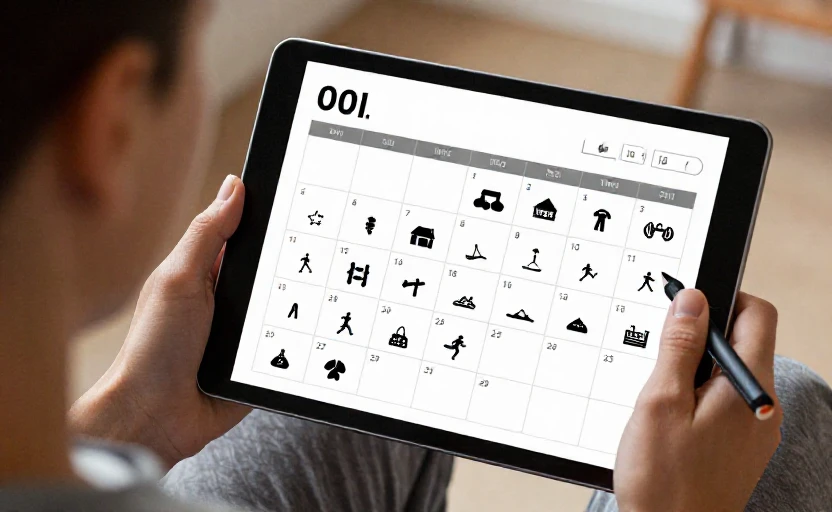
Put your plan where you’ll see it—on a calendar, in a notes app, on the fridge. Treat these appointments with the same respect as a work meeting. But also, build in flexibility. If you miss a Wednesday session, can you shift it to Thursday? The schedule is your guide, not your warden.
Finally, embrace variety within the structure. Doing the exact same workout every Monday for months leads to plateaus and boredom. Every 4-6 weeks, change your strength exercises, your cardio modality, or your rep ranges. This keeps your body adapting and your mind engaged.
The most effective home workout schedule is the one you consistently follow. It’s a living document that should evolve as your fitness, interests, and life circumstances do. Start simple, honor your rest, and celebrate the act of showing up for yourself, week after week.