If you’ve ever woken up feeling creaky after a home workout, you’re not alone. Stiff joints can turn a good fitness habit into a frustrating one. But the solution isn’t to stop moving—it’s to move smarter. Physical therapists who work with active adults know that bodyweight exercises, when scheduled properly, can actually reduce stiffness and improve joint lubrication.
The key lies in timing, variety, and listening to your body’s natural rhythms. Here’s how to build a weekly bodyweight routine that keeps your joints happy, according to the experts who treat them.
Why Bodyweight Workouts Can Help or Hinder Joints
Bodyweight training is low-impact compared to heavy lifting or running, but that doesn’t mean it’s automatically joint-friendly. Repeated movements like squats, lunges, and push-ups can stress the same tissues day after day. In fact, a 2021 study in the Journal of Orthopaedic & Sports Physical Therapy found that adults who performed bodyweight resistance training without adequate recovery had higher markers of joint inflammation after three consecutive days of work.
PTs point out that stiff joints often come from under-recovery, not overtraining. Joint cartilage gets its nutrients from synovial fluid, which moves best when you vary your range of motion. By scheduling strategically, you allow that fluid to circulate without overloading any one area.
The PT-Approved Weekly Framework
Most physical therapists recommend a rotating schedule that alternates between movement patterns and intensity. This is sometimes called “undulating periodization” for bodyweight training. Here’s a practical version that avoids joint fatigue:
Day 1: Full Range of Motion (Lower Focus)
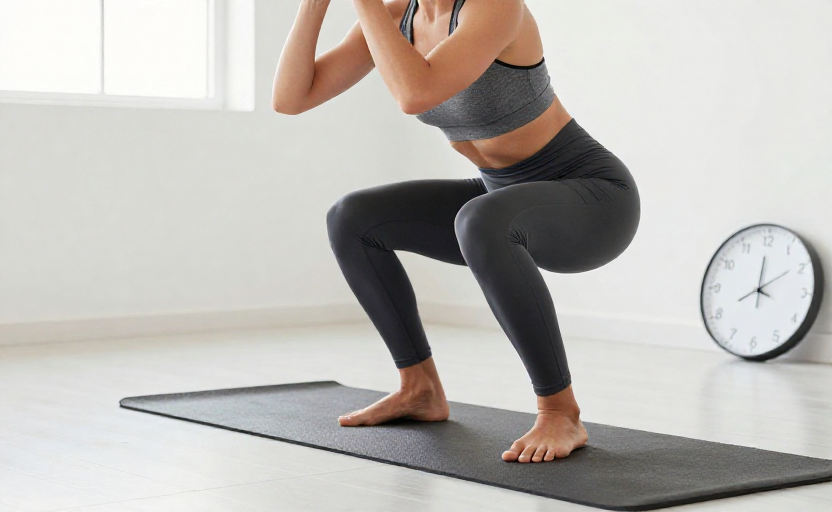
Start your week with controlled, full-depth movements. Think deep squats (heels down, if possible), hip hinges like glute bridges, and calf raises with a full stretch at the bottom. Complete 2–3 sets of 10–15 reps, resting 60 seconds between sets. The goal is to move through every degree of motion your joints allow without pain.
Day 2: Upper Body & Core
Give your lower joints a break and focus on the shoulders, elbows, and spine. Include push-ups (on knees or a countertop if needed), bird-dog holds, and side-lying leg raises. Avoid overhead pressing if your shoulders feel tight—instead, try incline push-ups or scapular retractions. Finish with a 5-minute doorway stretch for your chest and front shoulders.
Day 3: Active Recovery
This isn’t a rest day—it’s a “mobility day.” Use light bodyweight exercises like cat-cow, leg swings, and walking lunges with a long stride. The idea is to keep blood flowing but keep heart rate low. PTs often call this “joint wash-out” because movement clears inflammatory byproducts.
Day 4: Full Body (Tempo Controlled)
Return to full-body work, but slow down the eccentric (lowering) phase of each movement. For example, take 4 seconds to lower into a squat and 2 seconds to stand back up. This reduces impact and improves tendon resilience. Include planks, glute bridges, and bodyweight rows (under a sturdy table or using bed sheets).
Day 5: Lower Body (Pistol Squat Prep)
Focus on single-leg stability, which builds joint balance. Practice split squats (with a chair for support), single-leg calf raises, and lateral lunges. These movements strengthen the muscles around knees and hips—critical for joint stiffness prevention.
Day 6: Stretch & Breathe
Do a gentle flow: 10 minutes of yoga-style holds (child’s pose, pigeon pose, seated forward fold), followed by 5 minutes of diaphragmatic breathing. No strength work—just tension release.
Day 7: Total Rest
Give your joints a complete 24-hour break from structured exercise. Gentle walking is fine, but no squats, push-ups, or planks. This day allows the joint capsule to absorb synovial fluid and repair minor stresses.
Adjusting for Your Baseline
Not everyone needs seven days of structure. PTs often recommend a simpler starting point: three bodyweight sessions per week with at least one rest day between them. For example, you could do Monday (lower body), Wednesday (upper body), and Friday (full body). This automatically builds in 48 hours of recovery for each joint group—a rule that significantly reduces stiffness.
Quick tip: If you notice clicking or popping that’s painless, it’s usually harmless. If there’s any sharp, achy, or grinding sensation, stop that movement and consult a PT.
Warm-Up and Cool-Down That Actually Work
Scheduling isn’t just about days—it’s about the minutes before and after your workout. A good warm-up for stiff joints includes 3–5 minutes of dynamic movement: leg swings, arm circles, trunk rotations. Avoid static stretching before training; it can temporarily reduce muscle activation. After your workout, spend 5 minutes holding gentle static stretches for the muscles you used most.
PTs emphasize one more habit: drink water during your workday. Joint cartilage is about 70% water, and even mild dehydration can reduce shock absorption. It’s not a workout trick—it’s a daily foundation.
Avoiding Common Mistakes
- Going too hard two days in a row. Stiffness is often a sign that you didn’t alternate muscle groups. Never train the same body part for strength two days straight.
- Holding your breath. Tense breathing stiffens the rib cage and shoulders. Exhale during the hardest part of each movement (e.g., standing up from a squat).
- Ignoring your wrists. Planks and push-ups can strain wrists. Use fists or push-up bars if you feel wrist pain—it keeps the joints aligned.
- Rushing. Fast reps reduce joint control. Slow down by 2 seconds per rep and feel the difference.
Most of all, be consistent. Joint stiffness improves with regular, intelligent movement—not with long breaks followed by intense catch-up sessions. If you feel extra stiff one morning, scale back to half your usual reps and focus on form. That single adjustment can keep you moving pain-free for years.