Eating out doesn't have to mean abandoning your fiber goals. With a little know-how, you can scan almost any restaurant menu and assemble a plate that supports digestion, keeps you full, and aligns with a balanced diet. This guide walks you through practical strategies for spotting high-fiber options, customizing orders, and building a satisfying meal—whether you're at a diner, a fast-casual spot, or a sit-down restaurant.
Why fiber matters when dining out
Fiber does more than keep things moving. It helps stabilize blood sugar, supports heart health, and encourages a healthy gut microbiome. Most adults need around 25 to 38 grams per day, but many restaurant meals clock in at single-digit fiber counts—heavy on refined grains and light on vegetables, legumes, and whole foods. The trick isn't to avoid restaurants; it's to know which menu sections and customizations tip the scales in your favor.
Start with vegetables—they're the foundation
Before you even look at the entrées, ask yourself: where are the vegetables on this menu? A balanced plate begins with a generous base of non-starchy veggies. Look for a side salad, steamed greens, roasted vegetables, or a stir-fry loaded with broccoli, bell peppers, and snap peas. If the menu doesn't list vegetables as a side, ask if you can substitute them for fries or rice. Most restaurants will accommodate this request.
Order a side of sautéed spinach or a simple garden salad with vinaigrette. Even a few extra forkfuls of vegetables add 2–4 grams of fiber to your meal.
Choose whole grains and legumes as your carbohydrate
White rice, white pasta, and refined bread are standard on most menus, but they offer almost no fiber. Instead, scan for brown rice, quinoa, farro, whole-wheat pasta, or barley. Many Mexican and bowl-style restaurants let you choose your grain base—opt for brown rice or black beans. Legumes like lentils, chickpeas, and black beans are fiber powerhouses. A cup of cooked lentils has about 15 grams of fiber. If the menu has a bean-based soup, chili, or a bean salad, that's your best bet.
- Ask for brown rice or quinoa instead of white rice.
- Swap fries for a side of black beans or a bean salad.
- Choose a wrap or sandwich on whole-grain bread.
Protein matters, but pair it with fiber
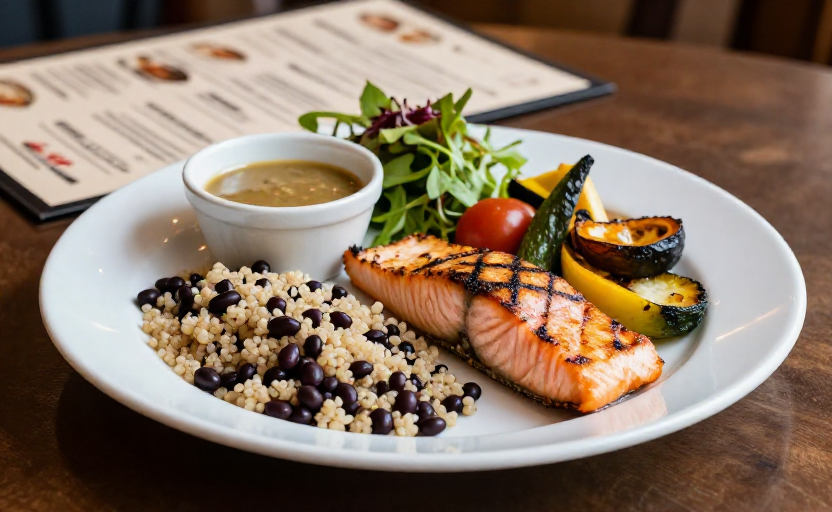
Lean protein—chicken, fish, tofu, or eggs—is important, but it rarely contains fiber. The key is to pair your protein with sides that do. For instance, a grilled salmon fillet with a side of lentils and roasted asparagus gives you a balanced plate. A chicken sandwich on a whole-grain bun with a side salad is another strong choice. Avoid proteins that are breaded and fried, as the coating adds refined carbs and little fiber.
Sauces, dressings, and hidden fiber traps
Not all sauces are fiber-friendly. Creamy dressings, cheese sauces, and heavy gravies add calories but no fiber. Instead, choose vinaigrettes, salsa, guacamole, or tahini-based dressings. Guacamole, made from avocado, contributes about 2 grams of fiber per tablespoon. Salsa is packed with tomatoes, onions, and peppers—each adding a small but worthwhile fiber boost.
Ask for dressings and sauces on the side so you control the amount. A tablespoon of vinaigrette is enough to dress a salad without drowning it in oil.
Navigating fast food and casual chains
Fast food doesn't have to be a fiber desert. Many chains now list nutritional information online or on in-store menus. Look for items like burrito bowls with brown rice and black beans, grilled chicken wraps with lettuce and tomato, or salads that include quinoa or edamame. Skip the tortilla chips and opt for a side of black beans or a piece of fruit. Even a simple order of oatmeal (without added sugar) can be a fiber-rich choice at breakfast chains.
If you're at a pizza place, order a thin-crust veggie pizza with a side salad. The vegetables on the pizza add some fiber, and the side salad fills you up before you reach for a second slice. At a burger joint, go for a lettuce wrap or a whole-grain bun and load up on lettuce, tomato, onion, and pickles.
Sample balanced plate from a typical menu
Here's what a high-fiber restaurant meal could look like:
- Base: Mixed greens or a side of roasted vegetables
- Grain or legume: Quinoa or black beans
- Protein: Grilled chicken, fish, or tofu
- Extras: Salsa, guacamole, or a light vinaigrette
- Beverage: Water or unsweetened iced tea
This combination delivers around 10–15 grams of fiber—a solid start toward your daily goal.
Practical tips for any restaurant
- Check the menu online beforehand. Most restaurants post nutritional info. Scan for fiber counts and plan your order.
- Don't be shy about substitutions. Ask to swap fries for a side salad or beans. Many places are happy to oblige.
- Order appetizers as entrées. A bean soup, a small salad, and a vegetable-based appetizer can combine into a fiber-rich meal.
- Watch portion sizes. Restaurant portions are often double what you'd serve at home. Half the plate can be tomorrow's lunch.
Building a balanced plate from a restaurant menu is mostly about knowing what to look for and asking for small tweaks. Prioritize vegetables, choose whole grains and legumes, pair protein with fiber, and keep sauces in check. With practice, it becomes second nature—and your digestion will thank you.