
Finding the right rhythm for your workouts can feel like a puzzle, especially when you’re aiming to keep your shoulders strong and pain-free. Train too little, and you might not see the progress you want. Train too often, and you risk the nagging aches that signal you’ve pushed past your body’s ability to recover. The sweet spot isn’t a universal number; it’s a personal cadence built on understanding how your shoulders work and what they need to thrive.
As a physiotherapist, the most common question I hear isn’t about the best exercise, but about the best schedule. People want to know the magic number of days per week. The honest answer is that it depends entirely on your current fitness, your goals, and the subtle feedback your body provides. This guide will help you listen to that feedback and build a sustainable, effective routine centered on shoulder health.
Understanding Your Shoulder’s Unique Demands
Your shoulder is the most mobile joint in your body. This incredible range of motion—allowing you to reach, throw, and lift—comes at a cost: inherent instability. Unlike the hip, which is a deep ball-and-socket, the shoulder socket is shallow. Stability comes from a complex team of muscles, tendons, and ligaments known as the rotator cuff and scapular stabilizers.
When we train, we’re asking this team to perform. How often we ask, and how hard, determines whether they get stronger or break down. Think of these muscles not as prime movers for heavy weight, but as essential stabilizers that need endurance and coordination. Training them requires a different mindset than training, say, your quads.
Frequency is less about pounding muscles into growth and more about practicing stability and movement patterns consistently.
The Core Principles of Frequency
Before landing on days per week, let’s establish three non-negotiable rules for shoulder training.
Recovery is Non-Optional. Muscle is built and repaired during rest, not during the workout itself. For the small stabilizers of the shoulder, which are constantly in use, adequate recovery is critical to prevent overuse injuries like tendinopathy.
Quality Always Trumps Quantity. One set of an exercise with perfect, controlled form is infinitely more valuable for shoulder health than three sets with jerky, compromised mechanics. Poor form often means your larger chest and back muscles are taking over, leaving the stabilizers underworked and vulnerable.
Listen to Your Pain Dial. Discomfort from muscle fatigue feels different from joint pain. A useful model is to rate your sensation on a scale of 0 to 10. A 0-3 might be mild muscle burn or stiffness, which is often acceptable. A persistent 4+ pain, especially a sharp or pinching feeling in the joint, is your body’s stop sign. Training through it is an invitation for injury.
Mapping Frequency to Your Experience Level
With those principles in mind, we can outline general frequency guidelines. Consider these starting points, not rigid rules.
If You’re New to Training or Rehabbing an Injury
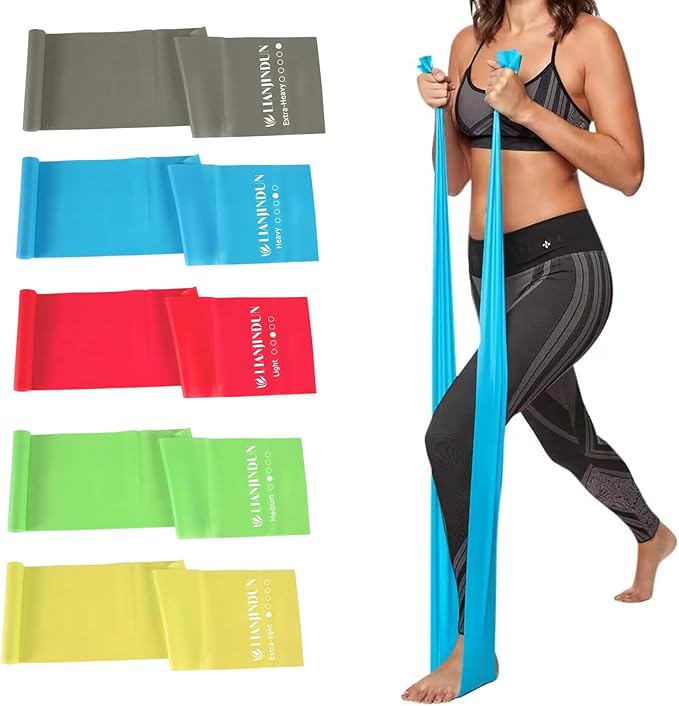
Start with 2 to 3 days per week, with at least one full day of rest between sessions. Your primary goal is neuromuscular re-education—teaching your body the correct movement patterns. Sessions can be short, even 15-20 minutes, focusing on foundational exercises like scapular retractions, gentle rotator cuff rotations with a band, and wall slides. The low frequency allows your tissues to adapt without overwhelm.
If You’re an Intermediate Lifter or Regularly Active
Aim for 3 to 4 days per week of dedicated shoulder-stability work. This can be integrated into your existing workouts. For example, you might do your rotator cuff and scapular exercises as part of your upper-body or push-day warm-up. The key is to avoid training the same movement patterns (like heavy overhead pressing) on consecutive days. You might structure a week with a push day, a rest day, a pull day, a rest day, and then a full-body day with lighter loads.
If You’re an Advanced Athlete with Robust Shoulder Health
You may tolerate 4 to 5 days of upper-body training, but variation is paramount. You cannot do high-intensity, high-load shoulder work daily. Advanced programming uses careful periodization, alternating between heavy, moderate, and light days, and varying the movement angles and demands. Even at this level, direct stability work is often still done at higher frequencies with very low load, almost as daily maintenance.
The Role of Exercise Selection and Volume
Frequency doesn’t exist in a vacuum. It’s directly tied to what you do and how much you do each session.
Your weekly schedule should balance “global movers” (like your latissimus dorsi and pectoralis major) with “local stabilizers” (the rotator cuff). A common mistake is to only train the movers with bench presses and pull-downs, neglecting the stabilizers. A healthy frequency plan includes both.
For stability work, higher frequency (e.g., 3-5 brief sessions per week) with lower volume per session (2-3 sets of 15-20 controlled reps) is typically more effective and safer than one marathon session. For strength work on global movers, lower frequency (1-2 times per week per movement pattern) with higher intensity is standard.
Signs You Need to Adjust Your Frequency
Your plan should be fluid. Here are clear indicators it’s time to pull back or change course:
- Persistent joint ache that lasts more than an hour post-workout or is present upon waking.
- A noticeable dip in performance, like suddenly struggling with a weight that felt easy the week before.
- Compensatory movements, such as your back arching excessively during an overhead press, signaling shoulder fatigue.
- Increased stiffness and a loss of your normal range of motion.
If you notice these, consider adding an extra rest day, reducing the load, or swapping high-intensity exercises for lower-intensity mobility and stability work for a week.
Building Your Sustainable Routine
Let’s translate this into a practical, sample framework for an intermediate individual focused on shoulder health. Remember to warm up with 5-10 minutes of light cardio and dynamic movement.
Monday (Push Focus): Overhead press (moderate load), followed by stability work: banded external rotations, scapular push-ups.
Tuesday (Active Recovery): Light cardio, full-body mobility flow, emphasis on thoracic spine rotations.
Wednesday (Pull Focus): Rows, lat pull-downs. Stability work: face pulls, prone Y-T-W lifts.
Thursday: Rest or gentle walk.
Friday (Full Body / Stability Focus): Goblet squats, stability-focused push-ups (slow, controlled), band pull-aparts. Focus on form over load.
Weekend: Choose one day for rest, one for enjoyable, non-structured activity like a hike or swim.
This pattern hits key movement patterns while sprinkling in stability work frequently, never hammering the shoulder joint with high load on back-to-back days. It’s a template you can adapt, listening closely to how your shoulders feel each week. The ultimate goal is a lifetime of strong, resilient movement—and that’s built not in a single week, but through months and years of consistent, mindful practice.