You finally committed to building stronger arms. You did your first set of bicep curls until your muscles burned, felt that satisfying pump, and woke up the next day wondering if someone replaced your arms with overcooked noodles. That soreness is normal, but it also raises an important question: how often should you actually train your arms, and how much rest do they need?
For beginners, the answer isn't as simple as "every other day." Your muscles adapt during rest, not during the workout itself. Understanding how to space out your arm training — and recognizing when you're overdoing it — will help you grow stronger without burning out or risking injury. We asked personal trainers for their go-to advice on rest periods for arm workouts aimed at newcomers.
Why arm muscles need recovery time
Your biceps, triceps, and forearms are relatively small muscle groups. While that might make them seem like they can handle daily training, the opposite is true. Smaller muscles actually recover more slowly than large ones like your quads or glutes because they work hard during many compound lifts already — think rows, pull-ups, and presses — even when you aren't doing isolation curls.
Soreness, technically called delayed onset muscle soreness (DOMS), typically peaks 24 to 48 hours after a workout. For new lifters who are still building connective tissue and neuromuscular coordination, that recovery window can stretch even longer. Pushing through heavy soreness with another intense arm session doesn't accelerate growth. It risks overtraining, tendinitis, or simply hitting a plateau because your muscles never fully rebuild.
Trainers recommend 48 hours of rest between arm sessions
The general rule most trainers give beginners is to wait at least 48 hours before directly training the same arm muscles again. That translates to no more than two to three dedicated arm sessions per week, with at least one full rest day between them.
Here’s why that number works: Your muscles need time to repair the microscopic tears caused by resistance training. During that 48-hour window, your body clears metabolic waste, shuttles nutrients to the muscles, and reinforces the fibers so they come back slightly stronger. Without that pause, you're breaking down tissue before it has a chance to finish the repair cycle.
That said, you don't have to sit completely idle. Active recovery is fine. Light walking, gentle stretching, or foam rolling your forearms won't interfere with muscle repair. The key is avoiding heavy loads or high-volume sets targeting the same muscle groups you just trained.
A quick note for beginners: Soreness is not a signal to skip your next workout entirely — but it is a signal to avoid training the same muscle group hard. If your biceps are still tender from Monday, do legs on Tuesday, or take a rest day.
Signs you aren't resting enough
Not everyone needs a rigid schedule. Some beginners recover faster than others, especially if their arm workouts are low in volume. But there are clear signs that you should extend your rest period:
- Persistent weakness. If you try to curl a weight you handled easily last session but can barely lift it, your arms are telling you they need more time off.
- Joint pain, not muscle soreness. A dull ache in your elbow or wrist that doesn't fade after warming up is a red flag. That’s usually tendinitis, not DOMS, and it requires more rest and possibly a check-in with a healthcare provider.
- Your workout performance drops for more than a week. Acute soreness is normal; a continued slide in strength or endurance indicates you may be training too often without adequate recovery.
- You feel mentally drained or irritable about training. Overtraining affects your nervous system, too. If arm day starts to feel like a chore you dread, a few extra rest days can reset both your body and your motivation.
How to structure a beginner arm routine with proper rest
If you’re planning two arm-focused sessions per week, spread them out evenly. For example, train arms on Monday and Thursday. That gives you three days between the first session and the next, with a full rest day after each. Here’s a simple layout:
- Monday: Compound workout (push-ups, rows, overhead press hits triceps and forearms) plus 2–3 isolation moves for biceps and triceps.
- Tuesday or Wednesday: Lower body or full rest.
- Thursday: Repeat a similar arm-focused session, possibly adjusting weight or rep range.
- Friday–Sunday: Rest, light activity, or total-body recovery work.
Beginners often make the mistake of thinking they need to hit arms every day to see growth. The reality is that you can make noticeable progress with just two well-planned sessions per week — especially in the first few months, when your nervous system is still learning how to recruit muscle fibers efficiently.
Can you do arms twice a week and still see results?
Absolutely. In fact, most trainers agree that twice per week is the sweet spot for people new to resistance training. Research on training frequency supports this: working a muscle group two times per week stimulates muscle protein synthesis more effectively than once a week, while still leaving enough time for full recovery.
If you're committed to three arm sessions in a week, spread them out so you never train arms two days in a row. A Monday-Wednesday-Friday pattern works only if you keep the volume moderate — three sets per movement, not five — and listen to your body. If you feel your elbows or wrists complaining, drop back to two sessions until you build more base strength.
What about push-ups or lighter daily arm work?
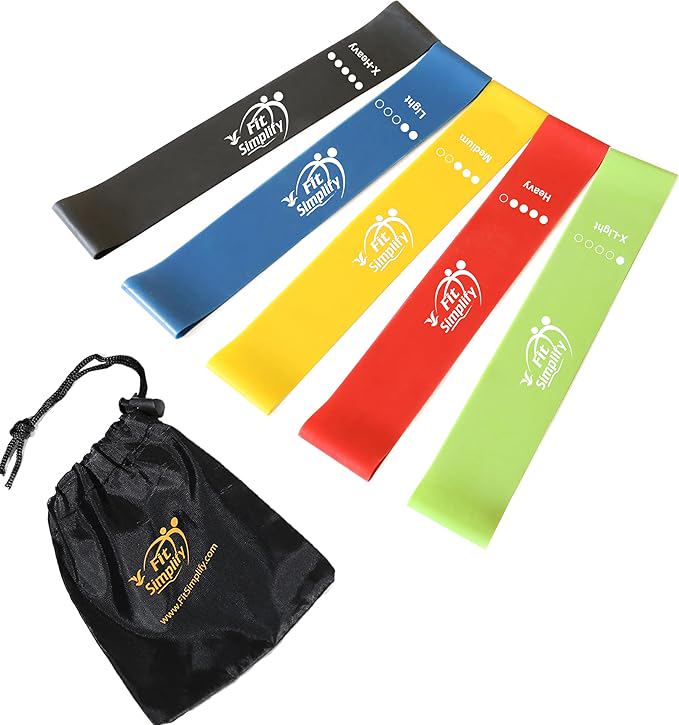
You can do very light arm exercises every day if they aren't fatiguing the muscles. Think wrist circles, finger extensions, or very low-resistance band work for blood flow. This is sometimes called "active recovery" and can help reduce soreness. But exercises that challenge your muscles — like push-ups, chin-ups, curls, or triceps dips — require the same 48-hour recovery window if you're doing them with serious effort.
If all else fails, trust the soreness as a rough guide. If you can't fully straighten your elbows the next day, give yourself permission to rest. That’s not laziness; it’s the most productive thing you can do for long-term arm strength.
Always check with a healthcare professional before beginning a new fitness routine, especially if you have existing joint issues or injuries.