
You know that feeling. The subtle ache in a knee after a run, the stiffness in a shoulder after a push day, the quiet whisper from your joints that maybe you’re asking for a bit too much, a bit too often. For anyone committed to a consistent fitness routine, this internal feedback loop is familiar. The instinct might be to push through, but the smarter, more sustainable approach is to listen and adjust. This is where the art of managing workout frequency comes in—not as a setback, but as a strategic tool for long-term health and performance.
Fitness professionals don’t just design workouts; they design recovery. They understand that joints—the hinges, sockets, and cushions of your body—aren’t just along for the ride. They are critical infrastructure. Adjusting how often you train isn’t about doing less; it’s about training smarter to ensure you can do more, for longer, without pain sidelining your progress.
Why Joints Demand a Different Kind of Schedule
Muscles and joints recover on different timelines. Muscle soreness from a tough workout often fades in 24-72 hours, signaling a readiness to train again. Joint connective tissues—tendons, ligaments, cartilage—have a poorer blood supply. They repair and adapt more slowly. Hitting them with the same high-impact or high-load stress before they’ve fully recovered is a recipe for overuse injuries like tendonitis or bursitis.
The goal is to find a rhythm that stimulates strength and adaptation without crossing the line into repetitive strain. It’s the difference between consistently challenging your body and consistently damaging it.
How Experts Rethink the Training Week
There’s no universal calendar. Adjustments are highly personal, but they follow proven principles. The first step is always assessment. A good trainer will ask: Where is the discomfort? When does it occur? What movements trigger it? The answers dictate the strategy.
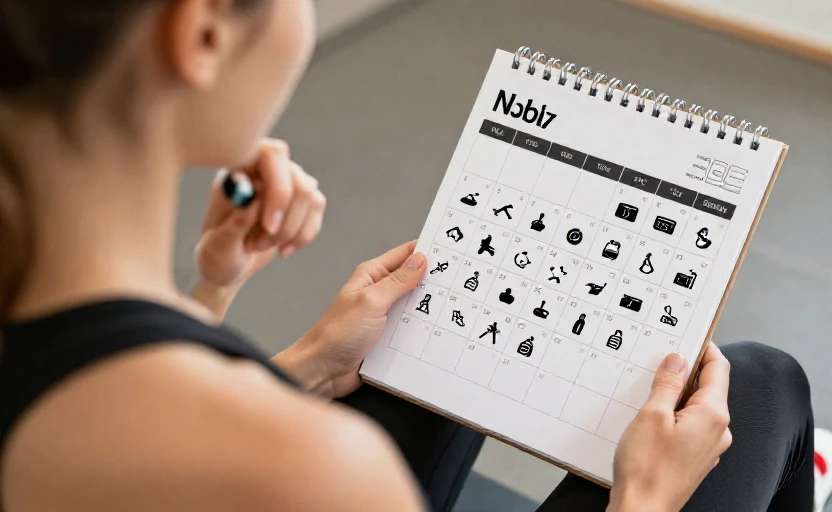
A common framework is the split routine, but with a joint-conscious twist. Instead of a traditional “leg day” that hammers every lower-body joint simultaneously, the week might be divided by movement pattern and impact level. For example, a heavy squat session that loads the knees and hips might be followed not by another leg day, but by a full day of rest, then an upper-body day, then a low-impact lower-body session like cycling or swimming. This creates a longer recovery window for the stressed joints while maintaining training frequency for other areas.
Intensity cycling is another cornerstone. Not every workout should be a max-effort grind. A joint-friendly week often follows a wave: high intensity one day, moderate the next, low or active recovery the following. This allows for neurological and muscular stimulation while giving joints a relative break. Think of it as managing the overall “load budget” for your knees, shoulders, and spine across the week, not just in a single session.
The Role of Active Recovery
Complete rest has its place, but gentle movement is often more beneficial for joint stiffness and circulation. Experts frequently program active recovery days that are purely joint-focused: think mobility flows, very light resistance band work, walking, or yoga. These sessions maintain habit frequency without adding compressive or shear stress.
The most effective adjustment is often the one you don’t see—the rest day strategically placed, not taken as a defeat.
Listening to the Signals: Pain vs. Discomfort
This is the critical skill. Fitness culture often glorifies “working through the pain,” but that’s a dangerous oversimplification. Experts distinguish between muscular discomfort (a burning sensation during effort) and joint pain (a sharp, pinching, or aching sensation, often in a specific spot).
- Joint pain that is sharp, localized, or causes swelling is a stop signal. It dictates an immediate reduction in frequency, load, or impact for that movement.
- General stiffness that eases with movement after 5-10 minutes may simply call for a better warm-up or a shift to lower-impact exercises for that day.
Adjusting frequency based on these signals is proactive healthcare. It might mean swapping a planned run for a rowing session when a knee feels tender, or skipping overhead presses for a week if the shoulder is grumpy.
Practical Adjustments for Common Goals
Let’s apply this to real scenarios. If your goal is strength but your elbows are complaining from too many barbell presses, an expert might reduce pressing frequency from three days a week to two, and fill the third slot with a pulling-focused day or grip work. The total training days remain, but the stress on the elbow joint is reduced.
For endurance runners managing knee or hip health, the adjustment might be a frequency shift in impact. Instead of running five days a week, they might run three, and insert two non-impact cardio days (cycling, elliptical) in between. Running frequency decreases, but overall cardiovascular training frequency stays high.
The overarching theme is variation. Varying your exercises, your intensities, and the angles of stress you apply is the single best way to protect joints while making progress. It prevents any single structure from being the repetitive point of failure.
Building a Joint-Health Foundation
Frequency adjustments are reactive and proactive. The proactive work is what builds resilient joints. This includes dedicated time for:
- Mobility work: Not just static stretching, but actively taking joints through their full range of motion under control.
- Targeted strengthening: Often of the smaller, stabilizing muscles around a joint. Strong glutes protect knees; strong rotator cuffs protect shoulders.
- Movement quality: Sometimes, reducing frequency creates space to drill technique with lighter loads, ensuring that when you do train, every rep is as joint-friendly as possible.
Your workout schedule is a living document. The fittest people aren’t those who never feel a twinge; they’re those who have learned to respond to those twinges with intelligence, not ignore them with bravado. Adjusting your frequency is a sign of expertise, not a lack of dedication. It’s the practice of aligning your ambition with the enduring capacity of your body, so you can keep moving well, for life.