Core strength isn’t about achieving a six-pack for the sake of appearance. It’s the quiet, steady work that supports everything else you do—from lifting a grocery bag to maintaining good posture at your desk, from running a mile to simply getting out of a chair with ease. A strong core acts as a stabilizer for your entire body, protecting your spine and transferring power between your upper and lower halves.
But when it comes to training this central pillar, confusion reigns. Should you do core work every day? Is once a week enough? The answer lies not in a universal number, but in understanding what your core truly is, how it recovers, and what you’re asking it to do.
What Do We Mean by "The Core"?
Let’s move beyond the idea of just the abdominal muscles. Your core is a complex cylinder of muscles that wraps around your torso. It includes the muscles you can see, like the rectus abdominis (the "six-pack" muscle) and the external obliques at your sides, but more importantly, it includes the deep stabilizers you can’t see.
These are the true heroes: the transverse abdominis (a deep corset muscle), the multifidus along your spine, the pelvic floor muscles, and the diaphragm. Their primary job isn’t to create movement, but to resist it—to brace and stabilize your spine before you lift, twist, or reach. Effective core training prioritizes this bracing and stabilizing function over endless crunches.
The Goldilocks Principle of Core Training Frequency
Finding the "just right" frequency for core work depends heavily on two factors: the intensity of your sessions and your overall training goals.
Think of it this way: you wouldn’t train your legs with heavy squats every single day. They need time to repair and grow stronger. Your core muscles are no different; they are skeletal muscles that respond to the same principles of stress, recovery, and adaptation.
For most people seeking general strength, stability, and injury prevention, aiming for 2 to 4 dedicated core sessions per week is a sustainable and effective sweet spot. This allows for sufficient stimulus without overtaxing the muscles or the nervous system.
Quality always trumps quantity. Five minutes of focused, mindful core engagement is far more valuable than twenty minutes of mindless, repetitive motion.
Tailoring Frequency to Your Routine
If Your Focus is General Fitness & Wellness
You might integrate core work as a finisher to your regular strength or cardio workouts, 2-3 times per week. These sessions can be shorter (10-15 minutes) and focus on fundamental patterns like planks, dead bugs, bird-dogs, and Pallof presses. The key is consistency and mind-muscle connection.
If You're an Athlete or Training for a Sport
Your core training should be more specific. A runner needs anti-rotation and hip stability for efficient stride. A golfer needs powerful rotational control. Frequency might remain at 2-3 times per week, but the exercises are chosen to directly support your sport’s demands, often at higher intensity.
If You're Recovering from Injury or Building a Foundation
Here, frequency might look different. Daily, very gentle practice of activation exercises (like drawing in the belly button to engage the transverse abdominis) can be beneficial to re-establish neuromuscular connection. This isn’t about fatigue; it’s about relearning how to turn on the right muscles. As you build tolerance, you’d transition to a more standard strength-building frequency.
Signs You Might Be Overdoing It
More is not always better. Your core needs rest. Listen to your body for these signals:
- Lower back pain or ache during or after training, especially a dull, persistent ache.
- Feeling your hip flexors (the front of your hips) cramping or taking over during exercises meant for your abs.
- A noticeable dip in performance in your other lifts or cardio—your core is too fatigued to stabilize effectively.
- No improvement in strength or endurance over several weeks, indicating a lack of recovery.
Building a Balanced Core Session
A well-rounded core routine addresses its three primary functions:
- Anti-Extension: Resisting your spine from arching excessively. Think: Planks, dead bugs, ab rollouts.
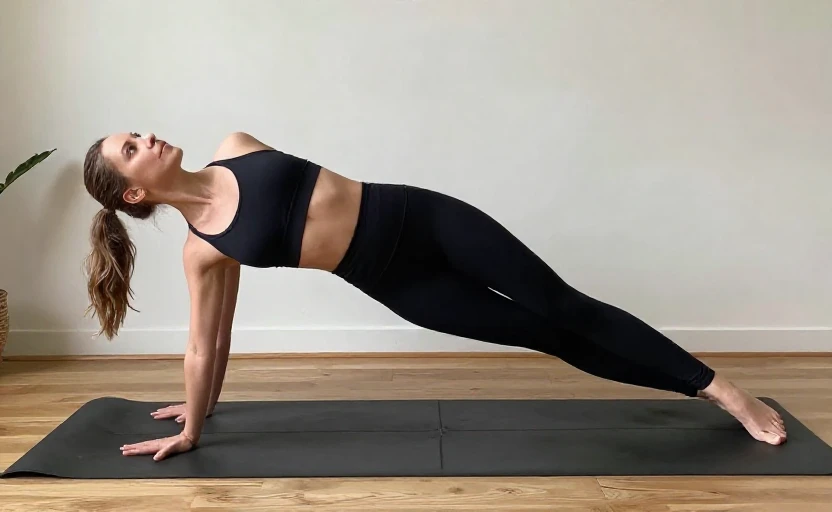
- Anti-Lateral Flexion: Resisting your spine from bending sideways. Think: Side planks, suitcase carries.
- Anti-Rotation: Resisting your spine from twisting. Think: Pallof presses, bird-dogs.
A simple session could include one exercise from each category, performed for 2-3 sets of quality, controlled reps or timed holds. This balanced approach builds functional resilience far better than a hundred crunches ever could.
The Everyday Core Work
Perhaps the most powerful tool isn’t your scheduled workout at all. It’s integrating core awareness into your daily life. This is where frequency takes on a new meaning.
Gently bracing your core (as if preparing for a light tap on the stomach) when you pick up a child, pull a door open, or stand up from a chair trains stability in real-world contexts. Focusing on maintaining a neutral spine while sitting or walking is continuous, low-level core engagement. This constant, mindful practice does more for long-term health and posture than any isolated exercise session.
The journey to a stronger core is a marathon, not a sprint. It’s built through consistent, intelligent practice—not daily punishment. Start where you are, focus on form and function over frequency alone, and let the strength you build in the center radiate outward to everything you do.