
Navigating exercise when your joints ache or muscles feel perpetually sore can feel like walking a tightrope. Push too hard, and you risk a flare-up. Do too little, and stiffness sets in, making movement even harder. The question isn't whether you should move—it's how often you should move to actually feel better, not worse. As a physiotherapist, I see this struggle daily. The good news is that the right workout frequency acts as a powerful tool for managing joint pain, not as a threat.
Forget the old adage of "no pain, no gain." When managing soreness and joint sensitivity, consistency with recovery is your new mantra. The goal is to find the "Goldilocks zone"—enough activity to lubricate joints and strengthen supporting muscles, but not so much that you overwhelm your tissues. Here is my evidence-based approach to calibrating your weekly workout schedule.
Why Frequency Matters More Than Intensity Right Now
Chronic joint pain and persistent muscle soreness are often signs of inflammation or of muscles that have not fully recovered from previous loads. Working out seven days a week without rest can keep your body in a constant state of stress, preventing repair. Conversely, exercising only once or twice a week can lead to deconditioning, which actually increases joint instability and pain over time.
A moderate, frequent approach works best. Think of this as a dose-response relationship. You want a small, manageable dose of stimuli (exercise) spread across the week, rather than one large, overwhelming dose that triggers pain. This concept is called relative rest—moving and loading the body enough to promote recovery, but not so much that you break it down further.
My 4-Day Rule for Chronic Joint Pain
Based on clinical experience and current research on tendinopathy and osteoarthritis management, a three to four day-per-week schedule is the sweet spot for most people dealing with persistent joint pain or post-workout soreness.
Quick Rule of Thumb: If you are sore for more than 48–72 hours after a workout, your frequency is too high, your intensity is too high, or both. Scale back.
Here is how that breaks down into a practical weekly flow:
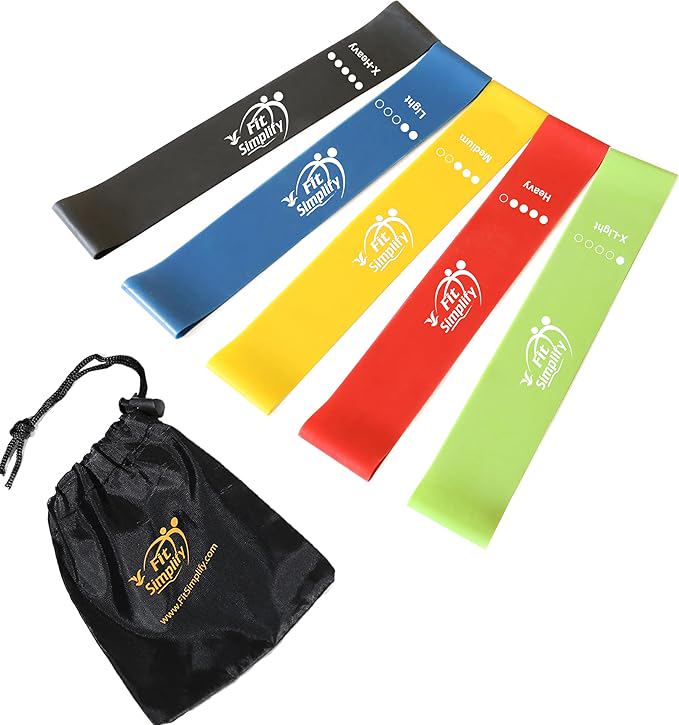
- Day 1 (Strength): Focus on compound, low-load movements (e.g., bodyweight squats, glute bridges, banded rows). Do not go to failure. Stop 2–3 reps shy of fatigue.
- Day 2 (Active Recovery): Do a different modality entirely. Think walking, gentle yoga, or swimming. Keep your heart rate low. This is not a workout; it is tissue perfusion and joint lubrication.
- Day 3 (Strength again): Repeat the same exercises from Day 1. Can you do the same work with less effort? If yes, you are recovering. If it feels heavier or more painful, drop the load or range of motion.
- Day 4 (Full Rest or Gentle Mobility): Complete rest or 10 minutes of light stretching is fine.
Then repeat. What matters here is the every-other-day structure for strength work. This gives sore muscles and inflamed joints a full 48 hours to undergo the repair process before they are challenged again.
The Critical Difference Between Good Pain and Bad Soreness
You need to become a detective of your own body. Not all soreness is bad. You are looking for muscular burn and mild fatigue during exercise, followed by a feeling of improved mobility the next day. This is good stress. Bad pain includes sharp, stabbing, or electric sensations, or joint pain that lingers for more than a day after a workout.
If you wake up the morning after a strength session and your muscles feel tired (mild soreness) but your joints feel loose and happy, you hit the right frequency. If your knees, hips, or lower back are hot, tender, or stiff, you are overloading the joint capsule. In that case, you need to drop your frequency back—perhaps to just two strength sessions per week—and increase your active recovery days.
Adapting Frequency Based on Your Pain Type
Not all joint pain is the same. The ideal workout frequency shifts slightly based on the underlying issue.
For Osteoarthritis (OA)
Aim for 3–4 sessions per week of low-impact, pain-free movement. The key is to avoid high-impact loading (running on concrete, heavy lifting with poor form). Swimming, walking, and cycling are excellent. The frequency keeps the synovial fluid moving, which literally nourishes the cartilage.
For Tendinopathy (e.g., tennis elbow, patellar tendonitis)
You need a specific isometric or heavy-slow-resistance protocol, often performed daily or every other day, but with very low volume (e.g., 3 sets of 15 seconds holds). Tendons respond better to frequent, low-stress loading than to infrequent, high-stress loading. Avoid explosive movements.
For General Muscle Soreness (DOMS)
If you are sore from a new workout routine, take a full rest day. Do not work the same muscle group again until the soreness has subsided to a 2/10 or less. This often means strength training each muscle group only twice per week with three days of rest in between.
How to Listen to Your Body (Without Being Lazy)
There is a big difference between being cautious and being fearful. To help you walk that line, ask yourself this simple question before every workout: "On a scale of 0–10, how is my joint pain right now?"
- 0–2 (No pain to mild ache): Green light. Proceed with a normal workout. You can even increase frequency slightly if you are feeling great.
- 3–5 (Moderate pain but no sharpness): Yellow light. Reduce your load by 30–50%. Still perform the movement, but do not push into pain. Keep frequency the same.
- 6+ (Significant pain, sharp, or throbbing): Red light. Skip the strength session. Switch to gentle range-of-motion exercises only. Drop frequency to just 1–2 days per week until pain settles.
A practical tip I give my patients: pre-activity warm-ups are non-negotiable. Spend 5–10 minutes doing blood-flow work (light cycling, leg swings, cat-cow stretches) before every workout. This primes the joint capsule and reduces the chance of provoking sharp pain.
Signs You Are Exercising Too Frequently
Tracking frequency is pointless if you ignore the signal. Look for these red flags:
- You wake up feeling stiff every single morning.
- Your pain gets worse as you continue exercising (not better).
- You feel mentally drained or dreading your next workout.
- Your sleep quality declines.
- You notice swelling or heat in a joint after exercise.
If any of these sound familiar, take a full week of low-active recovery (just walking and gentle stretching). Then restart with a reduced frequency—perhaps just two full-body strength sessions the next week—and see how you respond.
The final piece of advice is this: trust your recovery, not your ego. A well-structured workout plan for joint pain is not about how much you can endure; it is about how consistently you can show up without causing a setback. Three smart, well-timed sessions per week will always outperform six reckless ones. Your joints are trying to talk to you—the right frequency just helps you hear them clearly.