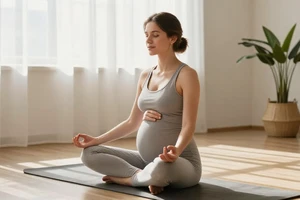

We often think of tight hamstrings as a minor annoyance — that familiar tug when you try to touch your toes or the stiffness that settles in after a long day of sitting. During pregnancy, however, chronically tight hamstrings stop being a simple flexibility quirk and become a genuine biomechanical risk. As your center of gravity shifts forward and your pelvis tilts to accommodate your growing baby, those already short and tight hamstrings pull on your pelvis with real force. This can set off a chain reaction that leads to pelvic girdle pain, pubic symphysis dysfunction, or even sacroiliac joint instability.
The good news is that your body sends clear signals long before a serious injury sets in. Here are seven warning signs that your tight hamstrings are moving from a nuisance to a pregnancy-related injury risk — and what you can do about it.
1. You Can't Straighten Your Leg Without Pain Behind the Knee
If you notice a sharp or pulling sensation behind your knee when you try to fully straighten your leg (especially first thing in the morning or after sitting), your hamstrings are likely short and overactive. During pregnancy, the hormone relaxin loosens your ligaments, but muscles don't always follow suit. When your hamstrings remain tight while your pelvis becomes more mobile, the attachment points at your sit bones and behind your knee become vulnerable. This specific pain pattern is often the first red flag that your hamstrings are pulling too hard on your pelvis.
2. A Deep Ache in Your Lower Back That Gets Worse When Standing
Tight hamstrings yank downward on your pelvis, flattening or even reversing the natural curve of your lower spine. As your belly grows and your center of gravity moves forward, your body compensates by exaggerating that lumbar curve — but tight hamstrings resist this change. The result is a deep, dull ache in the low back that intensifies the longer you stand. This is different from typical pregnancy back strain; it feels more structural and unrelenting, and it often eases noticeably when you sit or lie down with your knees bent.
3. Clicking or Popping in Your Hips When You Walk
Audible or palpable clicking in the front or side of your hip joint during walking is often dismissed as just another weird pregnancy noise. But when it's paired with tight hamstrings, it signals that the muscles around your pelvis are no longer coordinating smoothly. Your hamstrings, connected to your sit bones, directly influence how your glutes and deep hip rotators fire. If your hamstrings are too tight, your hip joint can become slightly unstable — and that clicking or popping is the sound of tendons snapping over bony landmarks. Over time, this instability can lead to bursitis or labral irritation.
4. Pain When Rolling Over in Bed
This is one of the most telling signs. If rolling from side to side in bed — especially when you try to keep your legs together or move them as a unit — causes sharp pain in your groin, pubic bone, or deep gluteal area, your hamstrings are likely contributing to pelvic misalignment. Tight hamstrings prevent your pelvis from rotating smoothly during side-lying transitions, which forces your sacroiliac joints and pubic symphysis to absorb the torque instead. Many women report this symptom worsening around the second trimester, and it often precedes pubic symphysis dysfunction.
5. A Feeling That Your Leg Is "Catching" or Hesitating When You Walk
Some people describe this as their leg feeling like it's not swinging forward smoothly, or a sensation that one leg is heavier than the other. This hesitancy in gait often traces back to hamstring tightness that restricts the normal forward swing phase of walking. During pregnancy, your body is already adapting to a wider stance and altered gait pattern. When your hamstrings refuse to lengthen adequately, your body compensates with extra rotation through your lower back or hips — and that compensation can land you in a full-blown injury.
6. Inability to Fully Bend Your Knees When Lying on Your Back
Here's a simple test: lie on your back and slowly pull one knee toward your chest while keeping the other leg extended on the floor. If you cannot bring your knee past a 90-degree angle without your lower back lifting off the ground or your extended leg popping upward, your hamstrings are tight enough to distort your pelvic alignment. In pregnancy, this limited range of motion means your body will borrow movement from your lumbar spine and sacroiliac joints — a recipe for pain and dysfunction.
7. A Persistent Dull Ache Under Your Sit Bones When Sitting
If sitting on a firm chair or the floor for more than a few minutes produces a dull, aching soreness directly under your buttocks (over your ischial tuberosities), you may be dealing with proximal hamstring tendinopathy. This is an overuse condition at the tendon attachment point. In pregnancy, this tendinopathy can progress rapidly because relaxin softens the tendon while the added weight increases tension. If left unaddressed, it can lead to a partial tear or chronic inflammation that makes walking, squatting, and sitting painful for months postpartum.
What to do now: If you recognize yourself in two or more of these signs, focus on gentle, pregnancy-safe hamstring lengthening that avoids deep forward folds or excessive stretching. Think of it as releasing tension, not forcing length. Prioritize activities that keep your pelvis neutral—like cat-cow, supported pelvic tilts, and walking on flat ground with a shorter stride.
The goal during pregnancy is not to achieve deep hamstring flexibility. It is to maintain enough length and resilience in your hamstrings so they don't become the weak link that triggers a pelvic or back injury. If any of these warning signs sound familiar, a pelvic floor physical therapist can give you specific, safe strategies tailored to your stage of pregnancy. Listen to these signals early — your body is not complaining without reason.