You’ve carved out the time, laid out your mat, and are ready to move. But before you press play on that workout video, there’s one more step that can make all the difference: what you put on your plate. The right pre-workout snack isn't about loading up on calories; it's about strategic fueling. It’s the quiet, steady energy that helps you push through the final set of squats or hold that plank just a bit longer, all from the comfort of your living room.
Think of your body like a wood-burning stove. To get a good, lasting fire, you need the right kind of wood—not just kindling that flares and fades. The goal is to choose foods that provide a blend of complex carbohydrates for steady fuel release, a modest amount of protein for muscle support, and minimal fat and fiber to keep digestion comfortable. Let’s look at five simple, effective options you likely already have at home.
What makes a good pre-workout food?
Before we get to the specifics, the guiding principle is balance and timing. You’re looking for something that digests relatively easily—so you’re not working out on a full stomach—but still provides accessible energy. A small meal or snack consumed 30 to 90 minutes before you start is usually the sweet spot. The closer you eat to your workout, the smaller and simpler the snack should be.
The ideal pre-workout bite combines digestible carbs with a touch of protein, avoiding heavy fats and excessive fiber that can cause discomfort mid-movement.
1. The Humble Banana
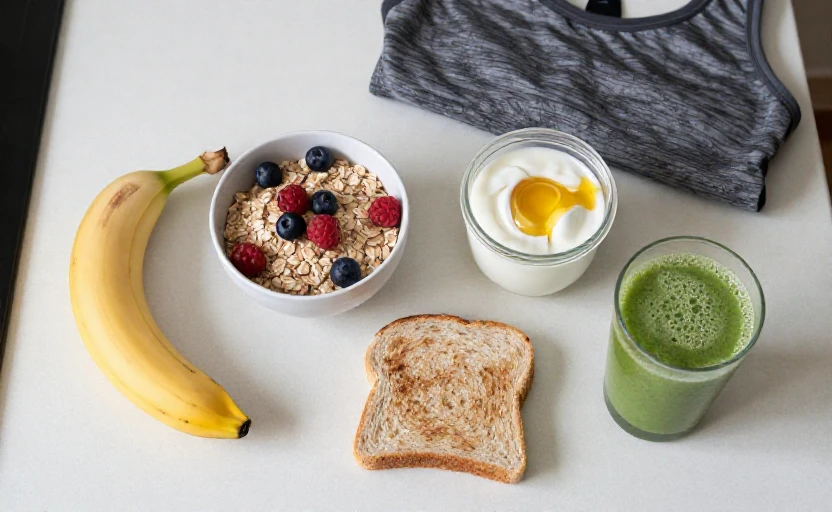
Nature’s perfect portable fuel, a banana is a classic for good reason. It’s rich in easily digestible carbohydrates, primarily in the form of natural sugars and starch, which your body can quickly convert to energy. It also provides a valuable dose of potassium, an electrolyte that supports nerve function and muscle contractions, which is especially helpful during sweaty sessions.
For a bit more staying power, pair it with a source of protein. A spoonful of almond butter or a few ounces of plain Greek yogurt turns this simple fruit into a more balanced mini-meal that can power you through a longer or more intense routine.
2. Oatmeal, The Steady Burner
A small bowl of oatmeal is like laying down slow-burning coals for your workout fire. Oats are a fantastic source of complex carbohydrates and soluble fiber, which leads to a gradual rise in blood sugar and sustained energy release. This makes them an excellent choice if your workout is more than an hour away or if you’re planning a longer endurance-focused session at home.
Keep it simple: about half a cup of cooked oats topped with a handful of berries for antioxidants and a drizzle of honey or maple syrup for immediately available carbs. Avoid loading it up with heavy cream or excessive nuts right before you exercise.
A quick note on portions
With pre-workout eating, less is often more. A small bowl (roughly ½ cup cooked) is typically sufficient. The goal is to feel fueled, not full.
3. Greek Yogurt with a Drizzle of Honey
This combination hits the pre-workout trifecta. Greek yogurt offers high-quality, easily digestible protein that helps prepare your muscles for the work ahead and can aid in the initial stages of recovery. The honey provides simple carbohydrates for a quick energy boost right as you start your warm-up.
Opt for plain, unsweetened yogurt to control added sugars, and add just a teaspoon or two of honey. You can add a few slices of banana or a sprinkle of granola for extra carbs if you need them. The protein in the yogurt also helps moderate the energy release from the carbs, preventing a sharp spike and crash.
4. Whole-Grain Toast with a Light Spread
Don’t underestimate the power of toast. A slice of whole-grain or sourdough bread provides quality carbohydrates. The key is what you put on it. Instead of butter or cream cheese, choose a lighter protein source.
- With mashed avocado: A quarter of an avocado adds healthy fats, but keep it light. The monounsaturated fats are beneficial, but a heavy layer can slow digestion.
- With a thin layer of nut butter: Almond or peanut butter adds protein and a bit of fat. Again, moderation is key—a tablespoon is plenty.
- With a slice of turkey or a scrambled egg white: This leans more into pure protein with minimal fat, ideal if carbs from the toast are your primary fuel focus.
This option is wonderfully customizable and quick, making it ideal for a morning workout routine.
5. The Simple Smoothie
When you need something that feels light but delivers nutrients efficiently, a smoothie is a great solution. Because it’s blended, it can be easier to digest right before a workout. The formula is straightforward: a liquid base (water, almond milk), a serving of fruit (banana, berries, mango) for carbs, and a small scoop of protein (a spoonful of Greek yogurt, a half-scoop of protein powder, or some silken tofu).
Keep your pre-workout smoothie simple. Skip high-fiber add-ins like chia seeds or kale stems right before you exercise, as they might cause gastrointestinal discomfort for some people.
What to avoid before you hit play
Just as important as what to eat is what to sidestep. Heavy, greasy, or high-fat meals (like fried foods, creamy pasta, or a large cheeseburger) demand a lot from your digestive system and can leave you feeling sluggish. Very high-fiber foods (like a massive bean salad or bran cereal) right before a workout can cause gas or cramping for some individuals. And while a small cup of coffee can enhance performance, a giant sugary energy drink might lead to a jittery start and a crashing finish.
Finally, listen to your own body. These are general guidelines, but individual tolerance varies. Some people thrive on a small snack 30 minutes before; others need to eat an hour and a half prior. Use your home workouts as a low-pressure testing ground to discover what makes you feel strongest and most energized.
Fueling well is a form of respect for the effort you’re about to give. By choosing one of these simple, whole-food options, you’re not just eating a snack—you’re preparing your body to perform at its best, right where you are.