You showed up, you put in the work, and you felt the burn—but now your wrists are talking back. That dull ache, the pinch during a push-up, the way your grip feels shaky on the dumbbell. If you’re training hard and your wrists are complaining louder than your muscles, you might be dealing with something more than just temporary soreness.
Wrist strain is common in fitness, but when your workout frequency outpaces what your wrists can recover from, the problem shifts from a minor annoyance to a real roadblock. Here are three specific warning signs that your training schedule—not just your form—could be making things worse.
1. The Pain Doesn’t Go Away Between Sessions
Normal muscle soreness fades within 24 to 48 hours. Wrist strain that lingers between workouts is a red flag. If you wake up the morning after a training day and your wrists still feel stiff, tender, or achey without having done anything that day, your frequency is likely exceeding your recovery capacity.
This persistent pain is a signal that the soft tissues—tendons, ligaments, and the joint capsule itself—aren’t getting enough downtime to repair. The cumulative load from back-to-back sessions can keep inflammation simmering, never allowing the healing process to finish. Think of it like a bruise that never gets a chance to fade because you keep bumping the same spot.
2. Your Grip Strength Drops Mid-Workout
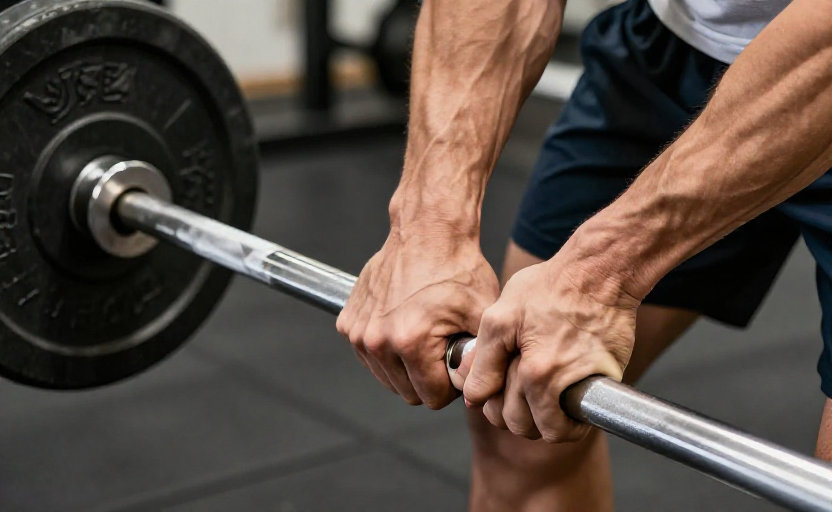
Another clear sign shows up during the workout itself. If you notice that your grip starts to fail noticeably earlier than it used to—say, you can only hold the barbell for eight reps instead of twelve before your wrists feel unstable—your training frequency may be fatiguing the forearm muscles and wrist stabilizers beyond their capacity.
This isn’t just about muscular endurance. When your wrists are strained from frequent load-bearing exercises like presses, planks, or kettlebell swings, the neurological feedback loop that keeps your grip coordinated gets disrupted. You might feel a ‘give’ at the wrist joint or a need to adjust your hand position constantly. Dropping a dumbbell or losing control of a bar is a safety hazard, so take this sign seriously.
3. Daily Movements Become Painful
The third warning sign moves beyond the gym. When wrist strain from overtraining spills into everyday life, you’ve crossed a line. Pay attention if you feel a jab of pain when you push yourself up from a chair, turn a doorknob, lift a grocery bag, or even type on a keyboard.
This functional pain means the repetitive stress from your workouts has created a low-level chronic irritation. Your wrists are essentially ‘on guard,’ and the extra demand of daily tasks pushes them past their pain threshold. If you’re modifying how you open doors or hold a coffee mug to avoid discomfort, your workout frequency almost certainly needs to be adjusted.
What to Do About It
If you recognize one or more of these signs, don’t assume you have to stop training altogether. The goal is to manage load, not eliminate activity. Here are a few practical adjustments that can help without derailing your progress:
- Reduce frequency, not just volume. Cut back the number of days per week you place direct load on your wrists. You might drop from four to three upper-body sessions or substitute a lower-body or cardio day to give your wrists a break.
- Change your exercise selection. For a few weeks, swap out movements that require wrist extension (like push-ups or bench press) for variations that keep the wrist neutral—think dumbbell floor press, push-ups on dumbbells or parallettes, or using a neutral-grip bar.
- Use supports strategically. Wrist wraps or brace-style supports can reduce excessive range of motion during heavy lifts, but don’t rely on them every single session. The goal is to let the tissues adapt gradually, not to create dependency.
- Prioritize recovery. Add gentle wrist mobility work on rest days—circular stretches, finger extensions, and light resistance band work for the extensors—but avoid aggressive stretching of an already irritated joint.
One simple rule: if the pain changes how you grip, push, or hold anything during the day, it’s time to pull back on frequency.
Pay attention to these three warning signs. They’re not just small annoyances—they’re your body’s way of saying the ‘stimulus vs. recovery’ equation is out of balance. With smarter frequency management, you can keep training hard and keep your wrists healthy for the long run.