Bodyweight workouts are a fantastic way to build strength, improve mobility, and boost cardiovascular fitness without any fancy equipment. But precisely because they feel “easier” on the body than heavy barbell training, it’s common to push too hard, too often. You might feel fine during the set, but a persistent ache in your knee or a clicking sensation in your shoulder the next day is a quiet signal you shouldn’t ignore.
Your joints—especially the knees, shoulders, wrists, and hips—rely on tendons, ligaments, and surrounding soft tissues to absorb load. Unlike muscle, these tissues repair more slowly. When you stack intense bodyweight sessions without adequate recovery, the cumulative stress can tip over from “productive stimulus” into “chronic irritation.” Here are three warning signs that your joints are asking for a longer break between bodyweight workouts.
1. The Pain Lingers Well Past Your Cool-Down
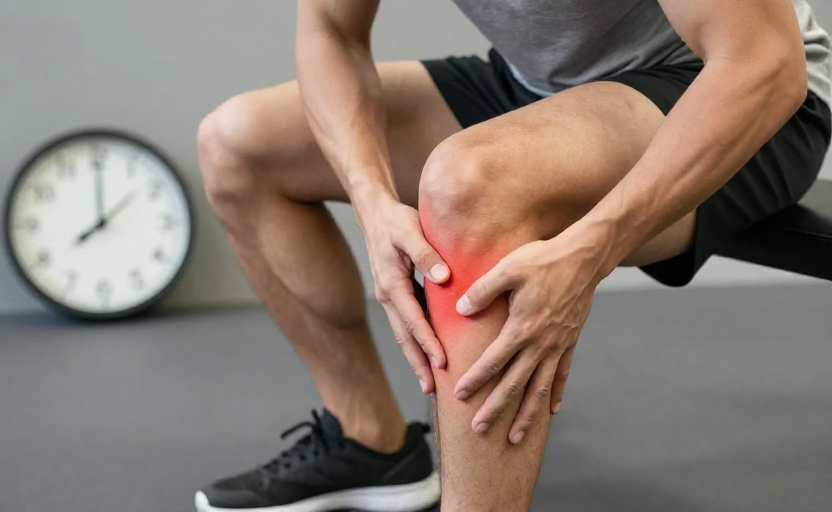
It’s normal to feel some muscle soreness (delayed onset muscle soreness, or DOMS) 24 to 48 hours after a challenging workout. But joint pain operates on a different timeline. If you feel a sharp, dull, or grinding sensation inside a joint while you’re exercising—or if that same ache persists for more than a couple of hours after you’ve finished—that’s a red flag.
Unlike the burn in your quads or chest, joint pain is rarely a sign of productive work. Instead, it often points to inflammation in the synovial lining, a bursa, or a tendon insertion point. For example, you might feel discomfort at the front of your knee after a high-rep squat session, or a deep ache in your wrist after a long plank or push-up hold. If that sensation doesn’t fade with light movement or a warm shower, your joint tissues haven’t recovered from the last session.
A simple self-check: Can you touch the sore area without flinching? Does it ache when you’re lying still? If so, give yourself at least one extra full rest day before doing any lower- or upper-body pulling or pushing movements.
2. Your Range of Motion Shrinks Between Sessions
Waking up and noticing that your shoulder feels “stiff” or that your ankle doesn’t quite dorsiflex the way it did yesterday might not seem alarming. But a gradual, session-to-session loss of range of motion (ROM) is a classic sign that the joint capsule or surrounding tendons are inflamed. When tissues are irritated, the body naturally tightens protective musculature, which can reduce your ability to move through a full arc.
Pay special attention to movements that used to feel fluid. If your deep squat feels shallower this week, or your downward dog feels restricted in the shoulders, this isn’t a flexibility problem—it’s likely a recovery problem. Forcing a joint through its full ROM when it’s already angry can aggravate the issue further.
Instead of “pressing through” the stiffness, take a day off from that specific movement pattern. A general rest day or active recovery (like a gentle walk or foam rolling the muscles, not the joint itself) will often restore that lost mobility within 48 hours. If it doesn’t, consider swapping that particular bodyweight exercise for a less loaded variation—for example, ditch full push-ups for an incline version until the wrist or shoulder feels free again.
3. You Notice Swelling, Clicking, or a “Grinding” Sensation
Not all joint sounds are dangerous. Popping or cracking without pain (known as cavitation) is usually harmless. But when the sound is accompanied by a feeling of grinding, catching, or—most importantly—swelling, it’s a clear sign that the joint’s internal environment is compromised. Swelling can be subtle. Look for a loss of definition around the kneecap, puffiness on the top of your foot after calf raises, or a feeling of fullness in the shoulder joint.
This type of symptom often develops in bodyweight workout enthusiasts who do very high volumes (e.g., 100 burpees, 200 squats) or who push through fatigue with poor form. When your stabilizing muscles tire, your joints have to take up the slack. Over time, that repetitive micro-trauma to cartilage or the labrum can escalate into a more stubborn overuse injury.
How to Adjust Your Recovery
If you recognize any of these signs, you don’t necessarily have to stop training entirely. Instead, make a deliberate change to your rest schedule:
- Increase the gap between sessions. If you’ve been doing full-body bodyweight circuits five days a week, drop to every other day—or even three days a week—until symptoms subside.
- Rotate movement planes. If your knees hurt from squats and lunges, replace lower-body work with glute bridges, single-leg deadlifts (unloaded), or step-ups on a low box.
- Prioritize sleep and hydration. Joint capsule lubrication and tissue repair happen most efficiently during sleep and when you’re well-hydrated.
- Add pre-workout mobility. Spend 5–10 minutes on dynamic joint warm-ups (arm circles, leg swings, cat-cow) to increase synovial fluid flow before you load the joint.
It can be tempting to view rest as “lost progress,” but for joint health, it’s the opposite. Non-recovery is what leads to tendinopathy, bursitis, and patellofemoral pain syndrome—conditions that can sideline you for weeks or months. Listening to these early warning signs isn’t weakness; it’s the smartest way to keep your bodyweight training sustainable for the long haul.