
You’ve been consistent with prenatal yoga. You roll out your mat, move through cat-cow, gentle forward folds, and maybe a few reclined twists. Your lower back feels better, your hips feel a bit looser—but those hamstrings? They still feel like cables. If you’re deep into pregnancy and your hamstrings are stubbornly tight, it might feel confusing. After all, you’re stretching. Shouldn’t they be loosening up by now?
Here is the nuanced reality: prenatal yoga is designed for stability and safety during pregnancy. It’s a wonderful practice for maintaining mobility, reducing tension, and connecting to your changing body. But when it comes to releasing extremely tight hamstrings—especially those that have been chronically short for years—the gentle, short-duration holds typical in many prenatal classes may simply not be enough. There are clear signposts that your hamstrings are asking for something more specific. Here are three warning signs to watch for.
1. Your Forward Folds Never Get Deeper as Your Pregnancy Progresses
In prenatal yoga, wide-legged forward folds (Prasarita Padottanasana) and gentle seated folds (Paschimottanasana with a bolster) are common. You expect some limitation as your belly grows, but the real warning sign is stagnation or regression without any mechanical reason. If you are consistently practicing these folds and finding zero change—or if the sensation behind your knees and up the backs of your thighs actually intensifies rather than eases—that is a clue. This often indicates that the hamstrings are not simply tight from pregnancy hormones or posture; they may have developed neuromuscular holding patterns that calm, supported stretching alone cannot reprogram.
What is happening here is that your nervous system perceives the end range of the stretch as a threat. Instead of releasing, the muscle fibers contract to protect themselves. Prenatal yoga’s emphasis on comfort and avoiding overstretching means you rarely, if ever, hold a position long enough or with enough specificity to tell your brain, “This stretch is safe; you can let go.” The muscle remains in a guarded state.
2. You Feel Tension in Your Lower Back That Doesn’t Dissolve With Gentle Flows
Low back pain is common in pregnancy—we know that. The growing uterus shifts your center of gravity, and the hormone relaxin loosens ligaments (though it has less effect on muscle fibers). But there is a specific quality of tight-hamstring-related back pain. It often feels like a deep ache under the sit bones (ischial tuberosities) or a tugging sensation along the beltline at your lower back when you walk or try to stand up straight. Think of your hamstrings as the cables attached to the back of your pelvis. When they are too short, they pull your pelvis into a posterior tilt (tucking your tailbone under). To compensate, your lumbar spine flattens, and to keep you upright, the deeper stabilizing muscles around your sacrum and lower back must work overtime.
Prenatal yoga classes often focus on opening the front of the hips (hip flexors) and building pelvic floor awareness, which is excellent for the belly's position. However, if the hamstrings are the primary problem, that lovely hip-opening sequence may actually put more strain through the back of your pelvis. The warning sign is that your back feels better during and immediately after class but returns to its baseline tension within an hour. The stretch may be too brief to lengthen the hamstring fibers meaningfully. A targeted hamstring release protocol—separate from your main yoga practice—can often resolve this stubborn back pain within a few sessions.
3. Standing Poses Cause a Sharp Pinch in the Back of Your Thigh
This is the most distinct red flag. In a typical prenatal class, standing poses like Warrior II and Triangle feel stable and strong for you. But the moment you straighten your front leg in a lunge, or deliberately try to square your hips in Parsvottanasana (pyramid pose), you feel a sharp, localized twinge—sometimes even radiating down toward the back of the knee. This is not the usual “good stretch” sensation of muscle fiber lengthening; it feels more like an impingement or a tearing sensation. This can be a sign of moderate to severe hamstring shortness, often accompanied by underlying tendinopathy or scar tissue from old injuries that gentle stretching cannot break up.
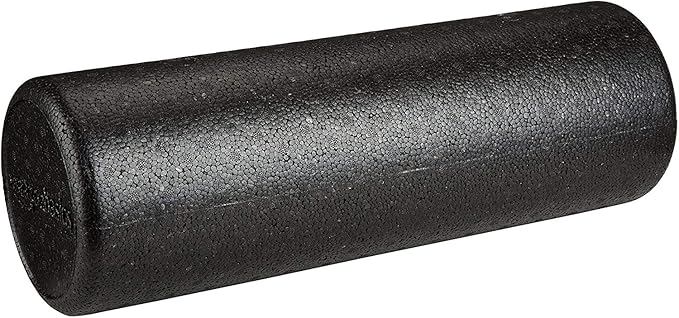
In this scenario, continuing to stretch without specifically addressing the tissue quality can actually worsen the problem. Prenatal yoga might even provoke this sensation, especially if the instructor cues “straighten your leg” or “shift your weight back.” Your body needs deeper, more concentrated work: foam rolling, myofascial release, or very specific low-load longer-duration stretches (two to three minutes per side, not the typical six breaths) performed outside of class. Approaching this with a physical therapist or a qualified prenatal personal trainer who understands soft-tissue work is often the right next step.
What “More Than Prenatal Yoga Stretching” Actually Looks Like
If you identify with any of these warning signs, the answer is not necessarily to give up prenatal yoga—it’s to complement it with targeted strategies that prenatal classes typically cannot accommodate for safety and time reasons. Consider incorporating these practices on non-yoga days:
- Prolonged passive hamstring stretch: Lie on your back with your leg up against a wall or door frame, keeping the knee nearly straight (a slight bend is okay). Hold for two to three minutes while breathing deeply. This tells your nervous system the stretch is safe.
- Gentle eccentric loading: Sitting tall on the floor, extend one leg and place a rolled towel under your knee. Slowly lean forward just a few degrees over 10 seconds, then release. This builds tendon resilience.
- Self-myofascial release with a lacrosse ball: Sitting on a chair, place the ball under your thigh and roll gently from your sitting bone to mid-thigh, avoiding the knee. Stop and breathe into any tender spots for about 30 seconds.
Always consult with your healthcare provider or physical therapist before starting new exercises during pregnancy, especially eccentric loading or deep-myofascial work. The goal is not aggressive stretching but intelligent, respectful lengthening that works with your body’s new biomechanics.
A note on relaxin: While this hormone increases joint laxity, it primarily affects ligaments, not muscle bellies or tendons. Tight hamstrings do not magically loosen because of relaxin. They respond best to consistent, specific, and patient mechanical input.
Remember that your hamstrings have likely been tight for many months or years before pregnancy. Prenatal yoga is a beautiful practice for your overall well-being, but it is not a one-size-fits-all solution for deep-seated muscle tension. Paying attention to these warning signs keeps you safe, functional, and more comfortable as you move through the rest of your pregnancy and prepare for birth recovery.