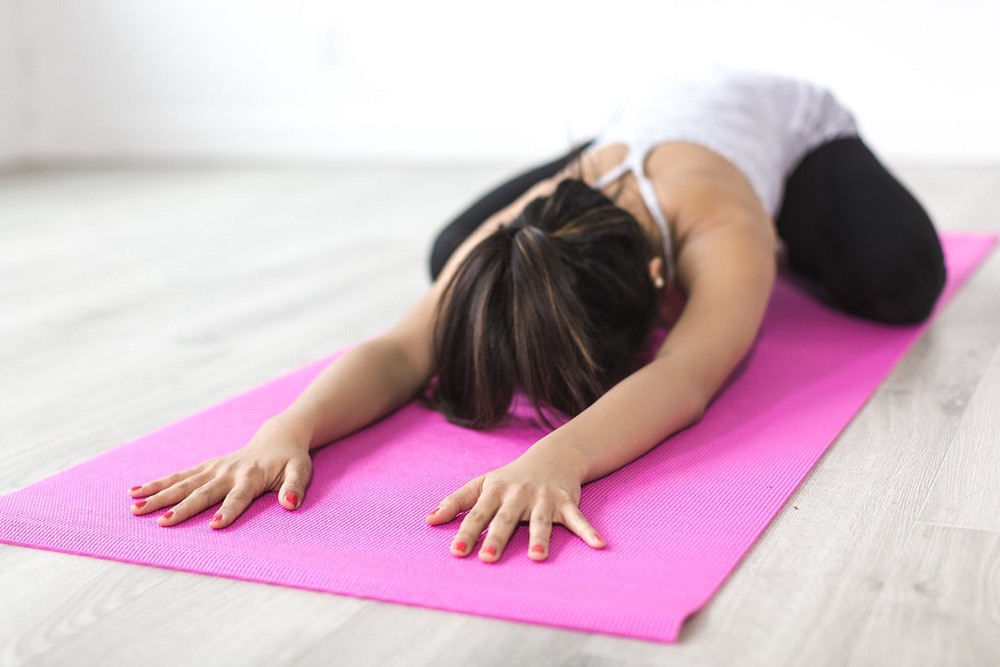
When you first step onto the mat, it’s natural to assume that flexibility is something you either have or you don’t. You might see other students folding into deep forward folds or binding their arms behind their backs, and it feels like they were born that way. But the truth is, flexibility is less about genetics and more about how you approach the practice. If you’ve been showing up to class, breathing through the poses, and still feeling stuck, there’s a good chance a few subtle habits are holding you back.
I’ve worked with countless beginners who believe they are “too stiff” for yoga. Almost always, the issue isn’t their body. It’s the way they’re moving—or not moving—in the poses. Here are six common mistakes that quietly block flexibility progress, along with what to do instead.
1. You’re forcing the stretch with your muscles
This one might seem counterintuitive. You want to get deeper into a pose, so you clench your jaw, tense your shoulders, and pull yourself further into a forward fold. That effort actually sends a signal to your nervous system that says “danger,” and your muscles instinctively tighten to protect themselves. The result? You’re fighting against your own body.
Instead, try softening your approach. Think of your muscles as a rope. If you pull hard on a knot, it only gets tighter. Breathe into the sensation, back off slightly from the edge, and allow the release to happen on its own timing. Progress in flexibility is slow, calm, and patient.
2. Skipping the warm-up (or doing one that’s too short)
Cold muscles don’t stretch well. If you walk into a yoga class, roll out your mat, and immediately try to touch your toes, you’re working against your body’s natural need to prepare. The fascia—the connective tissue that wraps around your muscles—needs gentle movement and increased blood flow before it becomes pliable.
Aim for at least 5 to 10 minutes of dynamic movement before you attempt a deep stretch. Think cat-cow, gentle spinal twists, leg swings, or even a few Sun Salutations. The goal is to create heat and synovial fluid in the joints. Once your body feels warm, the poses will start to open more naturally.
3. Holding your breath during deep poses
It’s a surprisingly common habit. When a stretch feels intense, many new practitioners hold their breath without even realizing it. This activates the sympathetic nervous system—the “fight or flight” response—which causes muscle tension to increase. In short, holding your breath tells your body to resist the stretch.
Try this: during a deep hip opener like Pigeon Pose, count your inhales and exhales. Make your exhales slightly longer than your inhales. This stimulates the vagus nerve and signals safety to your body. You’ll notice that after just a few intentionally long exhalations, the muscle will release a little further without any additional effort.
4. Overworking the wrong muscles (and underworking the right ones)
Flexibility isn’t just about “opening” or “stretching” a muscle group. Often, a muscle feels tight because it’s overworked. For example, tight hamstrings are frequently a result of weak glutes and core. Your hamstrings are doing all the work to stabilize you, so they stay contracted even when you try to stretch them.
The fix is to strengthen the complementary muscle groups. To improve a forward fold, work on strengthening your glutes and lower abdominals. For deeper hip opening, build strength in your outer glutes and inner thighs. A balanced practice—where you don’t just stretch but also strengthen—creates the space for true flexibility gains.
A muscle that is weak will often stay tight as a protective strategy. Strength training is part of the flexibility equation.
5. You’re comparing your progress to the person next to you
This one is not a physical mistake, but it’s probably the most limiting one. Yoga studios are full of bodies with different bone lengths, joint shapes, and injury histories. Some people will naturally fold deeper because of their hip socket anatomy, not because they’re doing something you aren’t.
When you compare, you tend to push beyond your safe range of motion, which leads to joint strain and micro-tears in connective tissue. Those micro-tears heal as scar tissue, which actually reduces flexibility over time. Keep your gaze on your own mat. Flexibility is a personal journey, not a competition.
6. Not practicing consistently enough
Flexibility is what trainers call a “use it or lose it” trait. One deep stretch session per week won’t yield lasting changes. Your body needs frequent, gentle exposure to a pose to teach the nervous system that the new range of motion is safe and permanent.
That doesn’t mean you need an hour every day. Even 10 to 15 minutes of targeted stretching, five times a week, will outperform one 90-minute class once a week. The consistency matters more than the intensity. Build a short daily routine—maybe right after waking up or before bed—and stick with it for a month before you reassess.
When you strip away these subtle blockers, you give your body the chance to do what it naturally wants to do: move freely. Flexibility is not something you force. It’s something you invite. So next time you’re in a pose and feel stuck, check your breath, check your tension, and remember that the mat is a place for patience, not pressure.