You've finished your last rep, rolled out your mat, and caught your breath. That feeling of accomplishment is real — but what you put in your glass next matters just as much as the workout itself. After a home session, your muscles are primed for repair, and the right drink can help them rebuild efficiently.
While commercial recovery powders have their place, a few simple, kitchen-friendly beverages deliver exactly what your body needs without a long ingredient list or a trip to a specialty store. These three options are backed by nutrition science and easy to pull together when your workout gear is already in the laundry basket.
What Makes a Drink Good for Recovery?
Your muscles need two things after a workout: protein to repair tiny tears in the tissue, and carbohydrates to replenish the glycogen you just burned. Electrolytes like potassium and magnesium also help rehydrate and ease muscle tension. The ideal post-workout sip isn't necessarily a complicated formula — it just needs to hit those markers in a form your body can use quickly.
Aim to drink your recovery beverage within 30 to 60 minutes after your final rep, when your muscles are most receptive to nutrients.
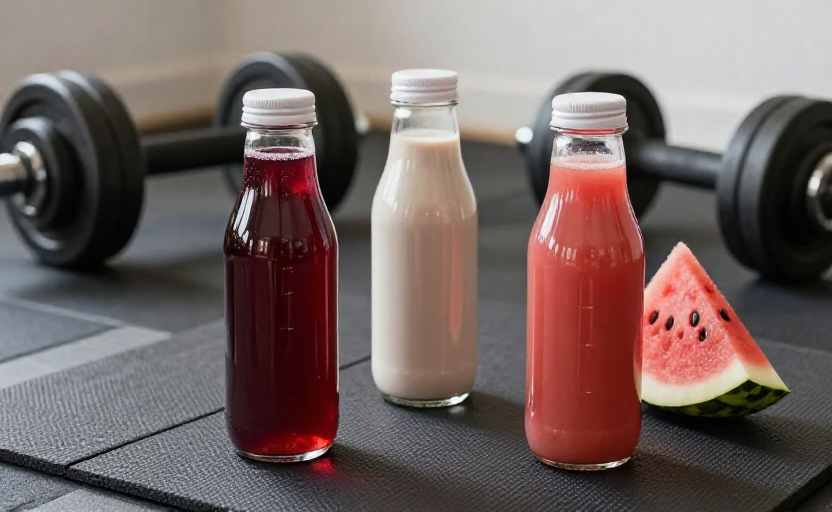
1. Tart Cherry Juice
Tart cherry juice has earned a strong reputation among athletes — not because it's trendy, but because it works. It's rich in anthocyanins, anti-inflammatory compounds that can reduce muscle soreness and speed up recovery.
A 2021 review in the International Journal of Environmental Research and Public Health found that tart cherry juice significantly reduced markers of muscle damage and perceived soreness after intense exercise. For a home workout where you might have pushed through a tough circuit or a heavy resistance session, this is the kind of support your body will thank you for.
You don't need much: about 8 to 12 ounces of unsweetened tart cherry juice is enough. If you find it too sharp, dilute it with sparkling water or a splash of coconut water for added electrolytes. Just be sure to check the label — many blends mix tart cherry with apple or grape juice, which adds sugar without additional benefit.
2. Chocolate Milk
Surprised? This lunchbox staple has been studied extensively as a recovery drink. It contains a natural ratio of carbohydrates to protein (roughly 3:1 to 4:1) that aligns well with what your muscles need post-workout. The protein comes from the milk itself, while the cocoa provides a small boost of antioxidants.
Low-fat chocolate milk is the most practical choice. A 2018 study in the Journal of the International Society of Sports Nutrition indicated that chocolate milk was just as effective as — and sometimes better than — commercial recovery beverages for promoting muscle repair and glycogen replenishment after resistance training.
For a home workout, one cup (about 8 ounces) is a simple, satisfying way to refuel. It's especially helpful if your session was moderate to high intensity and you didn't have a full meal planned immediately afterward.
Quick tip for non-dairy drinkers
If you avoid dairy, look for unsweetened chocolate soymilk or pea-protein-based chocolate milk alternatives. These often have a similar protein content to cow's milk, though carb ratios may differ slightly. Check the label to ensure it provides at least 8 grams of protein per serving.
3. Watermelon Juice with a Pinch of Salt
Watermelon is about 92 percent water, but its recovery value goes far beyond hydration. It contains L-citrulline, an amino acid that helps improve blood flow and may reduce muscle soreness. The natural sugars in the fruit also provide a quick glycogen refill.
An older but still relevant 2013 study in the Journal of Agricultural and Food Chemistry found that watermelon juice helped reduce muscle soreness 24 hours post-exercise compared to a placebo drink. A small pinch of sea salt (which contains sodium and trace minerals) helps your body actually absorb the water, which is important after you've sweated through a home workout in a room that might not be perfectly climate-controlled.
To make it, blend fresh watermelon chunks (about two cups) until smooth, then strain if you prefer a thinner texture. Add a tiny pinch of salt and stir well. Drink it as soon as it's ready — fresh watermelon juice doesn't keep well.
If you're looking for a low-calorie recovery option, this is your best bet. It's lighter than the other two options and works well after a yoga flow, a light bodyweight circuit, or a hot day workout.
These Drinks Do More Than Just Hydrate
Water alone won't help your muscles rebuild after a challenging home session. Each of these beverages provides something beyond fluid — anti-inflammatory compounds, protein, or specific amino acids that active recovery strategies rely on.
That doesn't mean you should skip water. Drink water throughout the day and especially during your workout. The recovery drinks are additions to your hydration strategy, not replacements for it.
Recovery isn't a luxury — it's part of the workout. By choosing one of these three simple drinks after your next home session, you're giving your muscles the raw materials they need to get stronger, adapt faster, and be ready for your next workout. Keep a carton of tart cherry juice in the fridge, a chocolate milk handy, or a ripe watermelon on the counter, and you'll never be caught without a smart recovery option.