Returning to exercise after surgery requires a careful approach. The body heals in stages, and pushing too hard or moving incorrectly can delay that process. For the beginner getting back into workouts, small mistakes can have outsized consequences, turning a steady recovery into a frustrating loop of setbacks. This article focuses on two specific errors—overloading too early and neglecting foundational movement patterns—that commonly slow post-surgery healing. Understanding why these mistakes happen and how to avoid them will help you move forward safely.
Mistake #1: Reintroducing Full Load Before the Body Is Ready
The first serious error is attempting the same weights, resistance levels, or intensity you used before surgery. After an operation, tissues are weakened, scar tissue is forming, and the neuromuscular system has lost some coordination. Jumping into compound lifts, heavy kettlebell swings, or high-rep resistance sets too soon puts direct stress on vulnerable surgical sites.
Why this slows healing
When you load a healing tendon, ligament, or bone before it has regained sufficient tensile strength, you create micro-tears. The body diverts resources to repair these new tears, which competes with the primary healing taking place at the surgical site. This cycle of re-injury and repair extends overall recovery time. Additionally, excessive loading increases inflammation and edema, which stiffen joints and limit range of motion. A beginner might interpret this stiffness as “getting back in shape,” but it is actually a signal that the repair process is being overwhelmed.
A better approach
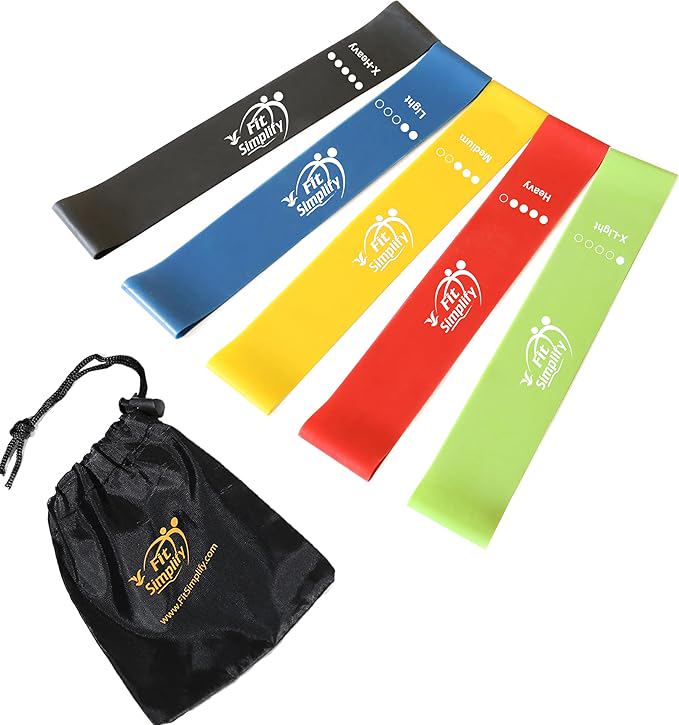
Work within a “sub-threshold” zone. This means choosing a load that allows you to complete 15–20 repetitions with controlled, pain-free form—not until failure. For example, if you could leg press 150 pounds before surgery, begin with 40–50 pounds or even just bodyweight, depending on your surgeon’s clearance. Resistance bands are often a forgiving alternative for early-stage rehab. The goal is not to fatigue muscle but to stimulate blood flow and re-establish neuromuscular connections. Increase load no faster than 5% per week, and only if joint or incision discomfort remains below a 2 out of 10 during and after the session.
“Healing is not a linear process. Beginner exercisers often mistake discomfort for progress. Let pain be your guide—if it changes how you move, back off.”
Mistake #2: Skipping Foundational Movement Patterns and Range-of-Motion Work
The second common mistake is diving into sport-specific or aesthetic-focused exercises—like bicep curls, leg extensions, or treadmill jogging—while ignoring the need to regain basic mobility and motor control. Surgery disrupts proprioception (the sense of where your body is in space), and the tissues surrounding the incision often tighten or shorten as they heal. Beginners may not realize that their gait, squat pattern, or shoulder mechanics have changed until they try to perform an exercise and feel a sharp pull or compensatory pain in another area.
Why this slows healing
When you skip foundational work, you reinforce faulty movement patterns that place stress away from the surgical site—for instance, leaning heavily on one leg during a lunge or rotating the torso to compensate for limited hip flexion. Over time, these compensations create secondary injuries in the low back, opposite knee, or contralateral shoulder. The body then must heal the primary surgical site plus these new issues. Furthermore, without active range-of-motion work, scar tissue can adhere to underlying muscle or bone, restricting long-term flexibility and increasing the risk of re-injury once you attempt full-range exercises.
A better approach
Devote at least the first 4–6 weeks of return-to-workout programming to non-negotiable mobility drills and basic stability exercises. For a lower-body surgery, this includes supine heel slides, seated hip flexor opens, and single-leg stance balance work (with hand support). For upper-body surgery, focus on thoracic rotations, pain-free shoulder flexions with a dowel, and scapular retractions without weight. Once you can perform these movements through a full, pain-free range, you can layer on strength. A red flag is when a beginner tries to squat but cannot maintain a neutral spine or full depth—this suggests the foundational pattern is not ready for additional load.
How to Structure Your First Weeks Back
Rather than following a generic plan, consider this sequence for the first 3–4 weeks post-clearance:
- Active recovery warm-up (10 minutes): Foam rolling adjacent regions (not directly over incisions), cat-cow stretches, and pendulum circles for an involved joint.
- Range-of-motion circuit (10 minutes): Perform 2–3 targeted mobility drills specific to your surgery site. Move slowly and breathe deeply; never push into sharp pain.
- Core engagement (5 minutes): Dead bugs, pallof presses with a band, or supine heel taps. A stable core protects the surgical area during all other movements.
- Low-load strength (15 minutes): Use bands or very light weights for 2–3 exercises that mimic your eventual program but at 30–40% effort. Focus on tempo—3 seconds up, 3 seconds down.
- Cool-down and tissue work (10 minutes): Gentle static stretching for the involved limb, plus self-massage around (not on) the incision to manage scar tissue mobility.
Always obtain clearance from your surgeon or physical therapist before starting any post-surgery workout. The timeline varies widely by procedure and individual healing factors.
Recognizing When to Scale Back
Recovery is not a straight line. Even with careful programming, you may experience days where inflammation flares or stiffness increases. This does not necessarily mean you caused damage, but it does require adjusting. If a joint feels hot, swollen, or painful at rest or during the first repetitions of an exercise, take that as a sign to drop the load or volume for that session. Beginners often fear “losing gains” if they take a day off, but persistent training through these signs is the fastest way to stall progress. Prioritizing sleep, hydration, and adequate protein intake supports the repair process far more than an extra set of reps.
Post-surgery exercise is a skill, and like any skill, it requires patience and precise adjustments. The two mistakes outlined here—loading too quickly and ignoring foundational movement—are the most common reasons why beginners see healing stagnate. By respecting the body’s current capacity and building from the ground up, you can avoid these pitfalls and return to full activity with fewer setbacks.