You've probably heard the advice to slow down at meals, but have you ever stopped to wonder why it actually works? It’s not just about table manners or savoring flavors. From a physiological standpoint, eating slowly is one of the most direct ways to reconnect with your body’s natural fullness signals—what dietitians call satiety cues. When you rush through a meal, you effectively drown out those signals before they have a chance to register.
Let’s walk through what happens inside your body when you eat slowly, why it matters for weight management and digestion, and how to make a slower pace feel natural rather than forced.
The two-way conversation between your stomach and brain
Your digestive system and brain are in constant communication during a meal. This conversation relies on a complex network of hormones, nerve signals, and stretch receptors in your stomach. The key players here are two gut hormones: ghrelin (the “I’m hungry” hormone) and a set of satiety hormones like cholecystokinin (CCK), peptide YY, and GLP-1 (the “I’m full” team).
When you eat, food stretches the stomach wall, and cells in your gut begin releasing these satiety hormones. But here’s the catch—it takes roughly 15 to 20 minutes for those hormones to reach meaningful levels in your bloodstream and for your brain to register that you’ve had enough. If you finish your entire plate in less than ten minutes, your brain never gets the memo. You keep eating past the point of fullness because the signal simply hasn’t arrived yet.
Think of it like sending a letter: you have to give the mail time to reach the recipient. Eating slowly is the equivalent of allowing the postal service to do its job before you decide to send another letter.
How slower eating changes your meal in real time
Research consistently shows that people who eat at a slower pace consume fewer calories per meal—not because they are restricting, but because their bodies have time to register fullness. In one small but telling study, participants who ate a plate of pasta over 30 minutes consumed nearly 30% fewer calories on average compared to those who finished the same meal in 6 to 8 minutes. Importantly, they also reported feeling just as satisfied afterward.
The chewing effect
Chewing is not just mechanical breakdown. The longer you chew, the more surface area is exposed to digestive enzymes in your mouth and stomach. This early breakdown helps your gut release satiety hormones sooner. Plus, more chewing gives your brain a steady stream of sensory feedback: texture, flavor, temperature—all of which contribute to a sense of meal satisfaction that is hard to achieve when you’re inhaling food.
Mindful portion control
When you eat slowly, you naturally become more aware of how quickly you’re filling up. You start to notice when the initial sharp hunger fades and a gentler sense of fullness begins to arise. That awareness lets you stop at a comfortable level rather than eating to the point of discomfort—something that is nearly impossible when you’re distracted or racing against a clock.
A dietitian might phrase it this way: your body already knows when to stop; you just need to give it the time to tell you.
Practical strategies to eat at a slower pace
Shifting to a slower eating speed isn’t about setting a timer and forcing yourself to take tiny bites. Instead, it’s about replacing a few rushed habits with calmer ones. Here are evidence-backed techniques that actually work in real life:
- Set your utensils down between bites. Put your fork or spoon down on the table after each mouthful. This simple pause forces a natural rhythm and prevents the autopilot motion of loading the next bite before you’ve finished the current one.
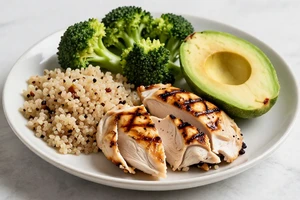
- Choose foods that require more effort. Whole grains, fibrous vegetables, and lean proteins take more chewing than ultra-processed snacks. A salad with crunchy greens and chickpeas will naturally slow you down compared to a smoothie or a bowl of white pasta.
- Eliminate distractions. Screens—whether TV, phone, or laptop—pull attention away from the meal. When you’re distracted, your brain receives fewer sensory signals from eating, so you tend to eat more and register less fullness. Try making at least one meal a day a screen-free experience.
- Take a deliberate first bite. The first few bites of a meal are the most flavorful because your taste receptors are fresh. Pause and notice the texture and flavor before you automatically reach for the next forkful. This builds mindfulness early in the meal.
What about eating slowly and weight loss?
Eating slowly is not a quick fix for weight loss, but it is a foundational skill that supports long-term weight management. When you eat slowly regularly, you tend to:
- Consume fewer calories without feeling deprived
- Improve digestion and reduce bloating
- Lower post-meal blood sugar spikes (especially important if you have insulin resistance)
- Develop a healthier, less anxious relationship with food
It’s worth noting that eating slowly alone is unlikely to cause significant weight loss if your overall diet is heavy in processed foods or if portion sizes are very large. But as part of a balanced eating pattern—one that includes plenty of vegetables, protein, healthy fats, and fiber—a slower pace helps you naturally align your intake with your body's needs.
Common pitfalls and how to overcome them
Many people try eating slowly for a day or two and then abandon the practice because it feels unnatural or because they’re too busy. Here’s how to navigate the most common roadblocks:
“I don’t have time to eat slowly.” You don’t have to slow down every single meal. Start with one meal per day—preferably one where you’re not rushed. Even a 20-minute breakfast or lunch can make a difference. Over time, the habit becomes automatic and you may find that you actually enjoy your meals more, so the time feels well spent.
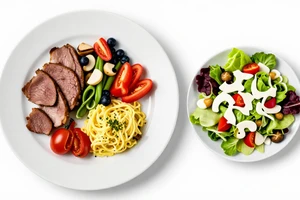
“I finish my food in five minutes out of habit.” Habit reversal can feel clumsy at first. Try using a smaller plate or bowl. A smaller serving looks more substantial on a smaller dish, and it psychologically cues you to slow down because there’s less food to finish. Add a glass of water and sip between bites to create natural pauses.
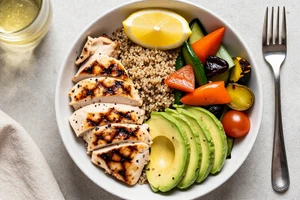
“I don’t feel full even when I eat slowly.” If you’re genuinely not feeling full after a slow, balanced meal, check whether you’re getting enough protein, fiber, and fat. A meal based solely on refined carbohydrates (like white rice or crackers) digests quickly and can leave you hungry even if you eat it at a leisurely pace. Include a palm-sized portion of protein, plenty of vegetables, and a source of healthy fat to give your satiety hormones something to work with.
Eating slowly is not about perfection or never eating fast again. It’s about building awareness so that you can hear—and trust—your body’s natural signals. When you slow down, you give your biology a chance to catch up with your fork. And that simple act can transform your relationship with food from one of urgency to one of ease.