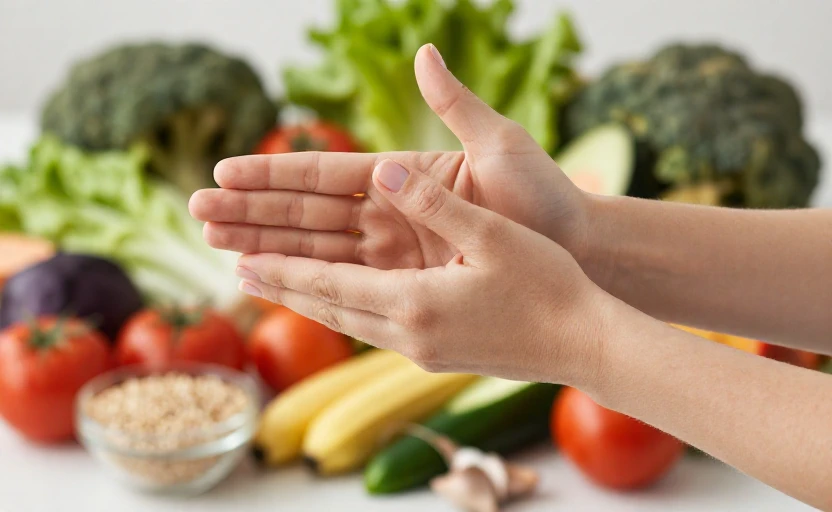
Portion control isn't about deprivation or meticulously weighing every morsel. It's a quiet, sustainable skill—a way of realigning your eye with your body's actual needs. Many of us have lost touch with what a standard portion looks like after decades of oversized restaurant plates and "value" packages. The good news is that this skill can be relearned with a few simple, practical strategies that don't require a kitchen scale to become a permanent fixture on your counter.
Think of it as visual calibration. Once you know what a serving of protein or carbohydrates should look like, you can build a balanced plate almost anywhere. This guide walks through the most effective tools and mindset shifts that dietitians actually share with their clients to make portion control feel intuitive, not like a rigid diet rule.
Why Portion Control Matters for Lasting Health
When we focus solely on what we eat and ignore how much, we can easily undermine our goals, even with nutritious foods. Healthy fats, whole grains, and lean proteins are essential, but they still contain calories. Portion control helps you enjoy the foods you love while maintaining energy balance. It's the bridge between nutritional knowledge and everyday practice.
More importantly, it fosters a healthier relationship with food. You move away from a cycle of restriction and overindulgence and toward a pattern of consistent, mindful nourishment. This steadiness is what supports stable energy, a comfortable weight, and long-term metabolic health.
Your Visual Toolkit: The Hand Guide
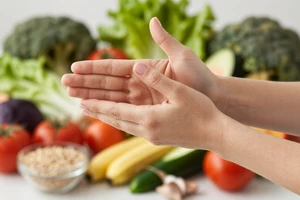
Your most convenient portion tool is always with you: your hand. It's proportional to your body size, making it a personalized guide. Here’s a simple framework many dietitians teach:
- Palm: A good measure for a serving of protein (chicken, fish, tofu).
- Fist: Roughly equivalent to one cup, useful for vegetables, fruits, or cooked grains.
- Cupped hand: A guide for a serving of carbohydrates like pasta, rice, or legumes.
- Thumb tip to first joint: Approximates a tablespoon, helpful for fats like nut butter, oil, or cheese.
This method isn't meant to be surgical. It’s a quick reality check to prevent the slow creep of portion sizes that happens when we rely on our eyes alone.
Practical Tools for the Kitchen
While your hands are perfect for on-the-go estimates, a few basic kitchen items can train your eye at home.
Measuring Cups and Spoons
Start by using these for a week or two, not forever. Measure out your usual serving of cereal, rice, or cooking oil. You might be surprised. This isn't about shaming; it's about gathering data. Once you see what a half-cup of oatmeal looks like in your favorite bowl, you'll be able to replicate it without the tools.
The Plate Method
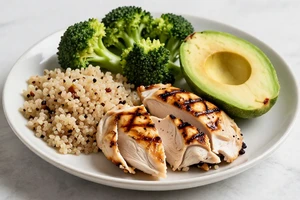
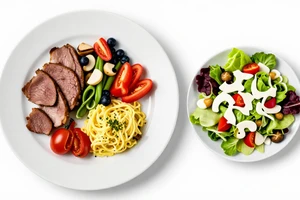
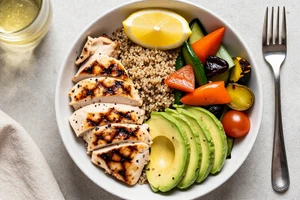
This is perhaps the simplest visual framework for building a balanced meal. Imagine your dinner plate divided:
- Half the plate: Non-starchy vegetables (salad, broccoli, peppers, green beans).
- A quarter of the plate: Lean protein (fish, chicken, lentils, eggs).
- A quarter of the plate: Quality carbohydrates (sweet potato, quinoa, brown rice, whole-wheat pasta).
Use a smaller plate. A standard 9- or 10-inch plate makes appropriate portions look satisfying, while a large platter can make them seem meager.
Mindful Eating: The Unseen Tool
Tools measure food, but mindfulness measures hunger. Before you plate your food, pause. Ask yourself where you are on a scale from 1 (ravenous) to 10 (stuffed). Aim to start eating around a 3 or 4 and stop at a 6 or 7—comfortably satisfied, not full.
Eliminate distractions during meals. Eating while watching TV or scrolling through your phone disconnects you from your body's satiety signals, making it easy to mindlessly finish an entire bag of snacks. Sit down, chew slowly, and pay attention to the taste and texture of your food. This simple practice is one of the most powerful portion control strategies available.
Navigating Restaurants and Packaged Foods
This is where portion control feels most challenging, but a few tactics can help.
At a restaurant, consider asking for a to-go box when your meal arrives and immediately packing up half to enjoy later. Alternatively, share an entrée with a dining companion. For packaged foods, always read the Nutrition Facts label. The serving size listed at the top is the basis for all the calorie and nutrient information below it. A bag of chips might list 150 calories per serving, but if the bag contains three servings and you eat it all, you've consumed 450 calories.
Sustaining the Practice
Portion control is a habit, not a perfect science. Some days you'll be more accurate than others. The goal is progress, not perfection. Be gentle with yourself and view it as a long-term investment in understanding and honoring your body's needs. By combining these visual guides, simple tools, and mindful attention, you build a flexible, sustainable approach to eating that supports your health without demanding constant vigilance.