You eat until you're full—or at least, you try to. Yet somehow, the fork keeps moving, the bowl empties, and that uncomfortably stuffed feeling creeps in before your brain registers it was time to stop. If this sounds familiar, you're not lacking willpower. You're likely working against a set of deeply ingrained diet myths that override your body's built-in satiety signals.
These myths sound so logical that they've become diet gospel. But they often do the opposite of what they promise—keeping you disconnected from your body's cues and eating more, not less. Let's untangle the four most common ones that lead to overeating, and replace them with something simpler: trust in your own biology.
Myth 1: You Have to "Clean Your Plate" Every Time
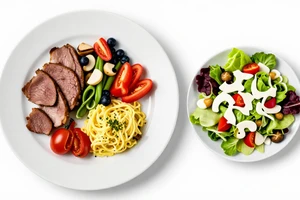
Whether it was a rule at your childhood dinner table or a mindset you adopted as an adult, the notion that leaving food on your plate is wasteful—or even rude—can override your natural stop signal. The problem is that your stomach's volume isn't calibrated to the portion sizes served at restaurants or even at home. A plate that looks "normal" to your eyes may be double what your body actually needs.
The fix isn't to force yourself to leave half your meal uneaten every time. Instead, pause halfway through eating. Put your fork down, take a breath, and ask yourself: Am I still hungry, or am I just eating because it's here? That brief delay lets your gut hormones—like cholecystokinin and peptide YY—send their message to your brain. If you're satisfied, stop. The leftover can wrap up for tomorrow's lunch.
One mindful pause between the stomach and the brain can break a lifetime of plate-cleaning autopilot.
Myth 2: All Calories Are Equal, So Just Count Them
Calorie-counting is a staple of diet culture, and it isn't inherently wrong—but it's incomplete. The myth is that a 200-calorie cookie and 200 calories of roasted chickpeas and vegetables will signal satiety the same way. Your body knows otherwise. It processes volume, fiber, protein, water content, and even the glycemic load differently.
Research consistently shows that foods high in fiber and water—like whole fruits, vegetables, legumes, and intact grains—trigger stretch receptors in your stomach and release satiety hormones sooner. Dense, highly processed foods supply calories quickly but bypass those signals, so you eat more before your brain gets the memo. Instead of obsessing over numbers, focus on choosing foods that physically fill your stomach and keep you satisfied longer.
- Volume matters: A big bowl of vegetable soup works better than a small bar of the same calories.
- Fiber helps: Oats, beans, and apples are your allies; refined white bread and pastries are not.
- Protein counts: A hard-boiled egg or a handful of nuts tells your brain to put the brakes on hunger.
Myth 3: Hunger and Fullness Are Opposites—Not Allies
Many people think they need to wait until they're starving to eat, and then stop only when they're painfully stuffed. That's like driving a car with no gas gauge and then flooring it until the tank overflows. The body actually operates on a spectrum, not a binary. Mild hunger (a gentle stomach rumble, slight emptiness) is a useful cue—it means your body is ready for fuel. Strong hunger (dizziness, irritability, headache) is a distress signal that primes you to overeat because your body fears scarcity.
By the same token, fullness doesn't have to mean a tight waistband. A comfortable 7 out of 10 on the fullness scale—content, not bloated—is a valid stopping point. The goal is not to suppress hunger but to recognize its early signals and respond with a satisfying meal before it escalates into ravenousness.
A Simple Scale to Use Today
Rate your hunger before eating on a 1-to-10 scale (1 = starving, 10 = stuffed). Aim to start eating when you're around a 3 or 4 (mild hunger). Stop when you hit a 7 (pleasantly full). It takes practice, but your body will begin to trust you again.
Myth 4: Eating Quickly Saves Time—Your Brain Disagrees
Speed-eating is a modern habit born from busy schedules and wolfing down lunch at your desk. But it actively sabotages your satiety signals. Your stomach needs about 20 minutes to produce enough of the hormone leptin and send it to the hypothalamus, telling your brain you've had enough. Polish off a meal in 8 minutes, and your brain never gets the memo—so you may still feel hungry, reach for seconds or dessert, and end up eating past fullness.
The fix is to slow down—not in a time-consuming, ritualistic way, but enough to let your biology catch up. Chew thoroughly, put your utensil down between bites, and engage with your food's texture and taste. You'll not only eat less but also enjoy your meals more. A 2019 study in the Journal of the Academy of Nutrition and Dietetics found that people who ate slowly consumed about 10% fewer calories per meal and reported greater satisfaction afterward.
The Takeaway: Your body already knows how to regulate hunger and fullness. The real issue is the diet myths you've inherited. Clean plates, calorie fixation, all-or-nothing thinking about hunger, and rushed eating all drown out your internal cues. Give yourself permission to leave food on your plate, eat foods that physically fill you up, listen for early hunger and comfortable fullness, and slow down. Over time, your satiety signals will restore the balanced relationship with food that diet culture has disrupted.