Protein is more than just a buzzword on a nutrition label; it’s the fundamental building block your body uses to repair tissues, create enzymes, and maintain muscle. Yet, with so much information out there, figuring out what to eat and when can feel overwhelming. You don’t need to live on chicken breast and protein shakes. A balanced approach, focusing on variety and timing, can help you meet your needs in a way that feels sustainable and supports your overall well-being.
The goal isn’t to maximize protein at all costs, but to integrate it thoughtfully into your day. This means choosing a mix of sources that bring other nutrients to the table and considering when you consume them to support your energy levels and recovery.
Why protein timing matters
Your body is in a constant state of turnover, breaking down old proteins and building new ones. While total daily intake is crucial, spreading that intake throughout the day can be more effective for muscle protein synthesis—the process of building and repairing muscle tissue—than consuming most of it in one meal.
Think of it like stoking a fire. A steady supply of fuel keeps it burning evenly, rather than one large log that creates a flare-up and then dies down.
For most people, aiming to include a source of protein in each meal and snack is a practical strategy. This helps maintain satiety, provides a steady stream of amino acids to your muscles, and can prevent the energy crashes that come from meals heavy in refined carbohydrates alone.
Complete and incomplete protein sources
Proteins are made of amino acids, nine of which are “essential,” meaning your body cannot make them and you must get them from food. A “complete” protein contains all nine essential amino acids in sufficient amounts.
- Animal-based sources like meat, poultry, fish, eggs, and dairy are typically complete proteins.
- Most plant-based sources like beans, lentils, nuts, and grains are “incomplete,” meaning they are low in one or more essential amino acids.
This is not a drawback for plant-based eaters; it simply requires a bit of awareness. By eating a variety of plant proteins throughout the day—such as beans with rice or hummus with whole-grain pita—you naturally combine amino acids to form complete proteins. The old idea that you must combine them in the same meal is outdated; your body maintains a pool of amino acids to draw from.
A guide to daily protein sources
Diversity is key. Relying on a single source means missing out on the unique vitamins, minerals, and fats other options provide.
Animal-based proteins
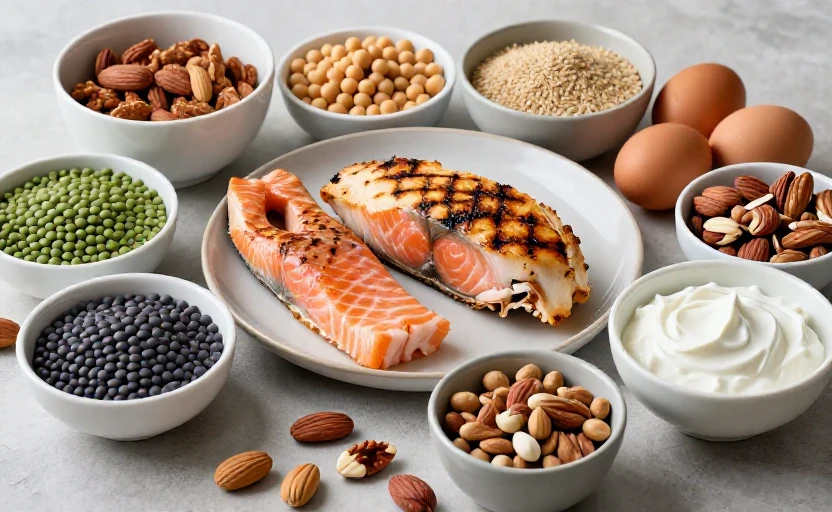
These are dense sources of complete protein. Opt for lean cuts of meat and poultry, and include fatty fish like salmon or mackerel a few times a week for their omega-3 content. Eggs and dairy, such as Greek yogurt and cottage cheese, are versatile options that also provide calcium and other nutrients.
Plant-based proteins
The plant kingdom offers a wealth of protein-packed choices that also deliver fiber, antioxidants, and healthy fats.
- Legumes: Lentils, chickpeas, black beans, and edamame.
- Whole grains: Quinoa (a complete protein), farro, and oats.
- Nuts and seeds: Almonds, peanuts, chia seeds, hemp seeds, and pumpkin seeds.
- Soy products: Tofu, tempeh, and edamame are complete proteins.
Incorporating these into meals is straightforward: add lentils to a soup, sprinkle seeds on a salad, or use tofu in a stir-fry.
Putting it into practice: A day of protein
Here’s what a day focused on consistent, varied protein intake might look like, without rigid calculations:
- Breakfast: A bowl of Greek yogurt with berries and a sprinkle of walnuts.
- Lunch: A large salad with grilled chicken, chickpeas, and quinoa.
- Snack: An apple with a tablespoon of almond butter.
- Dinner: Baked salmon with a side of lentils and roasted broccoli.
This pattern provides a mix of animal and plant proteins, spreads intake across the day, and comes packaged with a wide array of other beneficial nutrients.
Special considerations: Activity and age
Your protein needs aren't static. Individuals engaged in regular strength training or endurance sports have higher requirements to repair and build muscle. Consuming a protein-rich snack or meal within a couple of hours after a workout can support this recovery process.
Similarly, as we age, we become less efficient at using protein, a condition known as anabolic resistance. Older adults may benefit from a slightly higher daily protein intake and should be especially mindful of distributing it evenly across meals to help preserve muscle mass and strength.
Navigating protein doesn’t require a complicated regimen. By choosing a variety of whole-food sources—both animal and plant—and making a point to include them in your meals and snacks, you can easily support your body’s needs. Listen to your hunger cues, enjoy the foods you eat, and view protein as one essential part of a nourishing, balanced plate.