When your training split calls for a rest day, it is tempting to treat it like a free pass to eat whatever you want—or, conversely, to slash calories because you are not burning as much. Neither approach serves the goal of getting stronger. Off-days are not just for lounging; they are when your muscles rebuild, your nervous system resets, and your energy stores refill. What you eat on those 24 hours matters just as much as what you eat right after a hard set.
I spoke with registered dietitians who work with active adults to break down the specific nutritional priorities for training off-days. The consensus is clear: recovery nutrition on rest days is about strategic support, not deprivation or indulgence. Here is what they want you to know.
Why off-day nutrition is different
On training days, your body prioritizes shuttling fuel to working muscles and repairing micro-tears immediately post-exercise. On off-days, that process shifts into a slower, more thorough phase of rebuilding. “Your body is still in repair mode for 24 to 48 hours after a workout,” says sports dietitian Arielle Dana, RDN. “If you under-eat on rest days, you shortchange that repair. If you over-eat indiscriminately, you may blunt the sensitivity of your insulin response.”
The goal is to maintain steady blood sugar, provide consistent amino acids for muscle protein synthesis, and replenish glycogen stores—without the acute post-workout insulin spike that is helpful immediately after training. This means your plate will look similar to training days, but the timing and composition shift slightly.
Protein: keep the anchor consistent
One of the biggest mistakes people make is dropping protein intake on off-days. “Muscle protein synthesis does not take the day off just because you do,” says Dana. Most athletes need between 1.6 and 2.2 grams per kilogram of body weight daily, regardless of training status. Skipping a protein serving or two can drop you below the threshold needed to maintain that anabolic state.
Spread protein evenly across three to four meals—roughly 25 to 40 grams per meal for most adults. Chicken breast, salmon, eggs, Greek yogurt, tofu, and lentils all work. A slow-digesting protein source like cottage cheese or casein-rich dairy before bed may be especially beneficial on rest days, providing a steady drip of amino acids through the overnight fast.
Carbohydrates: strategic, not absent
Low-carb rest days are a common trend, but dietitians advise against going too low. “Your muscles are still replenishing glycogen stores, and your brain needs glucose for cognitive recovery—especially if you had a tough session the day before,” explains functional nutritionist Sarah Greenfield, RD.
That said, the type of carbohydrate matters more on off-days. Instead of fast-digesting sugars and refined starches that spike blood glucose, prioritize slowly digested carbs: sweet potatoes, oats, quinoa, brown rice, beans, and whole fruits. These provide steady energy and support gut health via fiber. If you ate a high-carb post-workout meal on training day, you can reduce total carb volume on the off-day by roughly 20 to 30 percent—but do not eliminate them entirely.
Healthy fats: the off-day advantage
Rest days are a great time to emphasize dietary fats. Because you are not depending on carbohydrates for fast energy, you can let fats play a larger role in satiety and cell repair. Omega-3-rich foods—salmon, walnuts, chia seeds, flax—also fight inflammation, which peaks during the recovery window.
Greenfield suggests adding half an avocado to a meal or cooking vegetables in olive oil. “Fats slow digestion, which is excellent on a day when you want stable blood sugar and longer-lasting energy,” she says. Aim for about 25 to 35 percent of total calories from fats, focusing on unsaturated sources.
Hydration and electrolytes
Off-days are prime time to correct fluid imbalances. Many people are in a mild dehydrated state after training days, especially if they sweated heavily. “Drink water consistently, but also consider electrolyte minerals—sodium, potassium, magnesium—which support muscle relaxation and nerve function,” says Dana.
Electrolytes do not require a sports drink; a pinch of sea salt in your water, a banana, a handful of spinach, or a glass of coconut water will do. Aim for at least half your body weight in ounces of water, and more if the weather is warm or you feel sluggish.
Micronutrients for repair
Off-days are an opportunity to micronutrient-load. Training depletes certain vitamins and minerals more quickly: zinc (for protein synthesis), vitamin D (for muscle function and immune health), magnesium (for muscle relaxation and sleep), and antioxidants like vitamin C and E (to quell oxidative stress).
Eat a colorful, whole-food diet on rest days. Think dark leafy greens, berries, bell peppers, citrus, nuts, seeds, and lean meats. A single serving of brazil nuts provides selenium, which supports the thyroid and antioxidant pathways. A bowl of cherries or tart cherry juice can help reduce muscle soreness.
Should you change meal timing?
The window of opportunity for post-workout nutrition does not apply on off-days. You have more flexibility. However, dietitians still recommend not going longer than five hours without eating, because long gaps can cause blood sugar dips that trigger cravings and energy crashes.
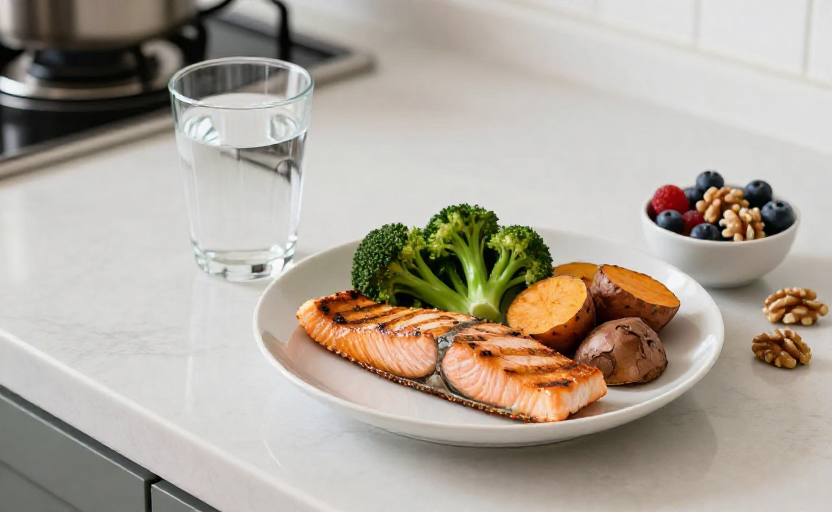
A sample off-day pattern might look like: a protein-rich breakfast (eggs + oatmeal), a lunch with protein, carbs, and fats (grilled chicken, quinoa, avocado, mixed greens), an afternoon snack (Greek yogurt with berries), and a dinner that leans slightly heavier on protein and vegetables (salmon + roasted sweet potatoes + broccoli). A small slow-digesting snack before bed, such as cottage cheese or a casein shake, can support overnight recovery.
Bottom line from the dietitians: do not treat your off-day like a cheat day or a fast. Feed your recovery the same way you feed your workout—with intention.